Hawk Hunt

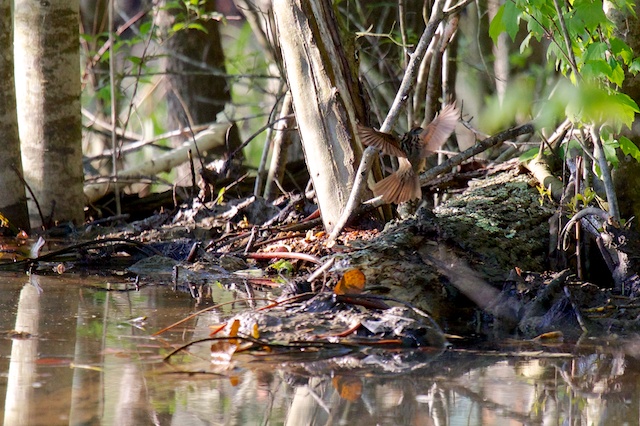
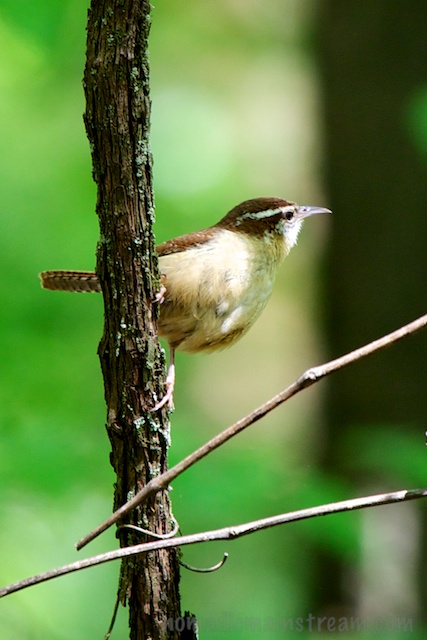
One of the best wren shots I've managed to capture--this little guy posed about 6 feet away from me

One of the best wren shots I’ve managed to capture–this little guy posed about 6 feet away from me

On a Saturday afternoon, with only 1 day left in a “Birdathon” (a competition to find as many bird species as possible in a 3-week period), what’s a girl to do after returning home from spending 3 ½ hours wandering around a wetland looking for birds?

You guessed it–go look for more birds.  Never mind that it’s the afternoon and not exactly prime birding.  Never mind that I’d just spend all morning walking around straining my neck.  Never mind that I had a dog that needed to go for a walk.

There was still a good chance of picking up a species or two in the afternoon, I would drive to the trailhead to reduce the walking, and Tisen would just have to go birding with me to get his walk in.

The only question was where to go.  Since I hadn’t been up to Stringer’s Ridge during yet and I knew there were Cooper’s Hawks nesting up there last year and I didn’t have Cooper’s hawks on my list yet, I thought Stringer’s Ridge was a good place to go.  Besides, if anyone is likely to be up and active during the middle of the afternoon, it’s a Cooper’s hawk.
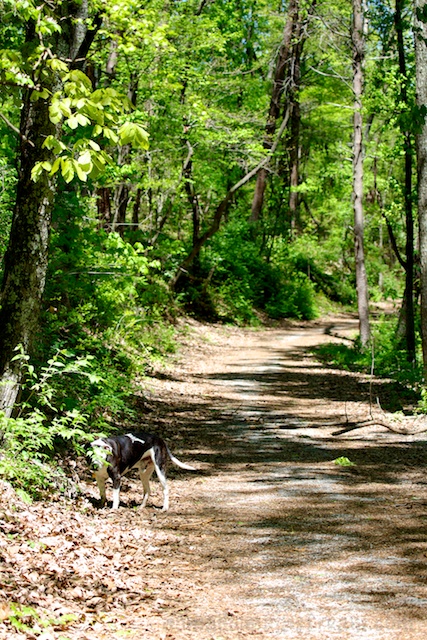
Tisen peering back at me through trailside brush

Tisen peering back at me through trailside brush

Tisen and I gathered up our respective equipment–binoculars, birding book, and camera in my case; Pink Elephant in his–and made our way to the car after a brief potty break for Tisen.

Stringer’s Ridge is close enough to walk to from our place, although it’s probably a good mile away and part of that mile is up a steep climb.  I was happy I’d decided to drive as we made our way through the neighborhood and up to the parking lot, my back was already aching from the wetland walk.

We parked in the empty lot and I enjoyed being able to let Tisen walk off-lead for a change with no one else around.  Tisen was pretty happy about getting to explore, too.  One problem with birding with Tisen is that he doesn’t really do a great job flushing birds for me.  He tends to scare them off in the opposite direction.  I found myself contemplating whether I should try to train him like a hunting dog to circle around and flush the birds towards me.  I decided it probably wasn’t worth the effort.
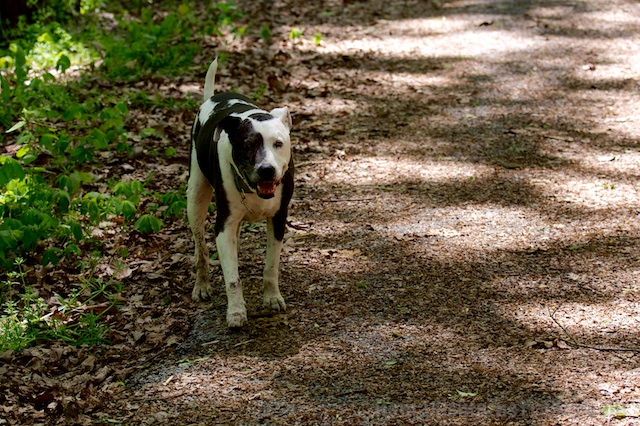
My sweet boy coming back to Mommy after wandering aways ahead

My sweet boy coming back to Mommy after wandering aways ahead

There weren’t many birds for him to scare away that day.  The occasional drumming of a distant woodpecker reached our ears and the ubiquitous Carolina Wren seemed to be following us along the path, but no Cooper’s Hawks were to be found.  Thankfully, as we made our way along a loop trail that gave us a nice walk through the woods that was probably less than 2 miles long, I heard a Wood Thrush singing its glorious, wistful song.  If you’ve never heard a Wood Thrush, you owe it to yourself to give it a listen.  You can play its flute-like song here:  http://www.allaboutbirds.org/guide/Wood_Thrush/id


VW Plant

This is not a broken, black ping pong ball but rather a common fungus

This is not a broken, black ping pong ball but rather a common fungus

There comes a time in every bird walk when someone much more knowledgable about plants than I am suddenly stops and points out a plant.  Often, the plant is a fungus.  Is a fungus actually a plant?  According to http://herbarium.usu.edu, it is not.  Rather, fungi have their very own kingdom–and what a special kingdom it is.

Photographically, I am always challenged when we encounter cool fungi or plants along the trail while birding.  This is because I only take one lens with me birding.  It’s my 100-400mm and it doesn’t really perform well for macro photography.  This doesn’t stop me, of course, from trying my best to get a shot of the life forms we encounter.  Realistically, I am not going to tote my tripod and macro lens on birding walks to capture these plants better up close, so I will just have to live with the motion blur and shallow depth of field I end up with when shooting with the 100-400mm.  It’s still better than what I get with an iPhone.

The first really interesting fungus we encountered looked like a block ping pong ball that hand been broken open.  In fact, it looked so manmade to me that I would have assumed it was litter had we not had one of our plant experts on the walk.  It amazes me when I see things like this in nature that we ever think we invented anything on our own.

"My what big ears you have!"

“My what big ears you have!”

The second interesting fungus was a group of wood ears growing along a fallen log.  They really do look like slightly slimy ears growing on wood.  I believe this may be the birthplace of the idea for Mr. Potato head.  Perhaps the wood ears were growing on a potato and someone thought, “Hey!  That looks like a face with ears!” and then the idea grew from there.  You never know.

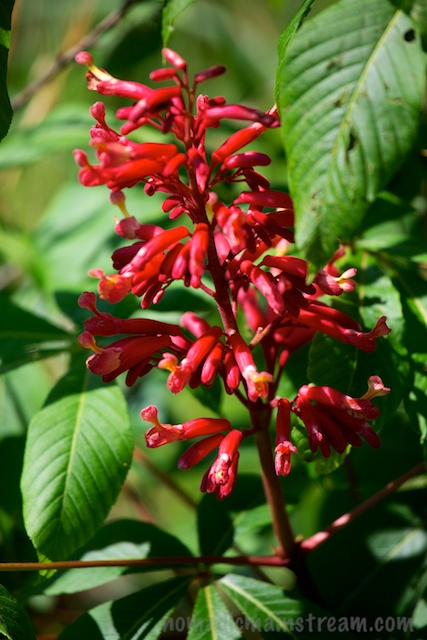
What kind of buckeye is that?

What kind of buckeye is that?

The next interesting non-bird we saw was, in fact, a member of the plant kingdom.  It was of particular interest to me because my Tennessean friends called it a Buckeye tree.  As a person from the buckeye state, I can tell you that I have never seen a flower on any buckeye tree that looks anything like this one.  I have read on more than one occasion that the buckeye tree is indigenous to Ohio and not found anywhere else.  I had doubted the truth of that, but now am wondering if perhaps what people call a buckeye down in Tennessee is not really the same tree at all.  Whatever it is, it’s quite beautiful.

An immature red-tailed hawk sends us on our way

An immature red-tailed hawk sends us on our way

We made our way out of the wetland a bit tired after such an early morning start.  We found many birds in the 3 hours we spent wandering about.  As we stood listening to a Cerulean Warbler just before calling it a day, we were surprised by the appearance of a Red-tailed Hawk, soaring happily overhead.  I managed to get this image of the immature hawk flying over head.

Private Moments and a Merlin

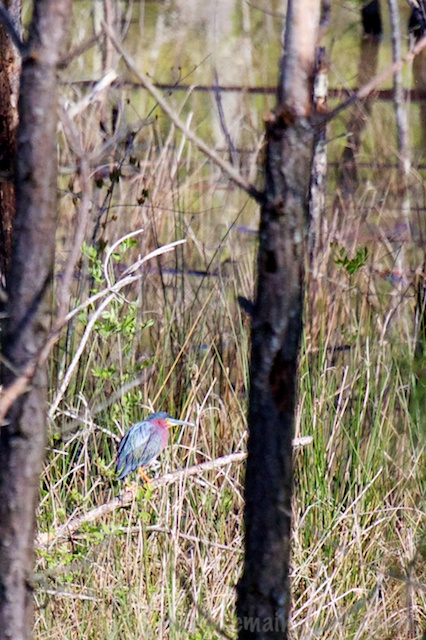
My first Green Heron of the season--usually, I see them daily at the park, but not during the birdathon

My first Green Heron of the season–usually, I see them daily at the park, but not during the birdathon

Continuing our excursion through the VW wetland, we made our way around to the far side of the wetland from our entry point.  This side was on the VW plant side.  They were doing a lot of construction between the wetland and the plant, but they had installed a protective barrier between the construction zone and the wetland to keep runoff from the construction from upsetting the balance of the ecosystem.

Because water does need to run from the construction area to the wetland, they installed a large pipe between the two that went under the barrier.  At the end of the pipe leading to the wetland, they installed what might have looked like a giant balloon waiting to be inflated and twisted into a life-sized balloon horse except that it was a dull, opaque black color.  It laid on the ground piled on itself looking lifeless and discarded.  Our guide told us it was a silt bag used to collect all the dirt and silt in the construction runoff.  When water is running through quickly, it does indeed inflate.  However, no one has yet tried to twist it into a life-sized balloon horse.
A tree full of Great Blue Heron on the far side of the wetland

A tree full of Great Blue Heron on the far side of the wetland

As we made our way around the end of the wetland, we got closer to the array of solar panels.  It was pretty darn impressive to see the field of panels growing electricity.  Our guide told us that over 20% of the power consumed by the plant comes from the solar panels outside the wetland.  This is an impressive amount of electricity when one considers how much power a manufacturing facility like that uses.  The Eastern Meadowlark definitely thought it was worth singing about–he perched on the edge of the panels and sung his heart out for us.

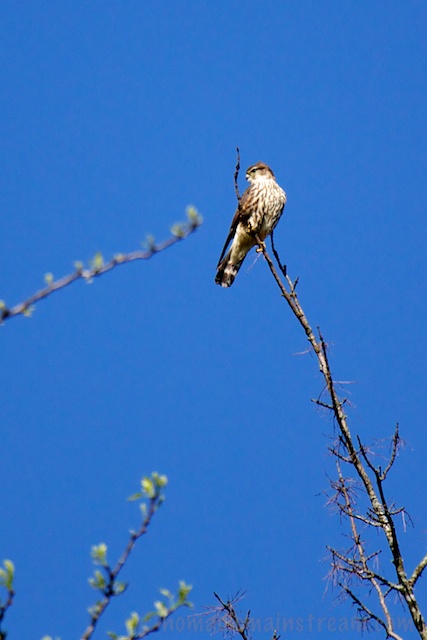
Spotting the Merlin at the end of a very thin-looking tree branch

Spotting the Merlin at the end of a very thin-looking tree branch

This was also about the time that everyone’s last cup of coffee kicked in.  First one person disappeared into a wooded area.  Next, another one started wandering towards the woods.  When we started following her, she stopped, turned and said, “I need a private moment.”  We all laughed at ourselves for blindly following her.  Next it was my turn.

This is one of those occasions when being able to spot poison ivy makes the difference between life and painful suffering.  I am skilled at spotting poison ivy at any stage of development–young poison ivy vines before the leaves sprout, fresh purple leaves dripping with toxic oils when they first burst forth, ancient hairy vines twisted around the trunk of a tree.  Unfortunately, I know all this because I’ve gotten it so many ways over the decade I’ve been allergic to it.

The Merlin seems to be testing the wind as he twists about, thinking about flying

The Merlin seems to be testing the wind as he twists about, thinking about flying

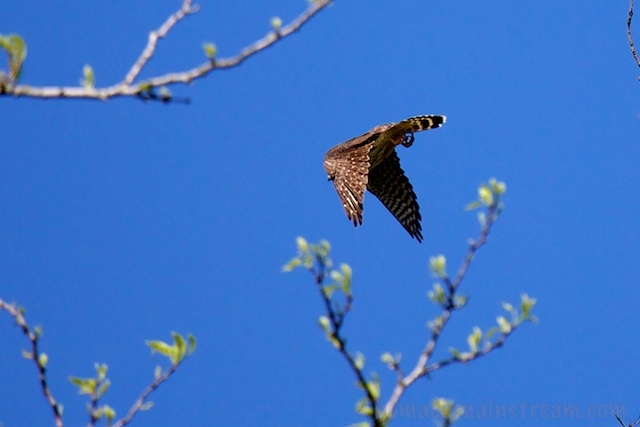
After I rejoined the group, I discovered they were all looking at a Merlin.  It graciously  remained in full view, perched long enough for me to get quite a few shots, although being about 100 yards closer would have yielded some really amazing images.  This was a life-list bird for me–I’ve never seen one before.  What a great day.

Off goes the Merlin

Off goes the Merlin

How Much Wood Would a Wood Duck Chuck?

This guy knows how to impress the ladies

This guy knows how to impress the ladies

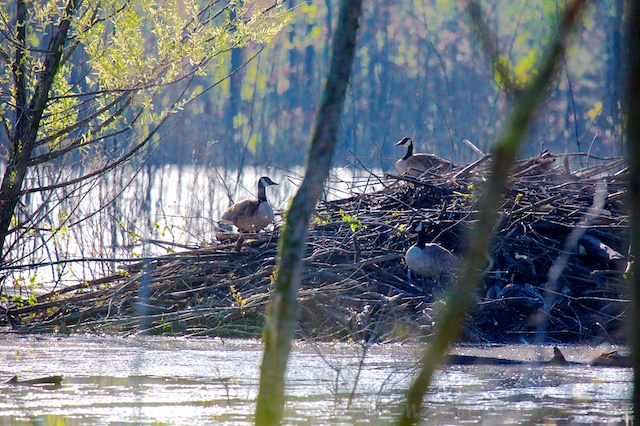
Bright and early Saturday morning, I joined my fellow birders in a walk around the VW wetland.  After we saw many heron perched on their nests in a giant heron rookery and a collection of Canada Geese roosting on top of a beaver hut, we made our way back through the brambles to a trail that allowed us to circle the wetland.

This took a little bush-whacking.  Well, whacking may be an exaggeration.  It was more like taking 3 steps forward and then freezing in place when caught in the brambles and peeling the brambles off carefully, trying not to rip skin in the process.  Then, three more steps forward.  Fortunately, once we made it to the trail cut by the surveyors, we were able to make good progress.

She may look indifferent, but I think she's just being coy

She may look indifferent, but I think she’s just being coy

Everyone develops their own methodology for getting through brambles.  I think there are 3 main approaches to bramble thrashing, which one you choose is generally dependent on what you are wearing.

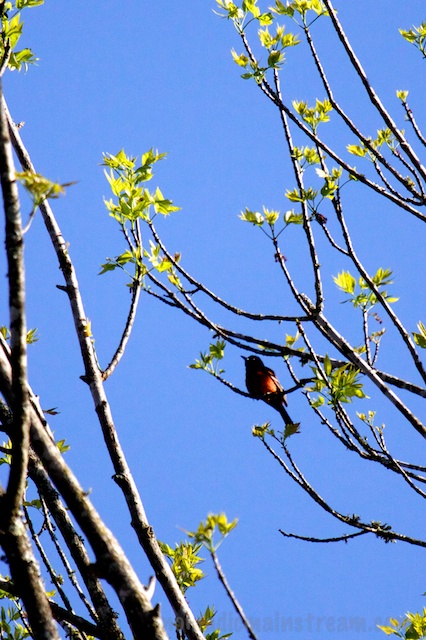
Still not optimally lit, this male Orchard Oriole impressed us with his song

Still not optimally lit, this male Orchard Oriole impressed us with his song

The three main approaches to brambles were:  1) accelerate through them as fast as possible and stop for nothing (approach taken by people who had on several layers and/or thick skin and who don’t care much for their top layer), 2)  Accelerate until you get stuck and then stop (approach taken by people with several layers but who do care about not ruining their top layer), and 3) Pick you way through slowly and carefully (approach taken by people with not enough layers to protect their skin).  I tended to fall into the 2nd category while our guide fell into the first. We didn’t have many people in the third category except when bare hands got tangled in thorns.

If this guy had moved just  a bit more, you would be able to tell he's a beautiful Orchard Oriole

If this guy had moved just a bit more, you would be able to tell he’s a beautiful Orchard Oriole

Thankfully, we all made it to the cleared trail with a minimal number of scratches.  We worked our way around slowly, passing the top of a major beaver dam in the process.  The work of the beavers was quite impressive–a testament to the expression “busy beaver.”  They had built a dam that must have been a good 50 feet wide or more.  It enclosed one end of the wetland, creating a waterfall given the amount of rain we’d been having.  On the other side of the dam, the wetland continued.   We was a second dam that had been broken apart.  Apparently the humans have to break the second dam every couple of days to keep the water from getting too backed up in the wetland.  The beavers are busy indeed.

As we came around the bend of the wetland, we spotted a male wood duck siting on top of a snag in the middle of a bright sunbeam.  As we all admired him, one of our group was looking at a different wood duck on tip of a different snag–it was the mate.  The male showed off for her, obviously trying to get her attention.  She ruffled her feathers and acted indifferent, but I suspect they lived happily every after.

I'm pretty sure this is the wood duck equivalent of "shaking your booty"

I’m pretty sure this is the wood duck equivalent of “shaking your booty”

Tisen looking for food (I think)

Tisen looking for food (I think)


Volkswagen Feuchtgebiet

One lone heron in silhouette on its nest

One lone heron in silhouette on its nest

5:15AM seems to be a time I can’t quite get away from.  When my alarm went off Saturday morning, I was not enthusiastic about getting out of bed.  But, I reminded myself I was going to get to see the wetland at the VW plant here in Chattanooga in exchange for getting up at this ungodly hour on a Saturday and rolled out of bed.

The drive to the VW plant was about a 25 minute drive with no traffic.  I was surprised that many of the transplants from Germany live in my building–seems like a long way to go twice a day.  But, then, I guess driving around the block seems like a long way to go to me.

Due to a road closing, we had to meet at a back entrance and then share rides with those who had trucks to get into the wetland.  We were hosted by the VW environmentalist.  She exuded pride in how environmentally friendly VW is, but the healthy wetland, bordered by a field of solar panels, spoke more loudly than she did.

A Swamp Sparrow flitting by the edge of the wetland

A Swamp Sparrow flitting by the edge of the wetland

At my Friday morning yoga class, I’d mentioned to one of my fellow students that I was going to the VW wetland the next morning.  He told me that his mother had worked at the same site when it was a TNT plant some 40ish years ago.  He told me that when she went to work, she had to take her pantyhose off and pack them tightly into a plastic bag or the hose would literally dissolve from the toxicity in the air.  I cannot imagine going into a place every day to work where nylon is dissolved in the air.

This is like a "Where's Waldo," but I swear there's a Yellow-breasted Chat in there

This is like a “Where’s Waldo,” but I swear there’s a Yellow-breasted Chat in there

This makes an amazing contrast to the site today.  I don’t know what cleanup efforts took place between the days when gun powder was made here and today, but I do know that wetlands act as kidneys.  They help strain out the toxins in an area and prevent them from getting into the larger water system and polluting streams, rivers, and even oceans.  The loss of wetland has been a major contributor to the loss of aquatic life and clean water.

Beavers created the wetland dams--but we only found Canada Geese

Beavers created the wetland dams–but we only found Canada Geese

Fortunately, VW treasures their wetland and makes a great deal of effort to maintain and protect it.  It’s green and pulsing with life.  The Great Blue Heron have discovered this area and built a rookery here.  I remember the first time I saw a rookery a few years back.  It was the most amazing discovery to me that these giant, awkward birds that look like they couldn’t perch on a 2” wide beam build stick nests in the tops of trees.

That they do so in groups where there may be dozens of nests all in the same group of trees makes their nesting habits even more interesting.  A normally solitary bird that joins to form a village each spring when it’s time to nest, looking like a miniature village of Pterodactyls–it’s fascinating.

A small portion of the heron rookery over the VW Wetland

A small portion of the heron rookery over the VW Wetland–notice the chicks in the nest to the left

Craven Birds

A singing Eastern Towhee may not be the most unusual sight in Tennessee, but this was the best picture I got of the day

A singing Eastern Towhee may not be the most unusual sight in Tennessee, but this was the best picture I got of the day

Today was a big birding day.  I got out birding with some really expert birders.  We met at Cravens House on Lookout Mountain.  When we arrived, I was surprised to discover that the gate to the main parking lot was still locked.  I’ve never been to Cravens House when the gate was locked, but then I don’t think I’ve ever been there at 9AM on a Sunday morning, either.

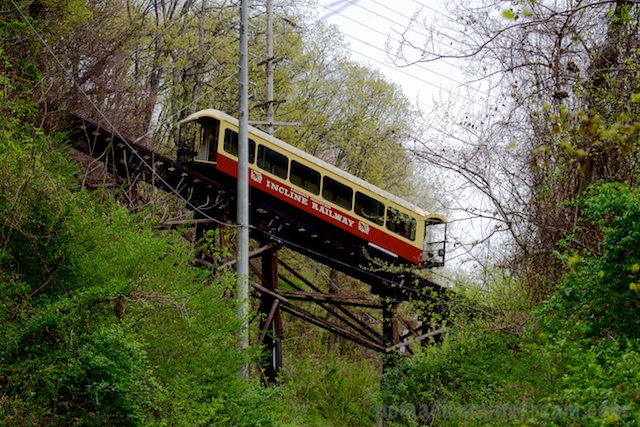
Not the usual sighting on a bird walk, but seeing the include railway train pass over the trail was kind of fun

Not the usual sighting on a bird walk, but seeing the include railway train pass over the trail was kind of fun

Pat and Tisen drove up with me in case no birders showed.  Normally, we don’t take dogs birding.  It’s just not the best mix.  Even though Tisen is not a big bird chaser, a lot of birds key off the shape of a canine and go into hiding.  I know this is particularly true of water fowl like geese.  I haven’t really witnessed this with song birds, but since I’ve never known anyone to bring a dog on a bird walk, I don’t know that I would have noticed.  The birds at Renaissance Park are so used to seeing dogs, I don’t think they’re a good test case.

Our plan was to go for a hike if no one showed and for Pat and Tisen to hike a different direction if others did show.  As it turned out, Pat and Tisen took their own hike.

A large variety of Trillium whose name I don't recall

A large variety of Trillium whose name I don’t recall

One birder joined us who moved to Chattanooga fairly recently.  He and his wife and children moved here from Seattle.  He was so excited to get to go birding.  He mentioned that since moving to Chattanooga he’d been a stay-at-home-dad.  I think that explained his enthusiasm for getting out and doing something with adults.  He was fun to bird with–he had lots of great birding stories from parts of the world like Australia.

We walked for 3 hours and saw about 34 bird species.  We might have seen more had we started out on a different trail, but I didn’t know the trail we ended up on was even up there until Clyde mentioned it.  Clyde is one of Chattanooga’s best birders.  I love it when he comes to bird walks–I’ve never birded with anyone who can bird like him.  He seems to hear or see a bird with every breath.  It’s really amazing.

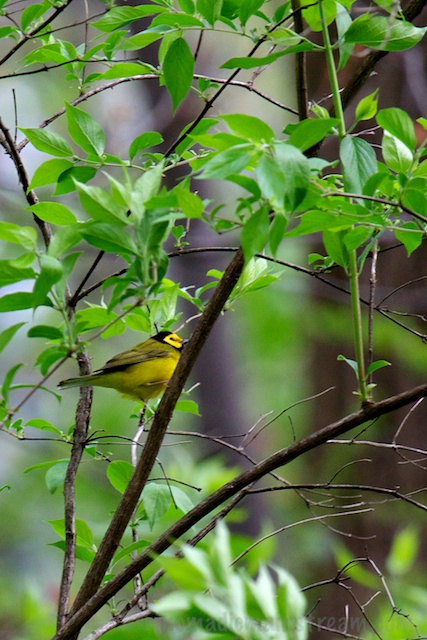
One of the more exciting sightings of the day--the Hooded Warbler

One of the more exciting sightings of the day–the Hooded Warbler

In any case, the Carolina Wrens and Northern Cardinals were singing so loudly that we joked we wished we had a volume control for them.  Carolina Wrens are one of those birds I never tire of.  Although they are so common it’s not particularly exciting to see them, their fussy little personalities and extraordinarily loud voices continue to amuse me.  On the occasions when I get to see them sing, I am always impressed by the effort.  Their entire body seems to throw itself into the production of sound.  It’s no wonder they produce a sound that seems at least a magnitude larger than their tiny bodies.

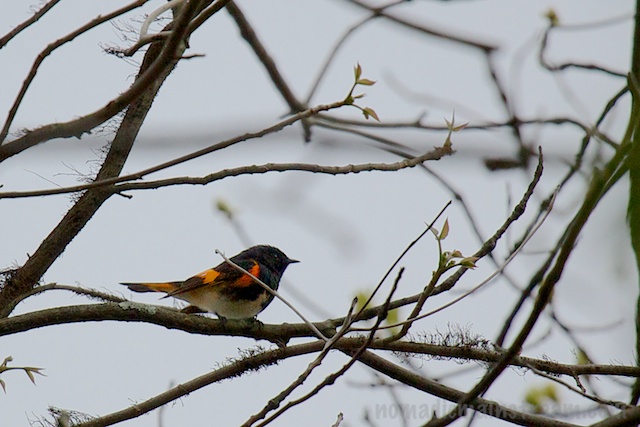
Another favorite that turned up--an American Redstart

Another favorite that turned up–an American Redstart

But today, no wrens were willing to pose for me.  The best I managed to capture was a singing Towhee.

Bird (and other Stuff) Walk

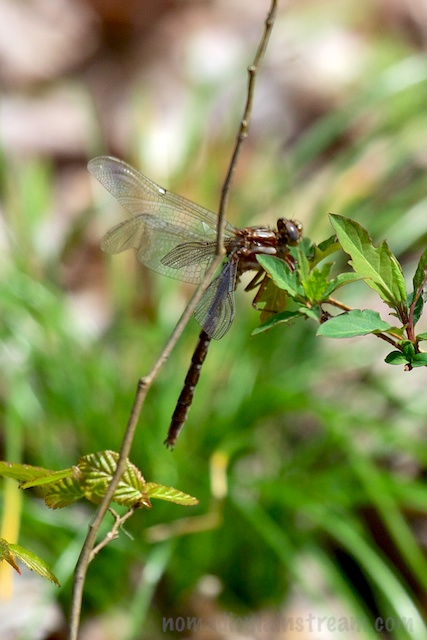
This dragonfly (or is it a damselfly?) appeared to be depositing eggs, but we weren't sure

This dragonfly (or is it a damselfly?) appeared to be depositing eggs, but we weren’t sure

April is primetime for birding.  The number of bird species here increases dramatically during spring migration.  For example, while only a handful of Wood Warblers nest and breed in the Tennessee area, dozens fly through Tennessee (including the Tennessee Warbler) during migration.

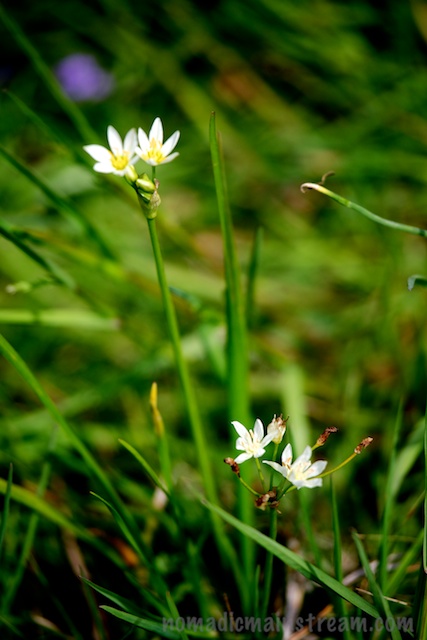
False garlic bloomed in the grass

False garlic bloomed in the grass

Spring migration is also easier on those of us with bad eyes.  This is for three primary reasons:

  1. They sing more, making it easier to figure out where they are and, with a bit of practice, to identify which bird it is from its song,
  2. In early spring, there are few leaves for the birds to hide behind, and
  3. The birds are in full breeding plumage, making them (especially the males) much easier to spot and recognize.
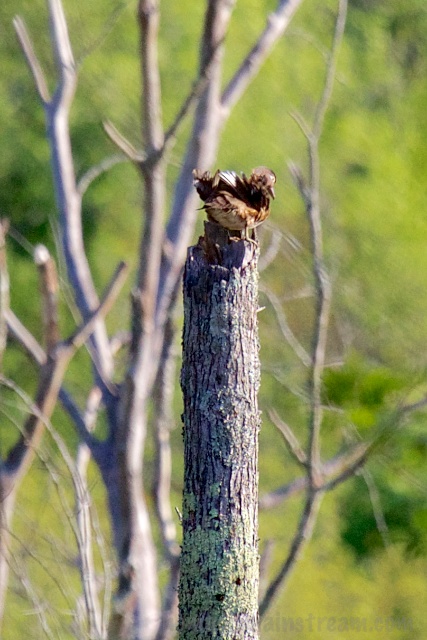
Oh how I wanted to trim the branches between me and this Brown Thrasher

Oh how I wanted to trim the branches between me and this Brown Thrasher

Therefore, it only makes sense that we would decide to have a Birdathon in the month of April.  This is a stolen idea from a friend up North who started raising money for the local Audubon chapter up there.  This friend introduced me to birding when she invited her sponsors to go on a bird walk each year as a thank you for contributing.  I guess it stuck–I think the first time I went on a bird walk with her must have been over 15 years ago now.

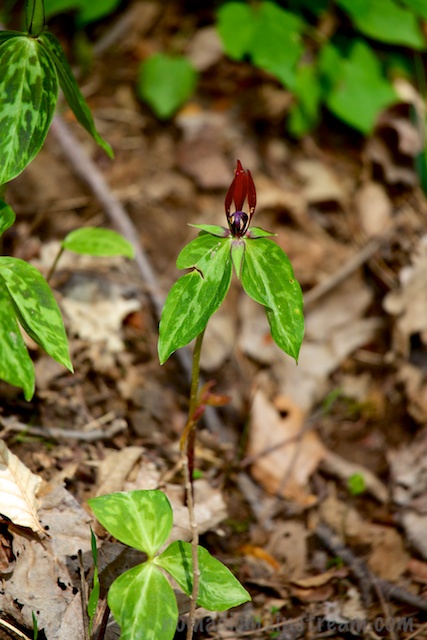
Trillium was just starting to bloom along the trail

Trillium was just starting to bloom along the trail

In any case, as part of the Birdathon, we are trying to raise money for the Audubon by taking pledges for the number of bird species we identify over a 3 week period.  I am not doing so well.  I don’t think I’ve even gotten up to 50 yet.

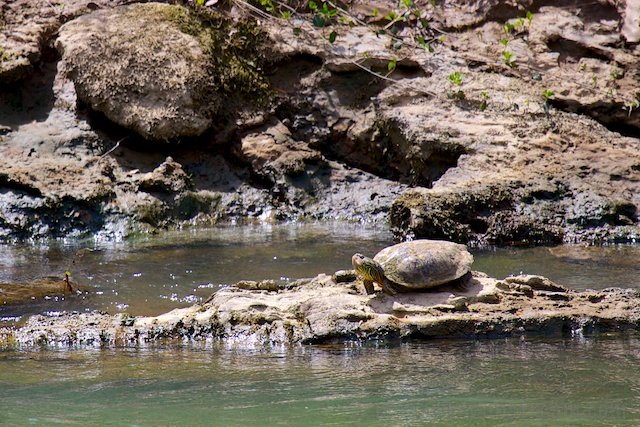
Much easier to shoot, this turtle basked in the sun

Much easier to shoot, this turtle basked in the sun

One of the rules is that if a bird is not commonly found in the area, you have to either have a second person who agrees with the ID or a photo of the bird.  This has led to me carrying my DSLR with the 100-400mm lens on it every time I go walking through the park or on an official bird walk.

Evidence that someone got only half a meal--we discovered the back half of a 5-striped skink

Evidence that someone got only half a meal–we discovered the back half of a 5-striped skink

I so want to get some great photos of song birds.  But every time I carry the camera, I end up with tiny shots of song birds up in tree tops.  I need a tree house with a blind to sit behind so I can get up closer to the birds.  Since I don’t think Park and Recreation will approve of me building a birdhouse, I guess I will have to stick to cropping the heck out of my images.

A muskrat surprised us while we looked for birds--I like how it is actually just under the surface of the water

A muskrat surprised us while we looked for birds–I like how it is actually just under the surface of the water

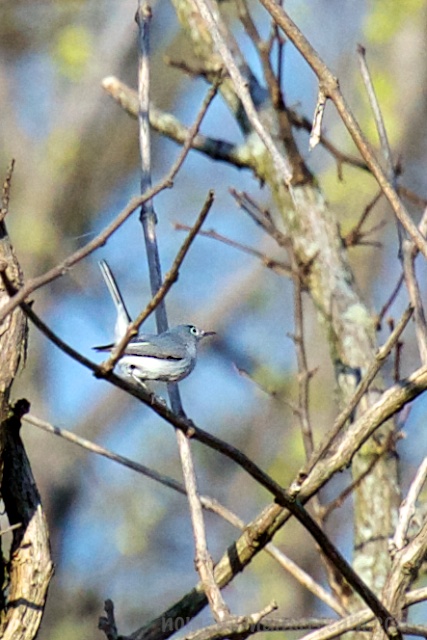
The photos in this post are from 2 bird walks, 2 locations.  One at the park near me and one at Audubon Acres.  I am slightly proud of the Blue-gray Gnatcatcher’s photo–that sucker is a 4 ½” bird and I was not that close–the fact that it’s as sharp as it is even though I cropped it a lot is what I’m proud of.

A Blue-gray Gnatcatcher busy hunting among the tree tops

A Blue-gray Gnatcatcher busy hunting among the tree tops

What strikes me as funny is that I only came back from 3 hours of looking at birds with images of 2 birds–I hope bird photographers are well paid.

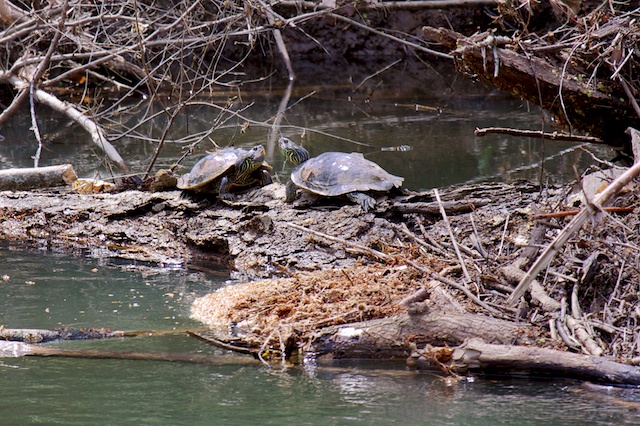
These turtles looked like they were in the middle of some sort of dating ritual

These turtles looked like they were in the middle of some sort of dating ritual

Another Turn for Cayce

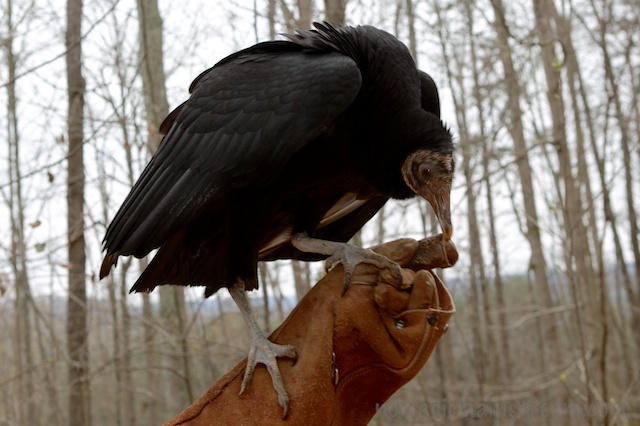
A split second of stillness while Cayce nibbles at the glove

A split second of stillness while Cayce nibbles at the glove

The last, but not least, bird we exercised on Saturday was Cayce.  Cayce the wonder vulture.  I got to witness a new side to Cayce.  Cayce’s next door neighbors, a pair of Peregrine Falcons, are currently nesting.  Wings to Soar is hoping to have their first fledglings to release to the wild as a result.  This is an exciting extension of their program from education to restoration.  Peregrine Falcons were a critically endangered species that has, through captive breeding and release programs, been removed from the endangered list.

However, during nesting, the falcons are fed through a hatch in the side of their enclosure that opens into a shelf up where the birds nest.  To reach the hatch, John and Dale have a ladder set up outside the enclosure.  When we took Cayce around the Peregrine Falcon’s enclosure, Cayce clearly thought that ladder was the boogie man.  Or whatever Black Vultures might be terrified of.  She jumped straight up in the air when she saw the ladder and refused to go past it.

Checking out the surroundings, Cayce is still nervous about where the ladder was

Checking out the surroundings, Cayce seems more relaxed with all her neck feathers fluffed

I tried taking Cayce back around the corner while Dale moved the ladder.  Then we tried to come back around.  I thought Cayce was following me, but as soon as I got passed the corner, she jumped straight up in the air again and made an attempt to land on a tree.

Fortunately, as soon as Dale came back into sight, she hopped back down and seemed a little more relaxed.  We ended up not being able to fly Cayce, but she did hop up and down from our gloves and run along the ground between us.  She just wasn’t up for flying.

One of the challenges of shooting Cayce in flight is the length of her wings.  She has such a long wingspan that the tips of her wings are always a blur in flying shots.  While I don’t mind having some motion showing in the photos, I’d like to have more of her wings still.  Regardless of what I want, on this day I don’t have the opportunity to try.

Shooting Cayce on the glove is a lot like trying to take portraits of a 2 year old.  She squirms and wiggles and moves her head. She flaps and jumps and basically makes it almost impossible to get a good shot.  This is complicated by her black feathers and black face, which suck up light and often leave her as a dark shadow.

In spite of these challenges, I think at least one image I came home with gives a good idea of Cayce’s personality:

I like to think of this as Cayce's "Hey, what are you doing?" look

I like to think of this as Cayce’s “Hey, what are you doing?” look

I don’t know if vultures have a sense of humor, but when I look at Cayce, I have to think they do.  There’s just something about the way she tilts her head like she really wants to know if you’re paying attention.  I suppose she could just be looking for food, but it makes me happier to think she at least find us entertaining.

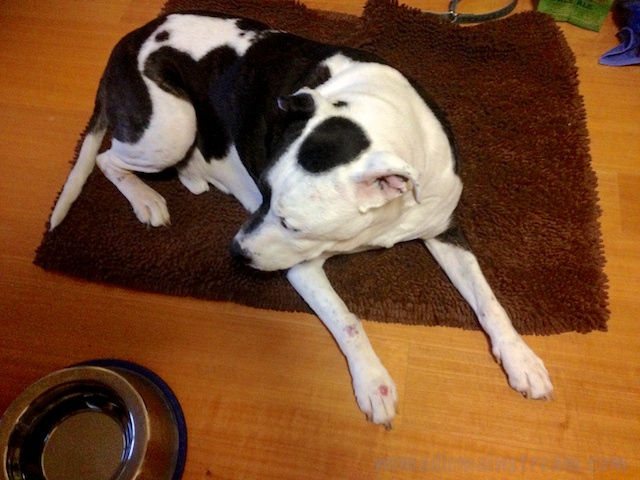
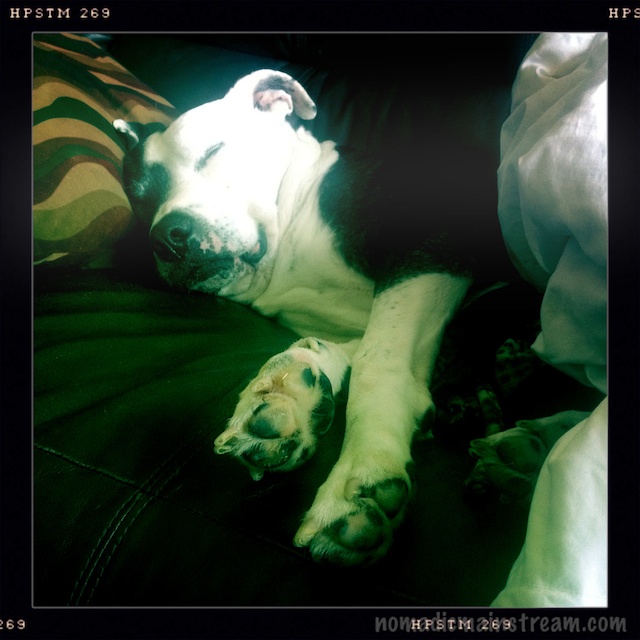
Tisen via Hipstamatic--he's all up for lounging on the couch these days

Tisen via Hipstamatic–he’s all up for lounging on the couch these days

Eskimo Kisses

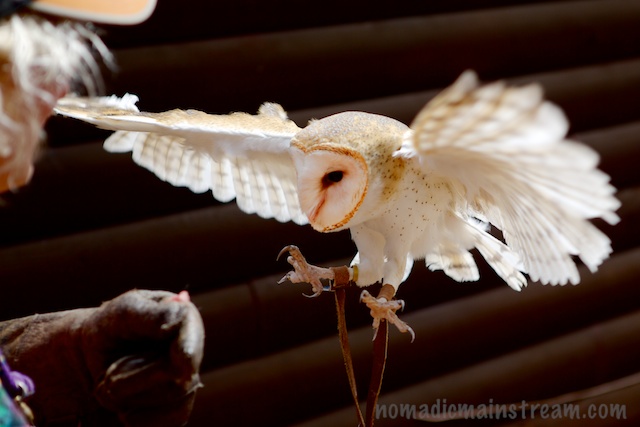
Theo shows off his impressive wing span

Theo shows off his impressive wing span

Each of the birds at Wings to Soar has a distinct personality.  Yet, all of them seem to have a special bond with Dale.  I don’t know exactly how to describe what a bond looks like when it comes to these mighty hunters, but there’s a level of trust and calm that the birds have with Dale.

Using his ridiculously long wings, Theo looks like he could glide forever

Using his ridiculously long wings, Theo looks like he could glide forever

I suspect the birds would be far more agitated being handled by me if Dale weren’t nearby.

Whatever the effect Dale has on the birds and vise versa, there are times when I’ve noticed her expressing what can only be described as a motherly affection for the birds.  For example, once during an educational program in an open field, a train came through blowing its whistle and scaring the bejesus out of Theo.  Theo was flying with a light line hooked to his jesses to prevent him from flying far, but he did take off and fly as far towards the trees as possible.

Theo with arced wings mid-flap

Theo with arced wings mid-flap

Dale had to go retrieve him from the middle of the field.  I swung the camera around and followed Dale for a bit.  When she retrieved Theo, the two of them bent their heads towards one another in some form of secret greeting.  It was like they were reconnecting after a fright.  Theo immediately appeared to relax.

Theo reaching for the glove

Theo reaching for the glove

On Saturday, when it was Theo’s turn to fly, that affection came through loud and clear.  Theo didn’t seem particularly motivated to fly.  After flying to me a couple of times, he wasn’t into modeling for my camera, probably because he had a full belly.

Theo making a mid-flight adjustment in response to Dale moving

Theo making a mid-flight adjustment in response to Dale moving

To coax him into flying, Dale stood close to his perch and then backed away so Theo would get a longer flight in.  This didn’t work so well the first attempt–Theo was obviously confused as to why Dale was running away and tried to land on her glove at her side.  The only thing to do when a raptor is trying to land on you is to give them the glove–you sure don’t want them to land anywhere else!

Theo gets lined up with the glove an come in for the approach

Theo gets lined up with the glove an come in for the approach

The second time Dale tried this approach, she started running away sooner and ran faster.  As she approached the distance Theo normally flies, she turned back towards Theo, but kept backing away.  Theo performed some impressive maneuvers in his attempts to avoid colliding with Dale as she changed speed and direction.  I wish I’d been set on video–I swear I saw Theo fly backwards at least twice.

Theo looks like he's all set for a landing, but Dale is still in motion

Theo looks like he’s all set for a landing, but Dale is still in motion

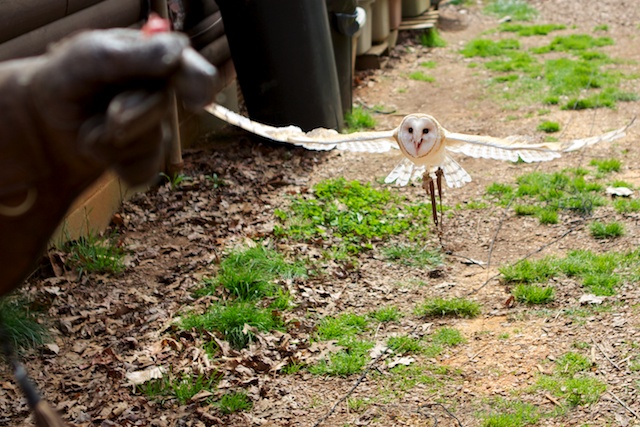
In the end, they did a graceful mid-air eskimo kiss just before Theo readjusted one more time to land on Dale’s glove.  The amount of effort Theo made to get to Dale’s glove spoke volumes about what this owl feels about his momma.  The smile (just visible through the feathers of Theo’s wings) on Dale’s face as she nearly collides beak-to-beak with a Barn Owl speaks volumes about Dale’s own feelings.

Theo and Dale rub noses before Theo manages to back up and land safely on the glove

Theo and Dale rub noses before Theo manages to back up and land safely on the glove

It’s hard not to smile when you see Dale working with these magnificent birds.

Back home, Tisen hung out with Twiggy, making themselves comfortable on the couch

Back home, Tisen hung out with Twiggy, making themselves comfortable on the couch

That Hawk Don’t Hunt

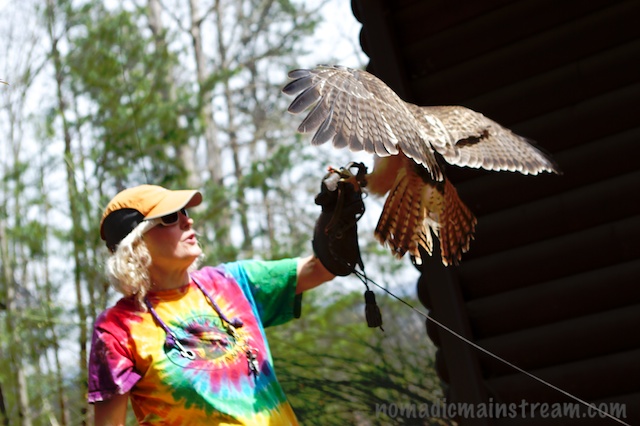
Screeching to a mid-air halt, Cody prepares to land gently on the glove

Screeching to a mid-air halt, Cody prepares to land gently on the glove

While training Cody on Saturday, one of the things I realized was that I had lost my healthy respect for the fierceness of his talons.  I was holding Cody on my glove when it suddenly struck me, “Oh yeah!  He has incredibly strong grip strength and really sharp talons on those feet!”  It was as if I had completely forgotten that raptors can accidentally injure their handlers pretty easily if said handler isn’t paying attention.

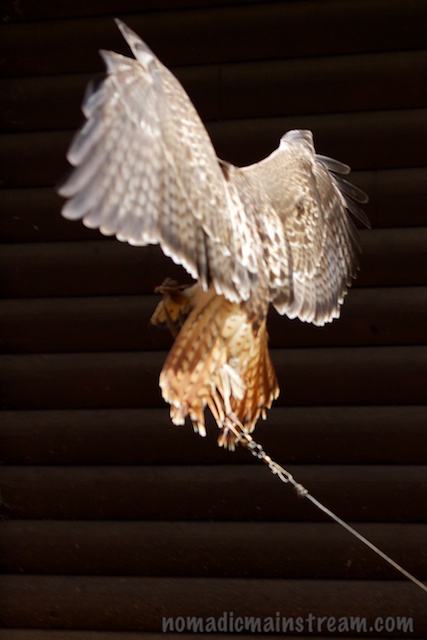
Mid-air ascent--after riding the ground effect, Cody rises to the height of the glove

Mid-air ascent–after riding the ground effect, Cody rises to the height of the glove

Fortunately for me, Cody and the other raptors I get to work with are accommodating and don’t intentionally try to harm people.  Perhaps even more fortunately, the realization struck me as Cody was working his way up my arm, but in time for me to adjust so he headed back out toward my hand and away from the end of my glove.  I can’t imagine what it would feel like to have one stray talon sink into the soft part of my arm–I’d like to keep it that way.

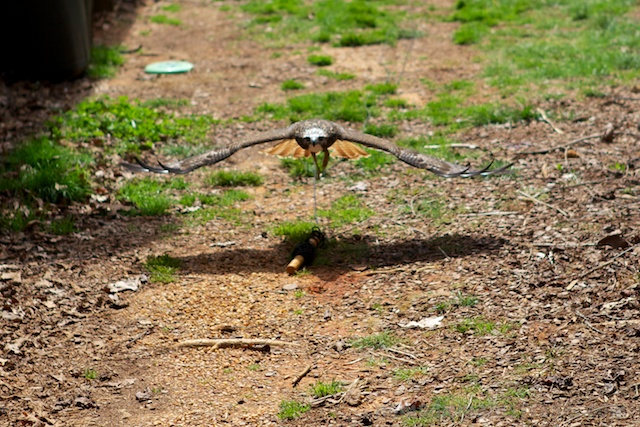
Ground effect--Cody floats on the bubble of air close to the ground

Ground effect–Cody floats on the bubble of air close to the ground

Having recalled the inherent danger in handling raptors, I stayed a bit more on my toes as we flew Cody.  Cody is about as sweet as it gets for a Red-tailed Hawk.  He ended up in captivity after being found starving.  He was taken to a falconer for rehabilitation.  The falconer attempted to teach him to hunt, but no matter what prey he encountered, he wasn’t interested in hunting.

Coming in for a landing--Cody touches down

Coming in for a landing–Cody touches down

Cody’s story reminds me of a story from my childhood about a bull named Ferdinand.  Ferdinand wanted to sit in the pasture enjoying butterflies and flowers rather than fight with bull fighters.  I don’t remember how the story ended exactly, but given that it was a favorite of mine, I would guess Ferdinand ended up happily wiling away the days in a pasture where he could be his gentle self.

Another float into the finish--I love the way Cody flares to a stop before landing on the glove

Another float into the finish–I love the way Cody flares to a stop before landing on the glove

This also parallels Cody’s story.  While Cody may not be interested in killing rodents, he’s happy to hang with the people who care for him.  He watches attentively as we work with him.  He seems curious–he clearly knows his usual training routine has been changed.  I suspect he remembers me, but I can’t offer any evidence that this is true.  He looks at me like he finds me interesting, but he doesn’t seem upset by my participation in the training process.

This is a back-view of Cody flaring to a stop

This is a back-view of Cody flaring to a stop

We fly Cody for a while and then Dale flies him without me so I can see if I can get some good shots of Cody in flight.  Cody is naturally photogenic.  Of all the birds, he’s the one I always end up with a bunch of great shots each time I shoot the birds.  However, he’s looking slightly less well groomed on this particular day.  He seems to have molted one of his tail feathers.  Almost like a missing tooth in the middle of a bright white, well cared for smile, the gap is hard to miss.

After the flare, Cody uses any remaining momentum to float gently to the glove

After the flare, Cody uses any remaining momentum to float gently to the glove

We try not to stare–no point in making Cody feel self-conscious.

This is Tisen's idea of "flare"

This is Tisen’s idea of “flare”