VW Plant

This is not a broken, black ping pong ball but rather a common fungus

This is not a broken, black ping pong ball but rather a common fungus

There comes a time in every bird walk when someone much more knowledgable about plants than I am suddenly stops and points out a plant.  Often, the plant is a fungus.  Is a fungus actually a plant?  According to http://herbarium.usu.edu, it is not.  Rather, fungi have their very own kingdom–and what a special kingdom it is.

Photographically, I am always challenged when we encounter cool fungi or plants along the trail while birding.  This is because I only take one lens with me birding.  It’s my 100-400mm and it doesn’t really perform well for macro photography.  This doesn’t stop me, of course, from trying my best to get a shot of the life forms we encounter.  Realistically, I am not going to tote my tripod and macro lens on birding walks to capture these plants better up close, so I will just have to live with the motion blur and shallow depth of field I end up with when shooting with the 100-400mm.  It’s still better than what I get with an iPhone.

The first really interesting fungus we encountered looked like a block ping pong ball that hand been broken open.  In fact, it looked so manmade to me that I would have assumed it was litter had we not had one of our plant experts on the walk.  It amazes me when I see things like this in nature that we ever think we invented anything on our own.

"My what big ears you have!"

“My what big ears you have!”

The second interesting fungus was a group of wood ears growing along a fallen log.  They really do look like slightly slimy ears growing on wood.  I believe this may be the birthplace of the idea for Mr. Potato head.  Perhaps the wood ears were growing on a potato and someone thought, “Hey!  That looks like a face with ears!” and then the idea grew from there.  You never know.
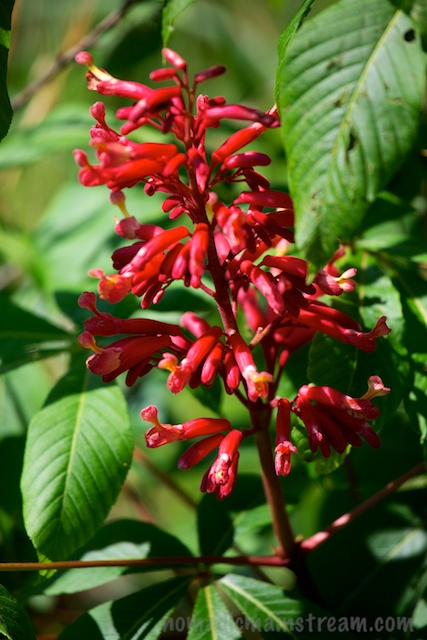
What kind of buckeye is that?

What kind of buckeye is that?

The next interesting non-bird we saw was, in fact, a member of the plant kingdom.  It was of particular interest to me because my Tennessean friends called it a Buckeye tree.  As a person from the buckeye state, I can tell you that I have never seen a flower on any buckeye tree that looks anything like this one.  I have read on more than one occasion that the buckeye tree is indigenous to Ohio and not found anywhere else.  I had doubted the truth of that, but now am wondering if perhaps what people call a buckeye down in Tennessee is not really the same tree at all.  Whatever it is, it’s quite beautiful.

An immature red-tailed hawk sends us on our way

An immature red-tailed hawk sends us on our way

We made our way out of the wetland a bit tired after such an early morning start.  We found many birds in the 3 hours we spent wandering about.  As we stood listening to a Cerulean Warbler just before calling it a day, we were surprised by the appearance of a Red-tailed Hawk, soaring happily overhead.  I managed to get this image of the immature hawk flying over head.
Private Moments and a Merlin

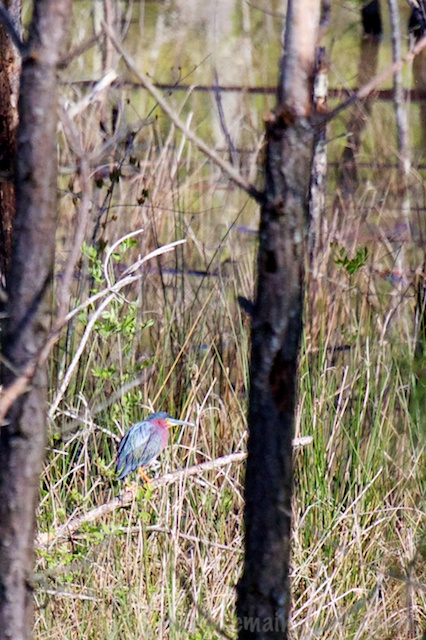
My first Green Heron of the season--usually, I see them daily at the park, but not during the birdathon

My first Green Heron of the season–usually, I see them daily at the park, but not during the birdathon

Continuing our excursion through the VW wetland, we made our way around to the far side of the wetland from our entry point.  This side was on the VW plant side.  They were doing a lot of construction between the wetland and the plant, but they had installed a protective barrier between the construction zone and the wetland to keep runoff from the construction from upsetting the balance of the ecosystem.

Because water does need to run from the construction area to the wetland, they installed a large pipe between the two that went under the barrier.  At the end of the pipe leading to the wetland, they installed what might have looked like a giant balloon waiting to be inflated and twisted into a life-sized balloon horse except that it was a dull, opaque black color.  It laid on the ground piled on itself looking lifeless and discarded.  Our guide told us it was a silt bag used to collect all the dirt and silt in the construction runoff.  When water is running through quickly, it does indeed inflate.  However, no one has yet tried to twist it into a life-sized balloon horse.
A tree full of Great Blue Heron on the far side of the wetland

A tree full of Great Blue Heron on the far side of the wetland

As we made our way around the end of the wetland, we got closer to the array of solar panels.  It was pretty darn impressive to see the field of panels growing electricity.  Our guide told us that over 20% of the power consumed by the plant comes from the solar panels outside the wetland.  This is an impressive amount of electricity when one considers how much power a manufacturing facility like that uses.  The Eastern Meadowlark definitely thought it was worth singing about–he perched on the edge of the panels and sung his heart out for us.

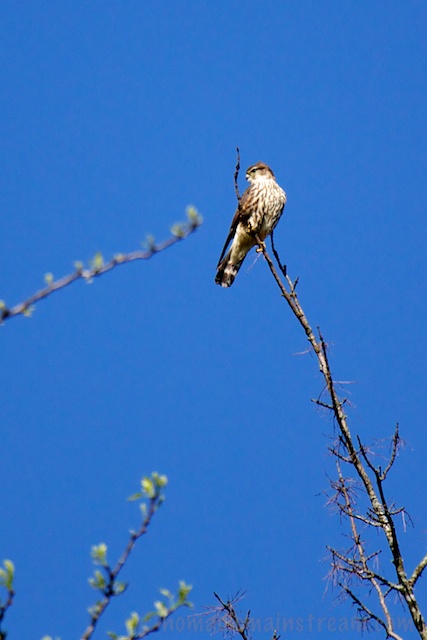
Spotting the Merlin at the end of a very thin-looking tree branch

Spotting the Merlin at the end of a very thin-looking tree branch

This was also about the time that everyone’s last cup of coffee kicked in.  First one person disappeared into a wooded area.  Next, another one started wandering towards the woods.  When we started following her, she stopped, turned and said, “I need a private moment.”  We all laughed at ourselves for blindly following her.  Next it was my turn.

This is one of those occasions when being able to spot poison ivy makes the difference between life and painful suffering.  I am skilled at spotting poison ivy at any stage of development–young poison ivy vines before the leaves sprout, fresh purple leaves dripping with toxic oils when they first burst forth, ancient hairy vines twisted around the trunk of a tree.  Unfortunately, I know all this because I’ve gotten it so many ways over the decade I’ve been allergic to it.

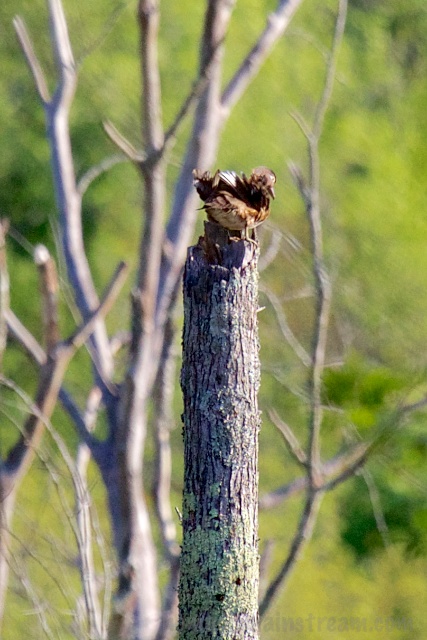
The Merlin seems to be testing the wind as he twists about, thinking about flying

The Merlin seems to be testing the wind as he twists about, thinking about flying

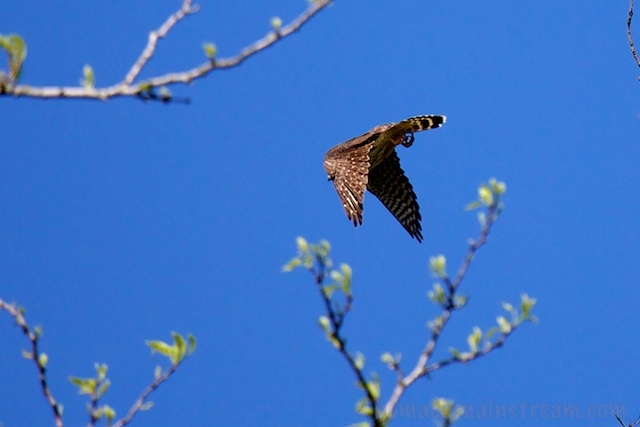
After I rejoined the group, I discovered they were all looking at a Merlin.  It graciously  remained in full view, perched long enough for me to get quite a few shots, although being about 100 yards closer would have yielded some really amazing images.  This was a life-list bird for me–I’ve never seen one before.  What a great day.

Off goes the Merlin

Off goes the Merlin

How Much Wood Would a Wood Duck Chuck?

This guy knows how to impress the ladies

This guy knows how to impress the ladies

Bright and early Saturday morning, I joined my fellow birders in a walk around the VW wetland.  After we saw many heron perched on their nests in a giant heron rookery and a collection of Canada Geese roosting on top of a beaver hut, we made our way back through the brambles to a trail that allowed us to circle the wetland.

This took a little bush-whacking.  Well, whacking may be an exaggeration.  It was more like taking 3 steps forward and then freezing in place when caught in the brambles and peeling the brambles off carefully, trying not to rip skin in the process.  Then, three more steps forward.  Fortunately, once we made it to the trail cut by the surveyors, we were able to make good progress.

She may look indifferent, but I think she's just being coy

She may look indifferent, but I think she’s just being coy

Everyone develops their own methodology for getting through brambles.  I think there are 3 main approaches to bramble thrashing, which one you choose is generally dependent on what you are wearing.

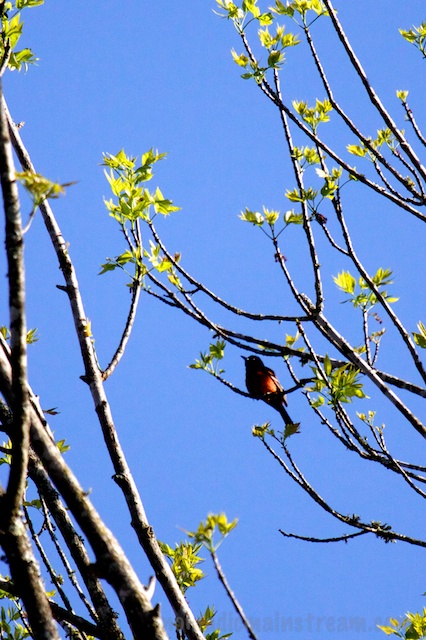
Still not optimally lit, this male Orchard Oriole impressed us with his song

Still not optimally lit, this male Orchard Oriole impressed us with his song

The three main approaches to brambles were:  1) accelerate through them as fast as possible and stop for nothing (approach taken by people who had on several layers and/or thick skin and who don’t care much for their top layer), 2)  Accelerate until you get stuck and then stop (approach taken by people with several layers but who do care about not ruining their top layer), and 3) Pick you way through slowly and carefully (approach taken by people with not enough layers to protect their skin).  I tended to fall into the 2nd category while our guide fell into the first. We didn’t have many people in the third category except when bare hands got tangled in thorns.

If this guy had moved just  a bit more, you would be able to tell he's a beautiful Orchard Oriole

If this guy had moved just a bit more, you would be able to tell he’s a beautiful Orchard Oriole

Thankfully, we all made it to the cleared trail with a minimal number of scratches.  We worked our way around slowly, passing the top of a major beaver dam in the process.  The work of the beavers was quite impressive–a testament to the expression “busy beaver.”  They had built a dam that must have been a good 50 feet wide or more.  It enclosed one end of the wetland, creating a waterfall given the amount of rain we’d been having.  On the other side of the dam, the wetland continued.   We was a second dam that had been broken apart.  Apparently the humans have to break the second dam every couple of days to keep the water from getting too backed up in the wetland.  The beavers are busy indeed.

As we came around the bend of the wetland, we spotted a male wood duck siting on top of a snag in the middle of a bright sunbeam.  As we all admired him, one of our group was looking at a different wood duck on tip of a different snag–it was the mate.  The male showed off for her, obviously trying to get her attention.  She ruffled her feathers and acted indifferent, but I suspect they lived happily every after.

I'm pretty sure this is the wood duck equivalent of "shaking your booty"

I’m pretty sure this is the wood duck equivalent of “shaking your booty”

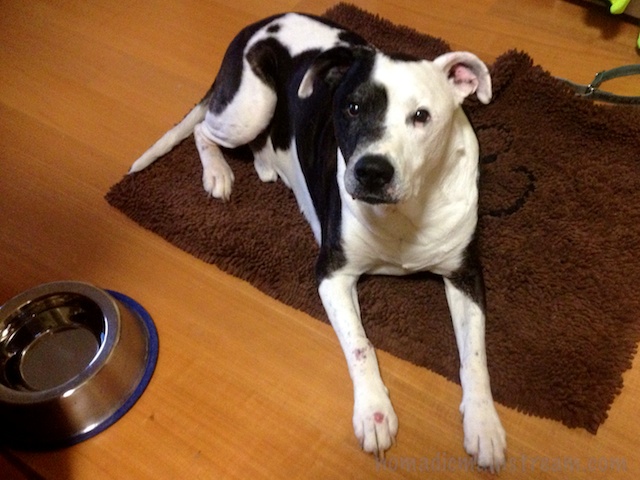
Tisen looking for food (I think)

Tisen looking for food (I think)


Volkswagen Feuchtgebiet

One lone heron in silhouette on its nest

One lone heron in silhouette on its nest

5:15AM seems to be a time I can’t quite get away from.  When my alarm went off Saturday morning, I was not enthusiastic about getting out of bed.  But, I reminded myself I was going to get to see the wetland at the VW plant here in Chattanooga in exchange for getting up at this ungodly hour on a Saturday and rolled out of bed.

The drive to the VW plant was about a 25 minute drive with no traffic.  I was surprised that many of the transplants from Germany live in my building–seems like a long way to go twice a day.  But, then, I guess driving around the block seems like a long way to go to me.

Due to a road closing, we had to meet at a back entrance and then share rides with those who had trucks to get into the wetland.  We were hosted by the VW environmentalist.  She exuded pride in how environmentally friendly VW is, but the healthy wetland, bordered by a field of solar panels, spoke more loudly than she did.

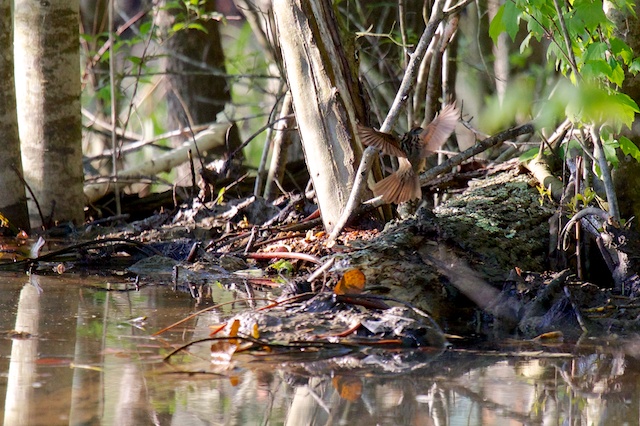
A Swamp Sparrow flitting by the edge of the wetland

A Swamp Sparrow flitting by the edge of the wetland

At my Friday morning yoga class, I’d mentioned to one of my fellow students that I was going to the VW wetland the next morning.  He told me that his mother had worked at the same site when it was a TNT plant some 40ish years ago.  He told me that when she went to work, she had to take her pantyhose off and pack them tightly into a plastic bag or the hose would literally dissolve from the toxicity in the air.  I cannot imagine going into a place every day to work where nylon is dissolved in the air.

This is like a "Where's Waldo," but I swear there's a Yellow-breasted Chat in there

This is like a “Where’s Waldo,” but I swear there’s a Yellow-breasted Chat in there

This makes an amazing contrast to the site today.  I don’t know what cleanup efforts took place between the days when gun powder was made here and today, but I do know that wetlands act as kidneys.  They help strain out the toxins in an area and prevent them from getting into the larger water system and polluting streams, rivers, and even oceans.  The loss of wetland has been a major contributor to the loss of aquatic life and clean water.

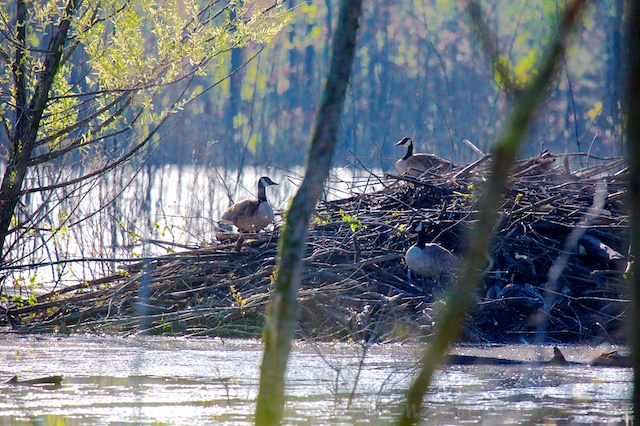
Beavers created the wetland dams--but we only found Canada Geese

Beavers created the wetland dams–but we only found Canada Geese

Fortunately, VW treasures their wetland and makes a great deal of effort to maintain and protect it.  It’s green and pulsing with life.  The Great Blue Heron have discovered this area and built a rookery here.  I remember the first time I saw a rookery a few years back.  It was the most amazing discovery to me that these giant, awkward birds that look like they couldn’t perch on a 2” wide beam build stick nests in the tops of trees.

That they do so in groups where there may be dozens of nests all in the same group of trees makes their nesting habits even more interesting.  A normally solitary bird that joins to form a village each spring when it’s time to nest, looking like a miniature village of Pterodactyls–it’s fascinating.

A small portion of the heron rookery over the VW Wetland

A small portion of the heron rookery over the VW Wetland–notice the chicks in the nest to the left

New Flash

Tisen looks nicely lit for this quick-and-dirty shot with the flash on camera

Tisen looks nicely lit for this quick-and-dirty shot with the flash on camera


I recall working pretty darn had to get a decent exposure with my manual flash

I recall working pretty darn had to get a decent exposure with my manual flash


I’ve been doing well on holding steady with the photography equipment I have.  I had the small splurge on small accessories for my iPhone along with a few dollars worth of apps for my iPhone, but otherwise, I haven’t bought anything for quite a while.

Then, I got frustrated with my inexpensive manual flash unit when I last pulled it out.  First, it doesn’t have an auto-focus assist function for low-light focusing.  Second, I have to take about 3 shots to figure out the right power settings on the flash (or buy a light meter).  Third, it won’t do high-speed sync (meaning I end up with black bars on my photos if I have too fast a shutter speed and my only option is to choose a slower shutter speed even when that’s not what I want.  Finally, I can’t do rear-curtain sync.  This is a feature you don’t think about until you try to shoot motion in dim lighting.

So, having these irritations right about tax return time combined with the realization that the price of the Speedlite I’ve been lusting after has dropped significantly since I last fantasized about owning it led to one of those late-night purchases that made me feel a little queasy when I woke up in the morning and realized what I’d done.

I put the card up to create catchlights in the eyes--another feature I was missing--but Tisen refused to look at me and even closed one eye

I put the card up to create catchlights in the eyes–another feature I was missing–but Tisen refused to look at me and even closed one eye

While it’s not the most expensive piece of equipment I’ve ever purchased, I tend to think of things as being “expensive” or “inexpensive” based on how much use I get out of them.  My tripod had a higher price tag, for example, but I use it all the time and it will last the rest of my life.  I feel the same way about my lenses.  While camera bodies are expensive and quickly out-dated, they last years and the camera body is the one piece of equipment I use for every shot I take.  A flash, on the other hand, is an occasional add-on accessory for me, not something I need 80% of the time.

In any case, I decided I should start learning how to use the thing immediately in order to increase the odds that I will be happy with having purchased it.  I tried to get Tisen to help me work on using rear-curtain sync, but he was resistant and seemed to think I was mad at him because I kept coaxing him onto one side of the room, making him sit, and then, when he started walking, pointing a big, black machine at him that kept flashing.  When he started cowering when I called him, I decided I needed to enlist Pat’s help.

Not quite what I was going for--was working on a trail leading up to a solid Tisen but me-thinks I have some learning to do

Not quite what I was going for–was working on a trail leading up to a solid Tisen but me-thinks I have some learning to do

Pat was not more cooperative and I didn’t have any better luck getting the image I was looking for.  But, I was pleased with how nicely the automatic abilities of the flash unit to choose the exposure worked.  I got far better exposures with ¼ of the effort.  That’s encouraging.


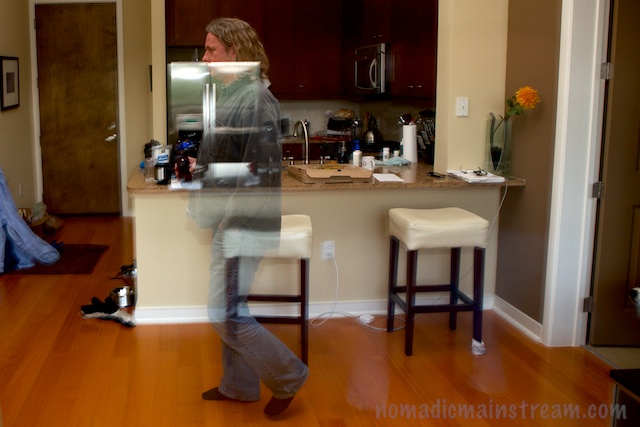
Pat got a little more solid, but he's still see-through

Pat got a little more solid, but he’s still see-through

In Memory of Tiger

A comforting friend during a stressful time

A comforting friend during a stressful time (Tisen at the vet with Tiger)

The Tyger

-William Blake


Tyger! Tyger! burning bright

In the forests of the night,

What immortal hand or eye

Could frame thy fearful symmetry?

In what distant deeps or skies
Burnt the fire of thine eyes?
On what wings dare he aspire?
What the hand dare seize the fire?

And what shoulder, & what art.
Could twist the sinews of thy heart?
And when thy heart began to beat,
What dread hand? & what dread feet?

What the hammer? what the chain?
In what furnace was thy brain?
What the anvil? what dread grasp
Dare its deadly terrors clasp?

When the stars threw down their spears,
And watered heaven with their tears,
Did he smile his work to see?
Did he who made the Lamb make thee?

Tyger! Tyger! burning bright
In the forests of the night,
What immortal hand or eye
Dare frame thy fearful symmetry?

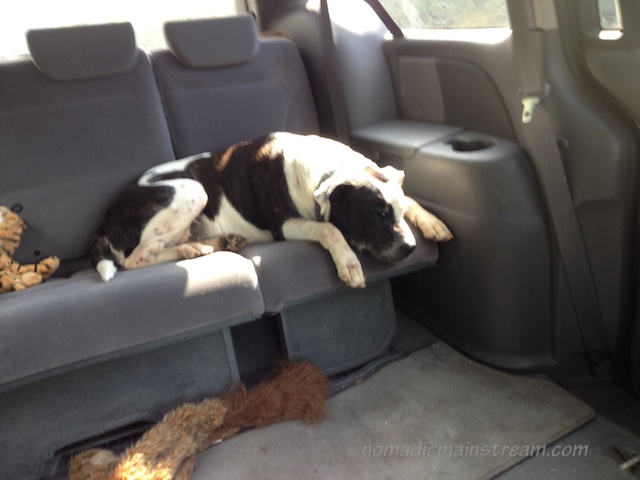
Tiger can be partially seen at the far left

Tiger can be partially seen at the far left

With great sadness, I write of the loss of Tiger.  Tiger was one of our small, furry family members.  Tiger was a good friend to Tisen.  He patiently allowed Tisen to carry him around like a doll–never complaining or even struggling.

Sadly, Tiger disappeared about 3 days ago.  He’d accompanied Tisen on a walk, hanging from Tisen’s mouth when last seen.  He then disappeared somewhere in the park.  Several searches failed to find Tiger; we’ve decided it’s time to acknowledge Tiger is gone for good.

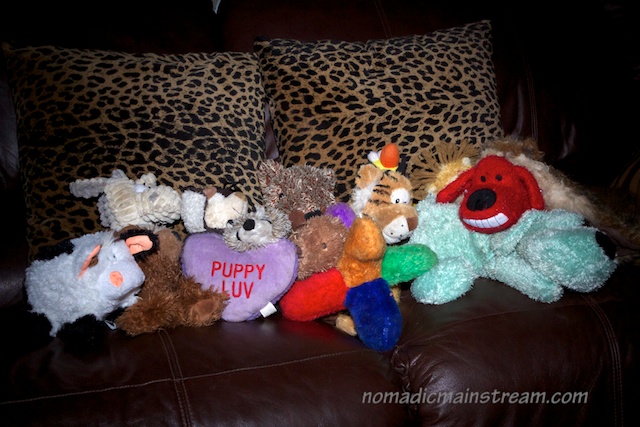
Our Tiger didn’t have such a fearful symmetry–his long and floppy legs wouldn’t hold his weight, let alone allow him to spring unexpectedly upon prey.  He didn’t strike fear in anyone’s heart.  I suppose the silly expression undermined ferocity.

Tiger looks like he's wearing a hat, but it's really Duck behind him

Tiger looks like he’s wearing a hat, but it’s really Duck behind him

Around here, Tiger wasn’t valued for his fierceness–he was valued for his squeak.  He was a Tisen favorite.  Unfortunately, Tisen got hot while carrying Tiger and set him down so he could pant.  Mommy wasn’t paying attention and we’d made a lap around the park before it dawned on Mommy that someone was missing.

My favorite Tiger story is from about 6 months ago.  I was walking through the park and Tisen had dropped Tiger on that day as well.  I’d picked up Tiger and then run into a man with his dog.  We exchanged greetings and dog information and then he went on his way.

In a recent family portrait, Tisen seemed to seek Tiger out

In a recent family portrait, Tisen seemed to seek Tiger out

A few minutes later, Tisen decided he wanted to carry Tiger again.  We walked along at a quick pace with Tisen proudly holding Tiger in his mouth.  We caught up to the man and his dog in the process.  When the man saw Tisen with Tiger, he burst out laughing and said, “Oh!  That’s his tiger!  I was wondering!”  Proof that when I suspected people thought I suffered from a disorder that caused me to compulsively carry stuffed animals, I wasn’t being paranoid.

I will miss having people wonder why I am carrying a stuffed Tiger with me through the park.  Tisen, however, seems to have moved on–he happily grabbed Hedge Hog when Tiger was no where to be found.

The first time Twiggy came to visit, she put Tiger in her pile

The first time Twiggy came to visit, she put Tiger in her pile

Mini Macro

This flower was about 1/2" across in person

This flower was about 1/2″ across in person–iPhone with macro lens attached

This morning, when my alarm went off at 5:15, I decided I didn’t want to get back into my full-blown exercise routine too quickly.  After all, biking and rowing 3x in a week after several months off is a pretty strong start.  I re-set the alarm for 7:00AM instead of going for my bike ride.

About as tight as I could get with my 100-400mm lens on my DSLR

About as tight as I could get with my 100-400mm lens on my DSLR

When my alarm went off the second time, I was sound asleep and dreaming–it was as if 5 minutes had passed from the first alarm.  I felt like I could have slept another 7 hours easily.  But, this time I dragged myself out of bed.

The same flower as above shot with the iPhone with the macro lens attached

The same flower as above shot with the iPhone with the macro lens attached

Since I need to try to bump up my bird count for the Birdathon and there was a storm yesterday, I took my binoculars and camera on Tisen’s walk.  Bird migration often follows cold fronts moving in and sometimes birds literally blow into an area during high winds.  However, when I got downstairs, I realized the temperature hadn’t actually dropped any.  I prepared myself for disappointment.

Water droplets covered these tall grasses

Water droplets covered these tall grasses

Not a single bird I hadn’t been seeing for weeks presented itself.  Tisen was disappointed, too.  He wanted to turn around and go back inside immediately.  Seems like he’s been nervous ever since the storm moved through last night, bringing lightening and thunder.  It’s almost as if he thinks there is a causal effect between walking in the park and thunderstorms.

I couldn't get far enough away from this violet to frame it properly with the macro attachment on the iPhone

I couldn’t get far enough away from this violet to frame it properly with the macro attachment on the iPhone

As a result of the lack of birds, I decided to photograph the amazing beads of water on some grass.  The problem with this decision was that I had my 100-400mm lens on my camera.  The 100-400mm lens is not the lens I would choose for shooting subjects like water droplets.  For starters, it has a minimum focusing distance of about 5 feet.  That means I can’t shoot from closer than 5 feet away.

More water-covered grass

More water-covered grass

It’s kind of tough to get interesting shots of water beads from 5 feet away, even at 400mm.  The second problem is that shooting at 400mm while hand-holding requires a really fast shutter speed.  Especially since there was still quite a bit of wind.  I managed to get a very fast shutter speed by setting a slightly higher ISO and opening the aperture all the way (the max is f/5.6 at 400mm).  While I wouldn’t hang these on the wall, I do like that you can see the coating of water droplets on the blades of grass.

Brightly lit yellow flower shot with iPhone and macro attachment

Brightly lit yellow flower shot with iPhone and macro attachment

This evening, I decided to try out my macro lens attachment on my iPhone to see how it compared.  Interestingly, auto focus doesn’t work.  In case you were wondering how you manually focus an iPhone, you moved the phone further and closer until you find the point where the image is sharp.  This is much easier to achieve when Tisen isn’t pulling on the leash, determined to get back home.  But, with a tripod, the iPhone might have done better than the 100-400mm lens did in some cases.

Tisen seems very happy to be at home

Tisen seems very happy to be at home

Web, Wings, and Walks

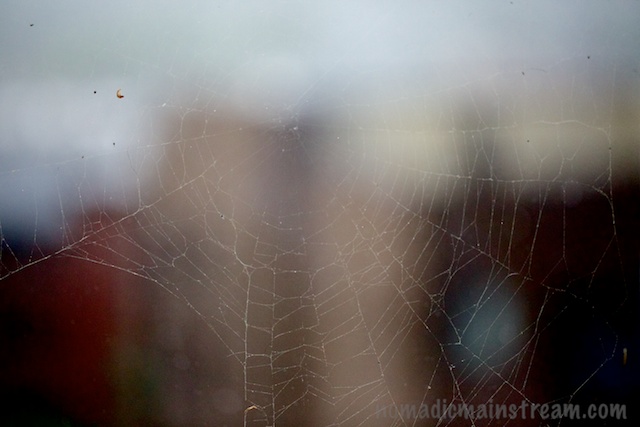
Spider web with buildings blurred in the background

Spider web with buildings blurred in the background

I am not obsessed–no matter what my husband claims–with birding.  I have only listened to my bird song recordings a few times this season.  I have only ordered one new birding-related product (a new version of birding software that let’s you quiz yourself on recognizing birds by sight and/or sound).  I have gone on no long-distance trips for the purpose of birding.

spider lace

spider lace

I even walk outdoors without binoculars.  This is a bit foolish–especially during the birdathon when every bird counts.  I keep seeing birds I can’t identify without binoculars when I don’t have them on me.  But, I often forget to grab the binocs when Tisen is in a particularly big hurry to get outside.  Somehow it seems wrong to ask him to cross his legs any longer than necessary while I get myself organized.

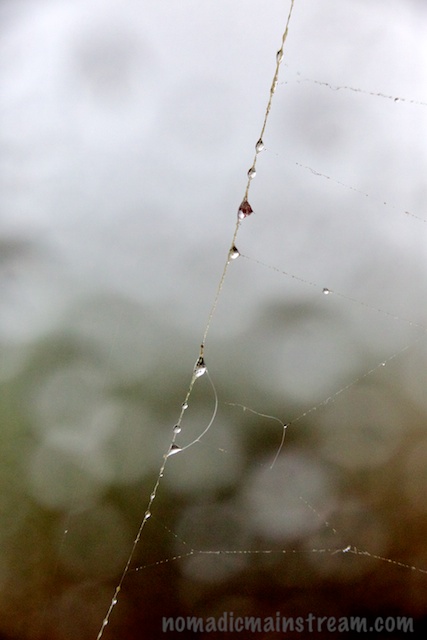
Drops reflecting the buildings outside

Drops reflecting the buildings outside

Today I was determined to make an evening bird walk at a marsh.  I haven’t been to this marsh before and I figured there was a good chance I’d pick up a few additional species before the Birdathon ends.

Single strand of water droplets

Single strand of water droplets

I took Tisen for a walk before I had to leave.  We made it about ¼ of the way through the park when the first clap of thunder sounded.  It wasn’t even a clap; it was more of a rumble.  It was enough for Tisen–he did an about-face and started pulling on the leash to head back in.  Because we lost Tiger during our lunchtime walk, I wanted to continue the walk and look for him.  But Tisen wasn’t missing Tiger so much.  I got him to turn around and take about 3 more steps, but when the next rumble of thunder came along, he was done.  We ended up jogging back up the path from whence we came.

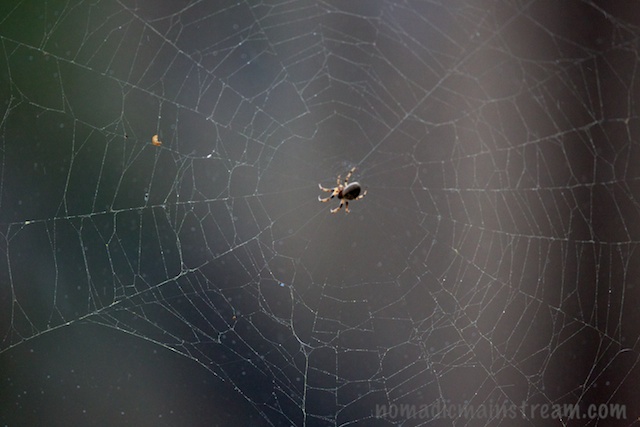
This spider literally ran into the center of the shot as I was shooting and then ran out again

This spider literally ran into the center of the shot as I was shooting and then ran out again

As the sky opened up, lightening bolts struck left and right, and even hail started to bounce of the windowsills, I noticed a large spider web in the window was catching raindrops.  I decided to experiment with shooting it for the few minutes I had before I needed to leave.  While I had a little trouble because of the background, I got a few images I like.

The Standifer Gap Marsh

The Standifer Gap Marsh

By the time I needed to leave, the rain and lightening had moved on.  I headed down to the garage and headed out to the other side of town for the walk.  Traffic was backed up and visibility was nil.  I arrived at the marsh late and then wasn’t sure where the entrance was.  No one else was there.  Not a big surprise considering on this side of town it was still raining and lightening every few seconds.

IMG_2069

I got out of the car and walked about 50 yards from the car and back–just long enough to add 2 birds to my birdathon list and take a few photos with the Camera! app–my iPhone safely protected in a waterproof case while my DSLR remained sheltered in the car.

More marsh

More marsh


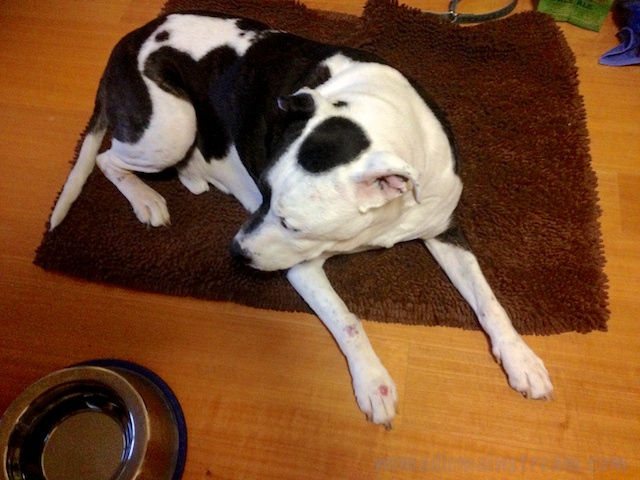
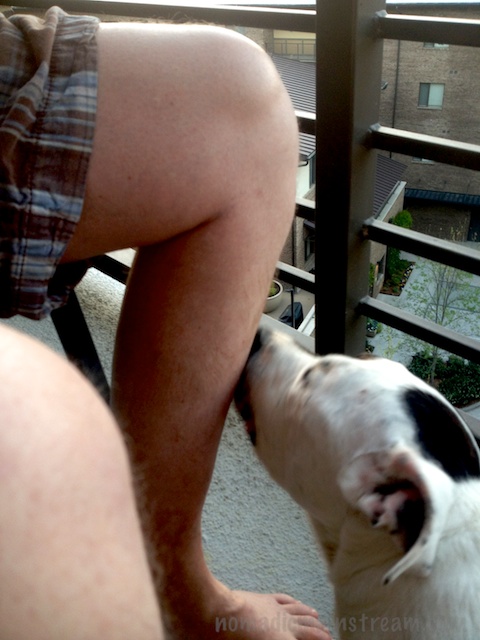
Tisen gives Daddy a bath

Tisen gives Daddy a bath


Riding at Sunrise

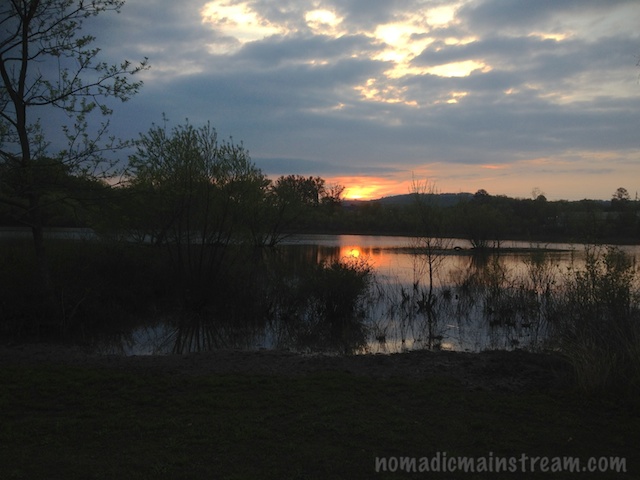
Sunrise reflected on Amnicola Marsh

Sunrise reflected on Amnicola Marsh

5:15AM didn’t seem any later this morning than it did yesterday.  Especially not after a bad night’s sleep–poor Tisen started itching again in the middle of the night.  But, I managed once again to get myself out of bed.  Then things went a bit South.

A sculpture lurking in the dim morning light

A sculpture lurking in the dim morning light

It’s like a time warp occurs in the morning.  I can look at the clock at 5:20, do a task that normally takes 5 minutes, and suddenly, it will be 5:45.  By the time I’d had a cup of coffee, gotten myself together, taken Tisen for a short walk, and gathered together all of the required accessories for an early morning bike ride, it was 6:40.  Then, still adjusting to having my bike in the parking garage and having to take all steal-able accessories off every time I ride, it took nearly 20 more minutes from the time I walked out our door to the time I’d finished re-accessorized my bike, unlocked it, and filled the tires.

The train crossing in morning light

The train crossing in morning light

At long last, I headed up the River Walk.  By the time I started riding, I felt foolish for bothering with the lights–it was light enough I no longer needed them.  As I made my way back across the Walnut Street Bridge and East along the Tennessee River, two Great Blue Herons flew straight at each other as if they were playing a game of chicken (I wonder if they call it “heron”?) until one suddenly swooped downward in a graceful dive, leveling out just above the water.

A Great Blue Heron perched on the rail of the pier below the bridge

A Great Blue Heron perched on the rail of the pier below the bridge


As I watched, my mouth dropped open just about the time I rode through a cloud of small gnat-like critters.  I guess I was hungry, but it wasn’t quite the filling snack I had in mind.  I have to say I preferred the mouth full of gnats over the eyeful of gnats I got simultaneously.  I rinsed my mouth with water, shut it tight, and wiped as many bugs out of my eyes as possible.

The final stretch of the River Walk

The final stretch of the River Walk

I rode as hard and as fast as I dared on the river walk–it’s not really a route conducive to riding fast, in fact, one section is posted 3-5 miles per hour.  I can’t imagine it’s physically possible to ride a bike 5 mph or less, but clearly the people who built the river walk weren’t cyclists.

Can you spot the Great Blue Heron on the rocky shore?

Can you spot the Great Blue Heron on the rocky shore?

When I came up on the Amnicola Marsh, I had to stop.  The sun was rising behind the marsh, reflected in the water.  3 Canada Geese were rendered into black swans, silhouettes against the brilliant light.  Near the shore, a group of Coots stretched out their gangly legs and ran back into the water as I rolled to a stop.

After taking a few photos, I remounted and made my way up to the dam.  A fisherman on the pier caught something big on his line as I was turning around to return home.  I wonder if it was an old tire or a giant fish?

My boy waiting patiently at home for breakfast

My boy waiting patiently at home for breakfast

Ready Rower

Waiting for me

Waiting for me

5:15AM seemed a little extra early this morning when the twittering of my iPhone interrupted my dream.  I awoke confused, unsure of whether it was really time to get up, having just fallen into a dream state a few minutes before the alarm went off.

I got up, turned off my annoying phone and then looked back over my shoulder at the warm bed I had just left behind.  My dog remained curled on his bed on the floor, snoring softly through slightly curled lips.  My husband seemed oblivious to the alarm, his own snores harmonizing with my dog’s–my husband forever the musician.

The rowing center bay glows like a fireplace

The rowing center bay glows like a fireplace

I slipped back under the covers for just a few minutes.  I thought about rolling over and falling back into whatever dream I had been pulled from.  But then, I remembered why I’d set the alarm for 5:15AM.  It was because I was going to row for the first time since last fall!

The thought of entering the river all by myself in the dark after not having rowed for months set off a new alarm, awakening the rabble of butterflies in my stomach.  With so much fluttering going on, there was no possibility of going back to sleep.  I decided coffee was in order.

I managed to get myself caffeinated, dressed, and assembled enough to take Tisen (who had managed to get out of bed) for a quick walk around the park.  Then, I was off.

A pedestrian bridge on the river walk reflected on the water

A pedestrian bridge on the river walk reflected on the water

I stuffed my rowing equipment into my saddle bags and rolled my bike out of the garage.  I carried it up the flight of steps to ground level, mounted, and rolled off into the dark feeling somewhat stoic, like I was about to face an enemy.

The quick 2 mile ride to the rowing center warmed up my legs and helped me relax.  The rabble in my belly died as I pumped my way up the slope of the Walnut Street Bridge looking over the stillness of the river below.  I reminded myself that it wasn’t that cold.  The worst thing that could happen is I could get wet.  I would make it back home slightly chilled, but no worse for wear.

Looking across the rests used for sculling boats to McClellan Island

Looking across the rests used for sculling boats to McClellan Island

I was the first rower of the morning.  I turned on the lights and tried to find my favorite boat to no avail.  I found another one and quickly learned I’d forgotten the art of carrying a rowing scull, but I managed to get it out safely.

I did everything out of order, but once I was seated in the scull and rowing, it was like I hadn’t missed a week.  The rhythm of legs pushing while arms pull oars through water, bending arms, straightening arms, sliding slowing back up to the catch, listening to the oars in the oarlocks and watching the Great Blue Heron soar a foot above the water all to a slow count of 4–it’s hard to imagine a better way to start a day.

One thing I forgot after a 5-month hiatus--what these things are called

One thing I forgot after a 5-month hiatus–what these things are called