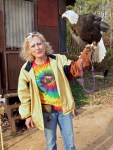
Going to the Birds

After spending the morning hang gliding, we change into dry clothes and head off to spend our afternoon with some of the best pilots ever born. They are a group of slightly crazy and/or disabled raptors. Raptors as in the family of birds that includes hawks, owls, eagles, and vultures–in other words, birds of prey.

I have been looking forward to this for weeks. We originally saw a poster for a Raptor Experience at the hang gliding office a month ago. The Raptor Experience is offered by a non-profit organization called SOAR (Save Our American Raptors). They care for non-releasable raptors and train them so they can be used for educational programs to teach people about birds of prey. They also have a Peregrine Falcon release project and are tracking a falcon who is currently vacationing in South America.

As a bird lover and one who is particularly fascinated by birds of prey, I am excited about this beyond belief. I’m hoping we will get to actually handle the birds, but in my excitement, I can’t remember if the person I talked to said we do or not. Even more exciting, I’ve been wanting to volunteer for a raptor rescue program for years, and now this looks like it might be an opportunity.

We arrive at the designated meeting spot a little early. My nerves kick in about meeting people a bit, but since we just talked with Dale, the wife of the husband and wife team who run the organization, I’m not too nervous. John, the other half of the team, arrives only a couple minutes after we do. He’s driving a jeep with a hang glider on the roof, so it’s not too hard to guess it’s him. Dale told me on the phone that she and John are both hang gliding pilots and I enjoyed watching a video of John taking a one-winged bald eagle hang gliding on their web site.

John offers to drive us up to their property where the birds live, explaining that the road is pretty rough. Pat, being a man, decides that he can drive the mini-van up it and save John the trip back down later. As we make our way down the dirt road with large holes, ridges, dips, and rocks, the car drags enough time to make me wish we’d just ridden with John. We make it without losing any parts of the van, although Pat comments that it’s a good thing that I’d already knocked off the front lip spoiler (whatever that is) dragging the front bumper over a parking block.

When we arrive, Dale comes out to greets us, although one of their rescued dogs beats her to the punch, and invites us into the house where she offers us freshly baked, homemade cookies and gives us a run down of what we’re going to experience and why these birds are here. We learn that, yes, we will get to handle the birds. (Yay!) We also learn that none of the birds here at SOAR are able to return to the wild either because of injuries or mental problems. Interestingly, “mental problems” are defined mostly as birds who were raised by humans and, because they imprinted on the humans, don’t know how to do what they were born to do.

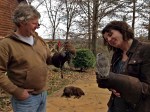
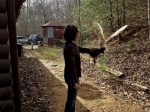
After the orientation, we head outside and are equipped with leather gloves. We are going to start with Eastern Screech Owls. Small, docile, and probably sleepy, they sit quietly on our gloves and even enjoy being petted on the back of the head. John tells us that owls understand touch as affection, but other birds we will handle do not and warns us not to attempt to pet the hawks.

I am so amazed by these tiny little owls. They weigh nothing. John points out that we can see the ruffled edges of their feathers, the secret to the silent flight of owls. And, even more amazing, John shows us their ears. They actually have little human-like ears under those feathers! The ears are offset, apparently to help locate where sounds are coming from in the dark.

I could have been happy just sitting there with these little owls all day, but Dale puts them away so John can bring us a Barred Owl–since Barred Owls will eat Screech Owls, everyone is happier when they’re not together.

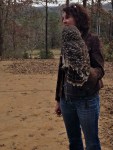
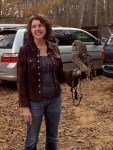
We used to live in a wooded ravine where Barred Owls also lived. They are enormous. Or, at least they look enormous. In contrast to their size, hollow bones and feathers make birds weigh far less than other types of animals of the same volume. I’ve read this before, but having never held a bird, the reality of the gap between how much this bird looks like it should weigh and how much it actually weighs surprises me when Dale puts this great big owl on my glove. This owl weighs less than 2 pounds.

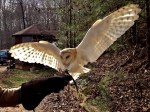
Next, John returns with a Barn Owl. We don’t get to hold this owl who is about halfway between the size of the Screech and Barred Owls. At least not right way. He doesn’t like to sit on the glove–he wants to fly. And that is exactly what he gets to do.

John stands at one spot behind the house and we go to the other. Dale accompanies us with a pouch full of small mouse parts. I ask her who gets to chop mice–she makes a face when she admits it’s her. Clearly, it’s not her favorite part of the job.

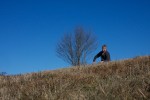
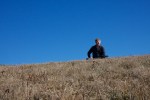
I hold out my gloved arm and Dale places a small piece of mouse on my fist. John releases the owl and he flies to me, swooping low to the ground and then flaring upward so that he lands feet forward on the glove. Having just come from hang gliding, we are fascinated watching how the owl instinctively uses ground effect (the rising air close to the ground) to get lift in time to flare, which is what Pat is now learning to do, so he can land on his feet.

It’s an amazing experience to stand there waiting for a bird of prey land on your fist. As he glides towards me, the owl’s tiny body is dwarfed by his enormous wingspan. The sunlight shines through the feathers on his wings, making him look as angelic as a bird of prey can. I wonder if he minds performing in the early afternoon when he should be sleeping. He looks pretty darn happy when he picks up a mouse chunk and swallows it down.

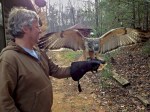
Next, we get to fly Cody, a Red-tail Hawk who refuses to hunt. Cody glides even closer to the ground, skimming just inches above the surface, and then swoops up in a sharp arc just before reaching me. I notice he flares with his feathers as well as his wings. Every feather spreads, his tail dramatically opening like a fan. Just as with the owl, this flare brings him nearly to a halt so that when he lands on my arm, there is no impact. It’s like he parachuted down gently.

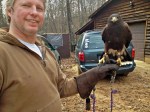
After flying Cody, we get to meet Franklin, an American Kestrel, and a Harris’s Hawk whose name escapes me. I’ve never seen a Harris’s Hawk before. He is beautiful–rich browns blend into black, which contrasts with the white in his tail.

Next, we get to meet Casey, the Black Vulture. Casey seems to think she is a dog. She circles around Dale, who tickles Casey on the back and Casey responds with what appears to be a happy Vulture sound, but comes out a lot like a hiss. Casey gallops along on the ground, preferring to walk even though she is perfectly capable of flying. Dale tells us that she sometimes walks Casey in the woods–she really does think she’s a dog!

We attempt to fly Casey, but Casey is in the mood to run instead. She flies up to our gloves to collect treats, but then hops back to the ground to run the distance between us instead of flying. Cameraless today, I switch my iPhone into video mode and try to capture her running on video–there is just something too funny about watching a vulture run.

I appreciate the work that vultures do, having once had a pond where hundreds of fish died all at once, it was an amazing thing to have a few dozen vultures show up and clean up the mess in about 3 days. However, I never thought the words “cute” and “vulture” went together. Today, I change my mind. Casey is adorable. Dale tells us that Casey is used to being the star of the show; I am not surprised.

We finish off our Raptor Experience with a Bald Eagle. I can’t recall this eagle’s name, but it is a Navajo word that means, “The Littlest Eagle.” It’s a good name. This poor guy lost a wing due to a shooting. I’m not sure if the missing wing contributes to how small he looks, but he definitely is small for an eagle. I am sad to learn this eagle has not been hang gliding yet because it means that there are two one-winged eagles living out their lives in captivity.

It’s an appropriate finale to the day, though. After all, it’s hard to beat a Bald Eagle for majesty. We go inside to wash our hands and talk for a while before wrapping up and heading home. Dale talks us into one of her cookies before we go–a peanut butter blossom with a soft hershey’s kiss in the middle, yum! We get in the car and I feel like I should pinch myself–it’s hard for me to believe that I just spent the afternoon playing with raptors. Instead, as Pat creeps back over the bumpy dirt road, I look at the pictures Dale took for us on my iPhone and smile.

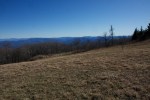
These Boots Were Made for Walking

Today, we return to the hang gliding training hills.  I am part nervous and part excited.  I love the 7 seconds of flying when I launch properly, but I hate the race down the hill when I don’t.  I’ve been getting better at launching, but not consistently enough that I feel confident I will get airborne every time.

When we arrive at 7:30AM, it’s frosty out.  The water puddles shine with a thin layer of ice.  And there are plenty of puddles–there have been many rainy days of late.  We assemble the gliders as quickly as we can, pausing periodically to warm our hands when they get so cold they refuse to work.  I am wearing my hiking boots with warm socks, but my feet have solidified inside my boots before I’ve finished assembling my glider.  I jump up and down to get the blood flowing back into my toes before finishing up and loading the glider on the trailer.

As I stand on the trailer holding the nose of the glider, my feet slide across the wet metal platform I’m standing on.  I realize that it, too, is covered in a thin layer of ice.  I have to switch hands on the metal bar my glider is hitched to–my hand goes numb in a matter of seconds even with my gloves on.  It’s hard to believe we’re South of home–or that it will probably be over 60 degrees today.

The trailer bounces along the rough ground as we make our way to the small hill.  We break through the ice on many puddles along the way.  As we climb up the side of the hill, we leave a trail of mud in our wake.  I’m happy to see the mud only because it means a softer landing than ground that’s frozen solid.

As I get set for my first flight, I line up with a target that will take me to the right of two large puddles; the ice on their surfaces is just starting to crack in the rising sun.  I tell myself not to worry about those puddles and to just stay focused on my target.

I am relieved that I launch successfully.  I launch, I fly straight, and I land on the wheels.  It all goes quite smoothly.  I seem to have learned how to keep my eyes on the target and how to let go when I launch.  These are two key steps forward and I’m pleased that I’ve retained these skills since we last flew, which has now been three weeks.

I take my second turn.  As I launch, I get a bit of a cross-wind and I need to turn to get back towards my target.  However, I move my shoulders instead of my hips, which pushes my feet the wrong direction and prevents the glider from turning.  I actually have the wherewithal to realize I’m cross-controlling and to swing my hips over and turn the glider properly just before landing.  I am ecstatic that I managed to have sufficient brain function to accomplish this.  It’s the first time I’ve realized I was cross-controlling while still in flight.

My confidence increasing, I line up for my third flight.  The wind is blowing more from the right now.  I point the nose of the glider as much to the right as possible, aiming for trees that will take me to the right of the biggest puddle.  I get set, I launch successfully, all is well, and then, I have the realization that I am now headed straight for the giant, still melting puddle below.  I panic.  My eyes lock on the damn puddle below me.  I try to tell myself to look back at my target, but now I am trying to remember how to turn at the same time.  My brain does a complete scramble and by the time I attempt to turn the glider, I am completely cross-controlling.  Then, it’s too late.
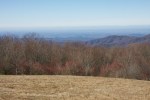
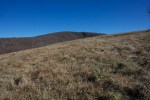
Instead of turning, I land squarely on the near-side of the puddle and roll all the way through what must be a 20 foot wide puddle with at least 4 inches of water–perhaps a small pond would be a more accurate description.

My chest is about a foot and a half above the ground and my belly and legs are dragging on the ground when I land.  As a result, all the water plowed up by the wheels forms a wave that dumps directly up my nose, into my ears, and down the top of my waterproof jacket.  My lower body drags through the water directly, shooting up a rooster tail that would rival a professional slalom water skier.  I burst out laughing about half way through the roll, which results in muddy water dumping into my mouth as well.

When my glider comes to a stop in the mud on the far side of the pond, I am laughing so hard I’m actually cackling.  I see the entire landing in my mind as if I were one of the spectators up on the hill and I can’t stop laughing.  This is a good thing because otherwise I might have noticed how cold I was.  Cheryl, our friendly Kabota driver, pulls the trailer around and I set the glider on it, climbing on the trailer and grabbing the strap.  Cheryl looks at me and asks, “Back in?”  I give her a confused look.  She tries again, “You calling it a day?”  Surprised, I tell her I’m going back up for another run.  If there’s one thing I know about trying to learn something new, unless you’ve really broken something, don’t stop on a low note.  Stop when you’re starting to get tired, but you just had a really good run.

She looks surprised and says, “Bless your heart!” as she turns to face front and starts back up the hill.  The rest of the group at the top of the hill is serious.  They all want to make sure I’m OK and not too cold.  However, once they’ve established that I’m not hurt, not horribly cold, and still laughing, the jokes start.  My husband describes watching the water and how unbelievably much water there was shooting up as my body drug through the pond.  One of my fellow students who flies with a helmet cam apparently stood there watching and then quietly said, “Oh, damn.  My camera’s not on.”  I would love to have had a video or even a photo of that landing!  I, of course, decided not to bring my camera today (the photo above is from earlier this year).

Fortunately for me, I am wearing all hiking clothes.  Everything I have on retains most of its insulating properties when wet and dries fast.  The only exception is my waterproof boots.  Funny thing about waterproof boots–they’re not so waterproof if you turn them upside down and drag them through water like you’re trying to scoop all the water out of a pond.  And, because they’re waterproof, once you fill them with water, your feet are pretty much like goldfish in a too-small bowl.  Fortunately, the temperature is going up, so I start warming up again almost immediately.

However, I start having troubles launching on my next run.  The pond is now occupying so much of my mind that I can’t keep track of what I’m doing.  It’s like I went backwards 3 months again.  The more I try not to think about that damn pond, the more I find it in my head.

On my next turn, I’m determined to do better.  I manage to launch, but then find myself flying towards the damn pond again.  This time, I push my hips over hard, determined I will turn before I hit that water another time.  However, turns out you’re not supposed to push your hips over; you’re supposed to pull.  I think I knew this at one time, but I forgot.  In any case, pushing lifts the nose and lifting the nose while turning puts the glider into a flat spin.

Fortunately for me, I’m not far enough off the ground for it to be much of a problem.  I make a hard right turn more or less straight for the ground.  It’s not the kind of flight that makes me proud, but it sure beats another dunking.

I struggle the next flight and the next as I try to pull my attention back from the pond.  Each good flight is followed by a bad one.  Finally, I decide I need to get one last good flight in and then call it a day.  I manage to get my head back to this flight and this flight only.  I launch, I fly, I turn without putting myself into a spin, and I land.  It’s a good flight and it’s just in time–I am spent and my toes feel like reconstituted prunes inside my wet boots.  All I can think about is how I need to find some shoes made for flying as I ride back towards the parking lot.

Waking Up

I get up at 5AM so I can be at the gym by 6AM and be awake. I only need 15 minutes to get ready, but I need an hour to be functional. It’s early for a workout. I get to the gym and realize I didn’t turn my phone on before I left–I wouldn’t have received any cancellation texts.  It gets to be a few minutes after 6 and I see no evidence that anyone else is here for the class I’m attending, including the trainer.

This is an anxiety producing situation for me. I don’t know why. Even if no one shows up, I’m at the gym and can get a workout in on my own. However, I get stressed when I’m supposed to be meeting people and we don’t hook up. I worry that I’m in the wrong place and we missed each other. Because, after all, if my trainer came in and didn’t see me, I just know he would assume I didn’t show and go on without me. And, even though the front door is only 20 feet from the treadmill I’m on, it’s entirely possible that the 200+ pound trainer could sneak by unnoticed and that he would never think of turning his head.  It’s ridiculous, but I do this to myself every time I meet someone until the situation becomes familiar.

The trainer arrives about 2 minutes after 6AM (depending on which clock you’re looking at). I am now stretching in the hallway outside the training room door. While I prefer to stretch in the women’s locker room, it’s too anxiety producing to be out of sight. Now that I know the trainer will arrive a couple minutes late, I will factor this into the next class and not be so anxious.

As it is, I follow him into the room and stand there feeling awkward while he tries to get his stuff situated to begin the class. My presence and readiness to start rushes him and he forgets to turn on his music, set up some equipment, put away his hat. Next time, I will wait outside until he tells me he’s ready.

As it turns out, I am the only participant today. Apparently everyone else thought 6AM was too early. I am at about 60% of full capacity with my cold. I am still tired and I’ve been laying around too much. I go a little easy today, but my shoulders and chest are still exhausted by the workout.  By the time we are done, I’m debating whether I want to walk before work or wait until after.  But realistically, if we don’t walk now, we won’t walk later.

When I get home, I write. By the time I get Pat out of bed and get myself ready, there is little time for a walk. We’ve also realized we have nothing to eat. So, we do go for a walk, but it’s just to the store and back. We pick up some cereal and milk so we can eat breakfast.

Even keeping it quick, I am racing back to get to my first call of the day by the time we’re done. I don’t know where the morning goes sometimes. I get up hours before work to have time to take care of the things I want to do. I like getting those things in at the beginning of the day. Somehow, making time for me first thing in the morning sends a message to my brain that I am a top priority–I will not sacrifice my health, my needs, myself for the sake of my job.

I have a fantasy work morning that goes like this: I sit on the balcony sipping coffee, watching the sunrise, maybe shooting a little. I finish my coffee and do yoga for a while, ending with some meditation. After feeling completely and totally relaxed, I write for an hour. Then, I go for a walk with Pat along the riverfront before starting work.

Theoretically, since I get up at least 3 hours before my work day starts, I should be able to make this fantasy reality–well, other than the sunrise during coffee. I don’t really know what happens, but my real morning often goes more like this: stumble out of bed, get the coffee going through bleary, half-shut eyes. Check email for emergencies. Answer a few mails. Check calendar for first meeting. Pour coffee. Write blog. Start researching some trivial point that has little to do with my post. Finish post, realize it’s getting late. Wake up Pat. Jump in shower, get cleaned up and ready to go. Decide to log on while waiting for Pat to get ready. Try to answer a couple of emails and then realize I’m out of time and we can’t go for a walk now.

Ah, I see what happens–I start working first. Funny thing how priorities work. How many times have I said, “I want to . . . But I just don’t have time”? Yet, I manage to make time for so many other things–like obsessive email checking. I tell myself “What if someone needs me?” In reality, what I think drives me is the fear that maybe no one does. Otherwise, wouldn’t it be easy to let them wait until office hours?

Tomorrow, maybe I will try leaving my phone in airplane mode until after I’ve finished that walk with Pat.

Recovering

I am still feeling like crap.  Having gotten a call at 11PM last night that kept me working until after midnight has not contributed positively to me getting over whatever I have.  I drag my tired rear out of bed and start my day.  All day, I keep thinking I’m going to have to take a break and lay down, but I have back-to-back calls and things to get done.  The day goes by until at about 6:45PM, I decide I can no longer think clearly and I really do need to stop.

I haven’t showered since Sunday morning.  I am puzzled as to why this is–for some reason, I grew up believing you’re not supposed to shower when you’re sick.  Maybe because having wet hair makes you feel cold?  But not showering only makes me feel sicker.  I decide I am going to the gym in the morning unless I’m dying when I wake up.  As such, I absolutely must shower tonight.

Pat asks what I want to do about dinner.  I look out the windows and realize it’s Wednesday night and I haven’t left the apartment since we returned from our weekend in the smokies on Sunday afternoon.  I briefly consider going out to dinner.  But, realizing that we have too many things yet to get done tonight and I want to go to bed early, I decide it makes more sense for Pat to pick up carry out while I convert myself back into a human being.

That’s exactly how I feel in the shower.  As difficult as it was for me to coax myself out of the 6 layers of clothes I’m wearing in an attempt to stay warm, I don’t want to leave the shower once I’m in it.  The hot water strikes my feet, making me realize how cold they really are.  They feel like giant ice cubes melting in a vat of scalding hot water.  My stiff neck and shoulders likewise feel like they’re melting under the heat of the water.  I stick my dirty hair under the water and I feel like the water just runs off.  My hair has grown waterproof after 3 days of wearing a ski cap and not bothering to so much as run a comb through my hair.

I use way too much shampoo, wanting a nice, thick lather to break through the grime.  Having converted my helmet back into hair, I feel like my transformation into a human life form is complete.  But I decide I should rinse some more anyway–I really cannot bring myself to step out from under the hot water.

Did I mention that we haven’t turned the heat on yet?  I don’t know why; it’s just a thing.  We want to make it to December before we turn the heat on.  Up until yesterday, there was only one other day we were tempted to turn the heat on.  But yesterday, the temperature inside dropped to 61.  And then, to 58 overnight.  Today, things warmed up considerably.  The apartment is back up to 65 thanks to the passive solar effect of the windows facing South.  But still, it’s enough of a chill that I really don’t want to get out from under that hot water.

Eventually, I talk myself into turning off the water and wrapping up in a towel before stepping out of the tub.  The bathroom is, thankfully, full of steam, helping to preserve the warmth from the shower.  Pat returns as I am pulling on about my 5th layer of clean clothes.  I am grateful for the numerous layers of warm clothes I have accumulated for winter activities–after all, I am about to brave the temperature of the apartment outside the bathroom.

Pat’s hunting and gathering expedition has turned up Taco Mamacitos.  Unfortunately, it’s gotten cold between the walk from the restaurant and waiting for me to get dressed.  Plus, my taste buds are not fully functional yet.  I eat it all anyway, realizing that I haven’t had anything to eat yet today besides a cup of soup and some crackers.

We flop on the couch with our cold food and turn on the TV.  I eat and worry about whether I’ll sleep tonight.  My cold is turning into a cough and I didn’t ask Pat to get me anything for a cough when he went to the store for me earlier today.

I find myself wondering about the human immune system.  Why is it, for example, that I get sick more than Pat?  He rarely catches anything.  He’s even more resistant to stuff like parasites.  I was violently ill at seemingly random intervals over 3 years until I finally figured out I was getting parasites from eating sushi.  Pat was eating at least 3x the amount of the same sushi I was eating, yet he never got sick.

Given that Pat and I live in the same place, eat mostly the same foods (I generally eat healthier than Pat, if anything), and are exposed to the same germs, it has to be genetic, right?  Or could it be that he drinks more beer?  Is beer the secret ingredient to a healthy immune system?  Perhaps I should try matching his diet exactly to see if it makes any difference.

Whatever the cause, I am annoyed that I am sick.  I feel like it’s personal weakness somehow that I have succumbed to a virus.  I ask myself what I have done wrong that has led to this illness.  I go down the list of possible errors on my part:  what have I been eating; how have I been sleeping; how careful have I been about washing my hands?  I find that I’m at fault on eating and sleeping, but hand washing has become almost an obsession.  Then, I wonder if I’m washing my hands too much.  Is that possible?  Am I denying my immune system its required exercise?

I take a deep breath and stop my root-cause analysis.  I am sick and I need care, not blame.  Why is it easier to sit around chastising yourself than to just figure out what you need and provide it?  I think about the Nonviolent Communication book I am reading and realize that’s the basic premise.  I’m too tired to think about it any more than that, though.  I try to take another deep breath, but I start coughing.  I decide I need to just watch TV mindlessly and I settle myself more comfortably into the couch.

Sick and Tired

It’s Monday morning.  I wake up with a throbbing headache.  I assume it’s because I slept funny.  It only gets worse the longer I’m up so I start pounding the coffee thinking it’s a caffeine withdrawal headache because I’ve been drinking too much coffee lately.  It still doesn’t relent.

It’s Monday afternoon. It’s clear to me that I have caught something.  My throat burns and feels like it’s swelling when I talk.  The pain in my jaw tells me this is a sinus headache.  I begin to sound like a kid who really needs to blow her nose.  I am so cold.  I pull on a down jacket, extra socks, my shearling slippers, and wrap a blanket around my legs while I work at my desk.

I hate being sick.  My strategy is to ignore it for as long as possible.  It’s the “if I deny I am getting sick, perhaps it will simply go away” approach.  Amazingly, this approach often works for me if I do two things besides pretend I’m not getting sick:  take some vitamins and get extra rest.

Unfortunately, for me today there is no rest for the weary.  And I’m not feeling like going out in the pouring rain after any immune-system boosting vitamins.  I sink under the fatigue when my work day finally concludes and decide to just lay on the couch playing solitaire.

I am convinced that solitaire may in fact be part of a large conspiracy to take over the world.  Now that solitaire is available in every electronic form and on every electronic device imaginable, I think the plot is picking up steam.  Helpless victims are immobilized for hours at a time, nearly oblivious to events happening around them.  If you want to rule the world, you just have to kick off a massive solitaire event that everyone has to log into at the same time.

But, between my solitaire game and watching TV, I manage to ignore how miserable I feel.  There was a time when just watching TV was enough to occupy my mind and allow me to shutdown.  Now, I seem to require multi-tasking to achieve the same effect.  At what point in life did it become impossible to give my full attention to one thing at a time for more than a few seconds?  I saw an article recently about how people are “multi-tasking free time.”  I find myself wondering if this tendency is contributing to my inability to sleep.

I wonder this, in part, because my husband used to drink massive amounts of caffeine to prevent migraines.  He was constantly guzzling caffeine after a while or a migraine would start.  Realizing that he couldn’t spend the rest of his life drinking that much coffee and Coke, he decided to quit drinking caffeine all together.  He was pretty miserable for about 2 months, but without consuming caffeine, he went for over a year without a single migraine.  As it turned out, the preventative was also the cause.

In my case, multi-tasking solitaire and TV has become my signal to turn off the brain and shutdown for the night.  It gives those nagging parts of my brain something to do other than replay conversations I had earlier in the day, wondering if I said the wrong thing, thinking about up coming conversations and what I should be sure to say, worrying that I’ve forgotten something important, or reliving high-anxiety moments that cause adrenaline rushes even in just remembering them.  These kinds of thoughts lead to a racing brain while I lie in bed trying to go to sleep.  Even when I am so exhausted that I do fall right to sleep, these thoughts infiltrate my dreams, take over my sleep, and rouse me out of bed in the middle of the night, demanding that I take some sort of action.

My brain is not kind.  It has no concerns about dumping massive chemicals into my body that I have no use for–after all, it’s not like I need to jump up and run away from a tiger.  It is unconcerned that I desperately need sleep to restore and recover both physical and mental well being.  It has no compassion, no basic human decency to just lay there quietly and let me sleep.

And once I have a few nights of little or disturbed sleep, like my husband’s caffeine, it becomes a contributor to the problem.  With not enough rest, I am less tolerant of the stressors that arise throughout the day.  I am more likely to allow things to come out of my mouth that I wish I could take back later.  I am more likely to forget to do something important that wakes me up in the middle of the night.  I have more gaps in my memory that lead to worrying about whether something is done or not.  This, then contributes to more bad nights.

So, I have developed a strategy to turn off these brain functions before I go to bed.  Solitaire and TV seem to give my busy mind something to focus on besides the things that produce stress for me.  I suspect that doing both of them together helps keep me from getting so engaged in either one that I get overly involved and more riled up.  I often find myself nodding off in the middle of a solitaire game as long as the TV show isn’t too much of an adrenaline rush.  Although, to tell the truth, I’ve managed to fall asleep during some pretty hairy scenes from time to time.

We used to just watch the Andy Griffith Show.  I love that show.  It’s silly and funny, but based on values like respecting others (including children), working out problems in a mutually agreeable way, and caring about people more than things.  When I find myself on a wave of accumulation, watching the Andy Griffith Show helps put things back in perspective.  How many TV shows were made where the main characters each had the same 3 outfits over 7 seasons?  I started falling to sleep with uncomplicated thoughts and feeling pretty content when I went to sleep to Andy Griffith.

Now, out of Andy Griffith shows to watch, I find I need the distractions to get my mind off of whatever bone its chewing and relax.  Yet, sometimes, something kicks in and I want to play one more game of solitaire, watch one more on-demand episode.  Then, I cannot get to sleep.  I have now developed the bad habit of taking the iPad to bed with me, surreptitiously to read for a little bit so I can go to sleep.  But I find myself often having a hard time not playing solitaire instead.  And, solitaire by itself is less likely to make me fall asleep than solitaire in combination with TV.  It becomes a compulsion to play one more game.  If I lose, I think “I’ll just play one more so I can win one before I quit.”  If I win, I think “I’ll just play one more since I’m on a roll–I might get a new high score.”  My cure has become my cause.

Tonight, I feel so awful.  I want nothing more than a sound night of sleep.  But once again, I cannot stop playing solitaire.  I am wide awake a midnight.  I do a mental equivalent of prying the iPad out of my clenched fingers and setting it aside to recharge.  I think, “If it can recharge for the night, so can I.”  I close my eyes and do my best to get comfortable.  But I ache everywhere in spite of the Ibuprofen I took for my headache.

I try to just pay attention to my breathing, feeling the air coming in and out of my body.  But my mind jumps up and races off somewhere I don’t want to go.  I try to reel it back in, but I’m strangely fascinated.  My curiosity wants to follow it even though I know it’s not leading me anywhere good.  I feel weak, like I can’t resist the urge to follow.  Before I know it, it is 1AM and I am still wide awake.

Because I have been referred to a sleep specialist in the past, I know I am a) not supposed to do anything besides sleep in bed (like read), b) not lay in bed when I’m not asleep, and c) not expose myself to bright light when it’s sleep time.  So what do I do?  I get out the iPad again while still in bed, only this time I turn to a book, turn the brightness down as low as it will go, and start to read.  I get through about 2 pages and am barely awake enough to set the iPad aside before falling asleep.  Go figure.

The Digital Dark Room

I have previously resisted editing photos, feeling like it’s cheating somehow.  However, when one of my photography mentors explained to me that “editing” RAW format pictures is like developing negatives in a  dark room, I started thinking about it differently.

Unfortunately, I find that processing photos is not a task I really enjoy.  For one, I spend the vast majority of my waking hours at a computer for work, having personal time end up on a computer as well is a little depressing.  Second, when I’m on the computer, I’m not out shooting.  But, the thing that I am beginning to realize is that part of what changes a photo from a form of documentation to a work of art is what the photographer does with it after the shot is taken.

It’s possible that I may need to bite the bullet and take a class in Photoshop at some point, but for now, I am content to play with Aperture and see if I can do what I need to do with it.  So far, the one thing I know enough to miss is how to layer together two shots into one.  I suspect Aperture doesn’t do that, but it’s possible I just haven’t found it yet.  That would be handy–outdoor shooting often leads to having to choose between an over-exposed sky or an under-exposed subject.  Being able to combine two shots would solve this problem.

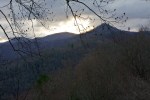
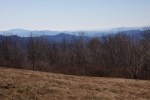
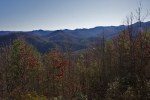
For today, I decide to play with a shot from our recent trip to the Smokies.  This was taken from a “knob” where there was an endless panoramic view of the smokies surrounding us.  While there is something about the shot that appeals to me, it completely fails to look like what I want to convey.  I’m not sure how to explain it, but the gap between what I see in my mind and what I see in the photo is large.  Normally, I would just trash this photo and call it done.  But, because there is that little something there that I like, I decide this is a good candidate to start experimenting with.

As I stare at this photo and start making adjustments, I think about something my brother once said to me.  I showed him a photo I was processing  with and without a certain adjustment and asked him which he liked better.  He said (roughly), “Which one is more like what it actually looked like?  That’s the one that’s better.”  I suppose on the surface this seems like a logical way to look at it, but his statement has haunted me ever since.

First, what does something look like?  Is that an absolute that can be monitored and measured and set objectively in stone?  Second, is capturing what something looks like the real goal of photography?  As I ponder this, I realize that it’s not about “what it looks like;” it’s about what I saw.  What I saw is probably a massive brain computation starting with light reflected into my eyes but then processed in the context of my personal experiences, interests, filters, and openness.

What I want to show is a new way to see the same thing.  When photography moves into the realm of creativity, you stretch your mind so you don’t ignore the shimmering light off one small leaf, miss the shadow of a soaring hawk that suddenly appears in your frame, fail to see the contrasting shadows under each blade of grass.  It’s not about “what it looks like”; it’s about learning how to see in new ways.

Having that realization, I find myself wanting to push myself out of documenting mode and into creative mode.  And I’ve realized that by concentrating solely on my shooting skills (which still have a long way to go), I’m completely missing out on half the formula.  So, today, I turn to my computer and play with what I can do in the digital dark room.

The Musings of a Passenger

It’s our final day in the Smokies.  Checkout time is at 11:00AM and I have a massage scheduled at 11:00AM.  As it turns out, it’s the last day the lodge will be open for the season.  Having fed us all breakfast, packed us all one last lunch for the road, and checked us all out, they are closing down the lodge for the winter.  I feel a little bad about the timing of my massage, but since I didn’t pick the time, I decide not to worry about it.

Pat takes another walk out to sunrise point while I head off to the massage room with the massage therapist.  After he walks, he will sit in the lodge lobby, in front of the giant fire place, reading something from the large library accumulated there.

The massage is wonderful.  I feel like jelly afterwards, oozing back into my clothes, out into the cold, and into the car.  It’s a nice state to go for a ride in, actually.  I try to sit so I’m not hunching up my shoulders, maintaing the state of relaxation I’ve obtained.  I look out the windows and absorb the limited view with little going on in my head (for once) besides the occasional reminder to relax a muscle that’s tightened up again.  After several minutes, Pat asks me if I’m sleeping.  I laugh at this–like I must be asleep if I am this relaxed.

I rouse myself a little.  Enough to engage in conversation with Pat.  I try to keep part of my mind checking in to make sure I’m staying relaxed periodically.  This gets a little tricky as we wind our way along the Cherahola Skyway where a storm apparently went through last night.  Fallen trees and other debris surprise us around many curves.  Fortunately, any of the trees that were all the way across the road have been cut and hauled away by now.  I find myself wondering if Snowbird Mountain was not hit by the storm or if we just slept through it.

The thick fog makes the views limited today.  I’m grateful that we had a couple of days of great visibility to see the spectacular views.  While I’ve never been one to go for scenic drives unless it was on the way to somewhere else, on a clear day, this drive is one that would be well worth going out of the way for.  Even from the car, it makes you feel connected to the world around you in a spectacular way.

One of the things that has caught both Pat and me by surprise since moving to Chattanooga is how beautiful this part of the country really is.  Even though we have both been to this region many times earlier in our lives, we both sort of dismissed it.  Perhaps it’s like the way we tend to mind our manners less with people we know will continue to love us anyway–the Smokies were accessible.  You would think this would make them more desirable, but we both tended to prefer trips out West when we started planning vacations.  The Rockies and Sierra Nevadas seemed far more appealing than the Smokies.

Now, discovering another incredibly beautiful place nearly every time we turn a corner, I feel dismayed that we missed earlier opportunities to more fully explore this area of the country.  Like I’ve been a bad friend, taking the Smokies for granted, thinking they would be there waiting for me to find time for them.  As it turns out, they did.  But, to use a photography analogy, I previously saw “the Smokies” through a wide angle lens–a single scene to take in one shot.  I now see “the Smokies” through a macro lens–an infinite collection of possibilities, each with their own virtues.  I don’t have enough life left to see the things I now want to see just in this area.  Then again, I suppose even a full lifetime wouldn’t be enough time anyway.

This causes me to ponder the whole concept of being nomadic.  If the purpose is to see and experience new things, can’t that be achieved while standing in one place?  After all, when I get out my macro lens, I discover the closer I get to a subject, the more of its details that are revealed, the more magnificent my subject seems.  Each time I experience this, I am awed by the things I never noticed before.

Here is an example of a Katydid (I think), which I normally would just see as a large, green bug, but its beauty is revealed in its intricate details and varying colors when viewed up close:

I am reminded of an experience I had back in Columbus that I may have mentioned before.  I used to ride my bike to work regularly.  My favorite part of the ride was the short stretch along the Olentangy multi-use trail.  I would enter a section of the trail that was in thick woods.  Then, the woods fell away abruptly to an open field that had been turned into a prairie habitat, full of wild flowers.  I could hear the birds all around me and I felt certain there were birds all over the flowers in that field, but I could never see any.

Then, on a Sunday, I went roller blading on the same trail.  At that speed, I was able to see some song sparrows and goldfinches popping in and out among the flowers.  I was surprised I didn’t see more birds, though.

One day, on a weekend, I went for a walk and ended up strolling through the prairie.  I spotted motion and stopped and stood still to better see.  When I stopped moving, it was like a curtain lifted.  For the first time, I saw that the prairie was buzzing (literally) with life–bees, hummingbirds, several types of sparrows, chipmunks, mosquitos, so many forms of life moving all around me that I couldn’t begin to count them all.  But I had to stand still to notice they were there.

I suppose, as is true of virtually everything in life, it’s all about balance.  A balance between seeing the forest and seeing the trees means a balance between moving and standing still.  A balance between seeking and finding means a balance between dreaming and realizing.  I wonder how you know when you’ve found the balance point?

Sassafras Falls

It’s our third day in the Smokies for the long holiday.  We take the same approach that we took yesterday–wake up slowly, lay around until hunger kicks in, throw something on and go to breakfast.  Then, we return to our room to choose today’s hike.  It’s a little cooler today and overcast.  Visibility is supposed to be poor.  The weather calls for clouds, but no rain.  We get out the guide in our room and I ask Pat if he’s up for a 9 mile hike.  There is a trail to a waterfalls nearby that’s supposed to be a nice easy walk. Neither one of us is up for a big physical challenge this weekend, still recovering from pulled muscles on the hang gliding training hills.

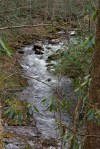
Much of the drive is alongside a stream that rolls and tumbles over rocks, creating white water.  There is trout fishing in this stream, a good sign that the water is clean.  I am too busy watching the scenery to be a lot of help navigating, but I interrupt gazing out the side window long enough to check the directions when Pat gets confused about a turn.  We manage to make it back to the trailhead with only one wrong turn.

We start up the trail as a light rain blows in, misting my face gently as we walk into the wind.  The trail used to be a railroad track, but was converted to a trail long before “rails-to-trails” meant bike trails.  As we start out, the climb is gradual, the trail is wide and flat, and we have no troubles finding our way.  We take our time.  We have 6 hours of daylight and emergency flashlights in our day packs.  If we need 6 hours to go 9 miles, we can take 6 hours.

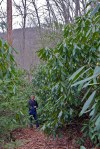
After a short distance, we enter what feels like a maze of Rhododendron.  The enormous shrubs on either side of the trail loom large, daring us to go off the path.  Pat and I both have flashbacks to our first backpacking trip together at Otter Creek Wilderness in Monongahela National Forest in West Virginia.  It was early in the spring–so early, it snowed our first night.  When it wasn’t snowing it was raining.  When we started out, the trail looked more like a stream than a trail.  Unfortunately, it rained so hard that after a while, there were hundreds of mini-streams all around us and we couldn’t tell which one was the trail.  We ended up bushwacking our way through giant Rhododendrons.  Each shrub was like a giant octopus, its twisting arms grabbing hold of our backpacks as we tried to belly crawl underneath.  I had visions of us being found weeks later, captured in the arms of giant greenery, suspended above the ground and frozen in postures of horror.  I’ve never felt quite the same about Rhododenrons ever since.

Thankfully, today they remain on the side of the trail, clearly demarcating where we are and are not supposed to be.  As a side benefit, because they keep their giant waxy leaves, they provide good hiding places when nature calls.  That doesn’t make me feel significantly better about them, however.

After about 3 miles of enjoying the view of the stream through the Rhododendrons, which has gotten steadily further below us, we arrive at a stream crossing in front of us.  We contemplate the best place to cross.  The water is high and moving fast.  These are dangerous circumstances for a water crossing; we want to find a safe route to ensure we don’t end up washed downstream.

I pick a route and make my way across.  In my hiking boots, I’m nervous about sticking to the wet rocks covered in moss.  It’s easy to lose footing and get caught in the current.  I make it OK with only one scary moment when I teeter on a rock waving my arms until I leap for the next rock and manage to land with firm footing.  Pat follows the route I took, probably figuring that if I can make it safely across, anyone can.

As we finish up our crossing, two dogs suddenly appear on the side of the creek we just left.  They are followed shortly by a family with a young daughter and teenage son.  They shout across the stream to us asking if this is the way to the falls, wanting to make sure they really needed to cross the stream before they decide whether or not to risk it.  As they contemplate, one of their dogs jumps in and is soon headed downstream in the rapids.  I run along the stream until I find a place that has an opening in the trees with an easy launch in and out of the water.  The dog hears me calling him and is able to swim over to the shore, climbing out and shaking every drop of water in his fur onto me.  My face and pants are dripping wet, but the dog is safe.  He runs back to his family who is now starting to cross.  As Pat and I walk away, we see the dog poised on the bank, about to jump back into the water and the family calling to him frantically to keep him from heading downstream a second time.  I imagine him thinking body surfing is great fun.

The next part of the trail gets steeper, narrower, rockier, and more overgrown.  We spot a faded sign after about 500 yards and make the turn to Sassafras Falls.  It’s supposed to go to the bottom of the falls, so we are surprised that it climbs even more sharply.

Now, the trail is on the edge of a drop off.  I do not have such a good track record when it comes to walking alongside cliffs.  Pat warns me that he’s not going to be able to catch me today (having grabbed me by the back of the pants in time to prevent me from falling to my death on more than one occasion).  Fortunately, this is not really a cliff and, when I look at it, if I were to fall, I would probably break a bone at worst.  Having broken quite a few bones and healed eventually, this thought is oddly reassuring.  Not worrying about falling helps me stay on the trail and I avoid any incidents.

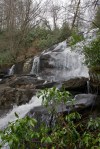
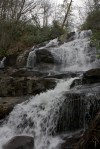
We make it to the falls and spend some time looking at the water crashing over the rocks with surprising force for a relatively small mountain stream.  It’s a beautiful falls, although I’d like to be able to back off from it so I can take in as a whole a little better.  We are so on top of it that I almost feel like I need the glasses I wear when I’m at the computer to fully appreciate it.

After I attempt to get some shots, we find a nice grouping of rocks to sit on and eat our lunch.  The rocks are moss covered, which makes them padded if slightly damp.  We sit facing the falls, enjoying our private table as we unwrap our sandwiches provided by the lodge.

We move at a much faster pace on the way back with most of the trail being downhill.  We do lose time trying to find a different place to cross the stream than the way we came over.  Our first route looks much more difficult from this direction.  It’s hard to explain how that happens–maybe it’s just an optical illusion–or maybe it a matter of stepping up vs stepping down depending on which direction you’re going.  In any case, we revisit our buschwacking-through-rhododendrons skills as we make our way along the stream, looking for a safe crossing point.

Pat finds a fallen tree and decides we should cross there.  I follow after he makes it safely, but have trouble not worrying about the camera around my neck.  If I fall in here, it’s deep and it won’t just be my feet that get wet.  I end up sitting on the log about halfway across and scooting forward until there is a branch sticking up that I can hold onto for balance.

We make it across the stream, back to the car, and even back to the lodge safely.  When we get out of the car, I stand and wait while Pat gathers some additional gear that he needs to bring into the hotel.  As I stand there, I hear the loud call of the Pileated Woodpecker.  My camera is around my neck still, although I have only my wide-angle lens with me, having opted to leave my other choices back in our room.  I spot the bird on a tree not too far away.  I decide to try to sneak up on him in the hope of getting a decent shot.  I do manage to sneak up closer, but not close enough to get a good shot before I make him too nervous and he flies away.  The brilliant red crest on his head practically looks neon in the light of dusk.

When the woodpeck flies away, he makes a giant arch around the parking lot and then flies over a deck where another guest is sitting.  We walk over and ask if she saw where he landed.  It turned out she never saw the bird that flew right over her and directly into her line of sight.  Given the size of a Pileated woodpecker, we are both (silently) amazed that someone could miss something like that.  She, however, seems nonplussed.  It makes me wonder how many birds have flown over my head that I never saw.

The sun setting behind the mountains tells us it’s time to go inside, clean up, and go to dinner.  We head on in, although we are in no hurry.  We have all evening.

Sunny Black Friday

It’s the day after Thanksgiving.  For some people, going to the malls before dawn and waiting in lines is the best way to spend this day.  Our agenda is the extreme opposite.  We start by sleeping in.  Well, maybe not exactly sleeping.  I wake up earlier than I’d like, but I simply lay in bed and refuse to get up.  I’m not sure exactly what is so wonderful about being able to just lay in bed knowing you don’t have to go anywhere, but it is.

Of course, I eventually get hungry and start thinking about breakfast.  Pat is also awake and lounging.  We clean up enough to be presentable and then head to the dining room.  After a leisurely breakfast, we return to our room to change and pack for hiking.  We have no grand plans today.  I get out the notebook in the room provided by the lodge that has a section on nearby trails.

We overheard the innkeepers parents talking about Huckleberry Knob as a short hike with a spectacular view.  Today promises to be a clear and sunny day, so this seems like a good choice.  The hike is listed in the notebook.  Since it’s only 2 miles round trip, I select a second hike that’s 4 miles round trip that also goes to a high spot with a great view.

As we leave, we pick up our brown bag lunches from the cooler next to the lodge door.  They don’t serve lunch in their restaurant, but they pack everyone a lunch in either a brown bag or a backpack to take with them.

I decide to try my fivefingers trekking shoes on the first trail since it is short.  I want to test whether my feet will be warm enough to wear them on a longer hike or not.  If a trail isn’t very rocky, is dry, and the ground isn’t too cold, I prefer my trekking shoes.  But it is late November and my feet can get painfully cold.  I decide the first trail is a good test because it’s long enough that my feet will have time to warm up and short enough that I won’t be miserable for long if they don’t.

The trail is actually a forestry access road that’s wide and flat with ruts in it.  In many places, it’s still puddled and muddy from recent rains.  I do my best to walk around the mud, but the tiniest bit of moisture seeps into my shoes, soaking my feet.  Each time my feet get wet, they get very cold.  With movement, they warm up until I get to the next puddle.  I’m glad that I choose a short trail to try them on.

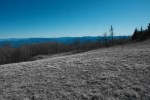
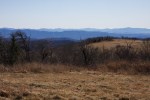
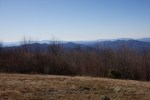
While the walk to the first “knob” is not particularly interesting, or if it is, I was so busy watching for mud that I missed it, the view from the knob is amazing.  If the mountains had snow covered peaks in the distance, I would feel like we were on the set of The Sound of Music.

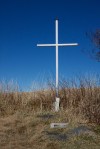
The first knob has a view of the second knob, which appears far away.  A huge cross looms up on the hill and we wonder what’s up there.  We enjoy the view a bit longer and then continue up to Huckleberry Knob.  We are upon it in no time–the distance is far less than what we thought from down below.  Oddly, the giant cross turns out to be a rather small.  So much so that we walk around the knob looking for the giant cross we saw from below.  I just recently relearned that looking up at something makes it appear larger, but this seems ridiculous.  Neither one of us can believe the 3’ cross that marks the grave of a man that died by getting drunk on the mountain and dying of exposure is the same cross we saw from below, but it has to be.

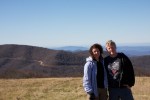
We run into a couple of women we saw at breakfast who are also enjoying the view.  We take turns taking pictures of each other.  It’s an incredibly beautiful day, but it’s noon and the lighting is not good for taking pictures.

Pat and I sit on the side of the knob for a while, looking at the sky and the mountains below.  It’s nice to just relax here for a bit.  After a while, we decide to walk back and go on to our next hiking destination, Mud Gap.

While Pat drives us to the next trail head, I slip out of my shoes and prop my feet up near the defrost vents so they can dry before I switch to my socks and boots for the next hike.  We eat our brown bag lunch while we drive and finish it in the parking lot at the trailhead.  Two other vehicles are in the parking lot.  One is a small pickup truck with Sierra Club stickers on it.  The other is a big pickup truck with an older man in an orange vest in it.  He is hunting.  It’s a little nerve wracking to realize we’re out hiking in a national forest the first official day of deer season.  It occurs to me we really should be wearing orange.  Fortunately, the trail is another well known trail that’s easily identified, so hopefully that will reduce our chances of being mistaken for deer.

We pause at the sign in the parking lot before heading up the trail.  I learn that this is actually part of the Benton-MacKaye trail.  This will be the second time I’ve hiked on part of this 275-mile trail that starts at the same point as the Appalachian trail, loops around, and then reconnects with the Appalachian trail in Smoky Mountain National Park.

As we study the sign, the hunter calls out to us.  He tells us about the hike, the view, and an alternate route that allows you to drive almost to the knob.  As we thank him and start walking, he calls out loudly, “I’m 77 years old; if I can walk up there, y’all sure can!”  We laugh and agree as we continue on our way.

As we make our way up the wet and rocky first 100 yards or so of the trail, I decide switching to my waterproof hiking boots was a good idea.  Pat interrupts my thoughts with, “How would that guy get a deer out of here if he shot one?”  We continue to contemplate that question as the trail gets steeper, rockier, and wetter.  I finally say, “Maybe he’s one of those guys that really just wants an excuse to go hiking.”

As we continue, we pause every once in a while to listen.  Sometimes we hear birds or squirrels, but more often, what we hear is the wind.  It starts like a far away swell, gathering in the distance.  Then it rolls its way up the side of the mountain, rising towards us as it gradually gets louder and louder.  Finally, it crashes over us and lifts my hair off my face.  The experience is like standing on the beach as the tide rolls in without getting wet.  I could stand and listen to the rise and fall of the wind all day, but we start moving again after the current wave starts to recede.

When we arrive at the knob, we are startled to see that it is littered with trash.  Then, two piles of trash jump up and start running towards us with wagging tails and a third assimilates itself into a man sitting up suddenly after having been caught in a nap.  As it turns out, it’s a couple with two dogs who have blankets and picnic gear with them.  We assume they are the owners of the Sierra Club pick up truck.

The dogs greet us and we pet them as the owners try to call them away.  I never know what to do in these circumstances.  The owners want the dogs to listen, but we want to pet the dogs.  Since these don’t seem like people who will abuse their dogs for being friendly, we go with petting them.

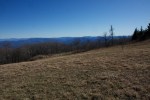
After being welcomed to the knob, we settle down on the side of it, slightly downhill from the Sierra Club couple and their dogs.  I work my way around the circumference, shooting the panoramic views even though the light isn’t any better than it was at Huckleberry knob.  I’m so happy to have finally gone somewhere with a spectacular view on a day when it’s clear.  Usually we only go to high spots on cloudy or foggy days.  I guess it pays to check the weather before you pick a hiking trail.

After shooting the view, we lay in the short, dormant grass on the knob and stare at the blue sky.  It’s so blue that I have a hard time focusing on it.  Not a single trace of cloud gives my eyes something to tell what an edge is.  I feel like the lens of my camera when I point it at a solid-colored surface.  I can’t say I’ve ever experienced that before.

As we lay there, Harry the dog suddenly appears standing over Pat’s head.  Apparently he was worried about us when he saw us lay down.  Pat pets him and he wags his tail.  Convinced we’re OK, he returns to his owners.

We get up and attempt to brush the dead grass off our shirts, but it really wants to stick to us.  We make our way back to the car, pausing to see a downy woodpecker, a grasshopper, and a squirrel.  By the time we get back down to the parking lot, my knees are starting to ache and I’m wondering if I should have worn my trekking shoes after all.  My feet are warm and dry, though, so I won’t be able to decide which was better until I know how long my knees will hurt.

We return to the van, hot inside from the sun.  We strip off some of our extra layers, extraneous in this sunshine.  We climb into the warm van and I am transported to the feeling of getting into a hot car after spending a summer day at the local swimming pool.  I love that feeling.  Any part of my skin that feels chilled suddenly feels like it’s been wrapped in a blanket.

We return to the lodge before sunset–enough time to shower, change, and sit and relax before dinner.  This has been a perfect day.  No crowds.  No traffic.  Just beautiful weather and a great view.  Sometimes I think that’s all I really need.

A Little Gratitude

It’s Thanksgiving Day.  And today, I am full of thanks.  I remember reading once that it’s easy to be grateful when things are going well, but the trick is to be grateful when they’re not.  Fortunately or unfortunately, as the case may be, this is an easy year to be grateful.  I count my blessings as we make our way from Chattanooga to the Smokies, where we will spend the long weekend.

We arrive at the lodge right around 1PM.  The Thanksgiving buffet has just started.  We get checked in, drop a few things off in our room, and then head to the dining room.  We walk down the buffet table checking out each dish, trying to decide what to leave room for and what to skip.  The inn keeper tells us there’s a menu printed on the table that lists all the dishes.  I laugh and tell him that would be great if I’d brought my reading glasses.  He laughs and we continue to peek at the food.  In the end, the preview was a wasted effort on my part.  The only dish I skip is the salad.  I take at least a small spoonful of everything else.  I will try it all and be grateful for the chance to try something new.

At least, that was my intention.  My swelling gratitude trips a little when I take a mouthful of whipped sweet potatoes and discover pieces of celery hiding in the mix.  A personal favorite complicated by an unexpected flavor.  I have to pause and figure out what I’m eating.  When I realize there is celery in my potatoes, I am both shocked and relieved. After all, celery is edible and I like it, but it is a surprising ingredient in sweet potatoes.  I return to gratitude and enjoy selecting the next bite of food.

In the background, a large family eating their Thanksgiving dinner together joins hands and one of the men at the table says a long and loud prayer.  I suddenly feel like an eavesdropper overhearing a private conversation.  It somehow feels wrong to me to hear this family sharing their form of gratitude.

My own sense of gratitude is a bit strained.  I refocus on the food, which is wonderful if different.  I think about the fact that I didn’t have to cook, we didn’t have to drive very far, we have a comfortable place to stay, and, best of all, we’re in the middle of the Smokies with a spectacular view.  If we had family or friends with us now, that would be the only thing that would make it more perfect.  But part of me feels like we’re missing the most important thing.  Then, I decide that instead of missing them, I will think of each of them.  I hold each family member and each friend in my mind for a moment, feeling gratitude for their presence in my life.  It’s a centering experience, reminding me of what’s important to me and how much I have to be grateful for.

When we finish eating, we go outside to take in the view.  We take a slow stroll in our city clothes along a short path to the Sunrise Viewpoint.  We pause to sit in a porch swing hung along the way.  We sit and talk over a leaf blower, a workman approaches, clearing all the leaves off the path.  He turns off the blower when he sees us, but we tell him to go ahead and finish his work.  He removes the leaves from the entire length of this short trail.  Given that this is a dirt path through the woods, I’m a little surprised that they blow the leaves off of it.  I am wearing my favorite new boots and would prefer that they didn’t since the leaves would prevent my boots from getting muddy.  When we continue our walk, I step carefully, trying not to let my boots sink into the dirt.  I am reminded of someone recently commenting that they had a hard time imagining me roughing it.  This comment surprised me at the time, but as I imagine what I look like in my urban clothes gingerly stepping around the mud, I think to myself, “Oh what a difference a change of clothes can make!”

At the sunset point, there is a deck with adirondak chairs to sit and watch the sun come up.  There’s a lovely view of the lake and mountains below.  Even better, there’s a bell hanging from a post with a mallet to strike it with.  When I give the bell a tap, it rings out with a sound that makes you think, “Ahhh.”  If peace were a sound, this is what it would sound like.  It rings on and on in a growing sort of sigh.  I am amazed at how long it continues from one gentle tap.

We sit for a bit, but then head the opposite direction towards the sunset point.  The view is less open from the sunset point and I want to get back to the lodge so I can capture some of the end of sunset, so we hurry back, me still trying to keep my boots from getting muddy.  After shooting, we find a spot to sit and relax where there is still some sunlight that keeps us warm.  As we sit and absorb the last rays of light, a group gathers  on a deck above and starts singing hymns.  Unfortunately, while some individuals seem to have good voices, as a group, they are painful to listen to.  We decide to head inside.  We enter the warm lobby and, after dropping off my camera, head to the bar.  With a glass of wine, we sit in front of the fire and relax until it’s time for dinner.

As we sit and unwind, I think again of friends and family and how much fun it would be to have them all here now.  Well, maybe not all at once.  I have the overwhelming urge to tell them all I love them.  I end up posting on Facebook instead.  I’m sure there’s an expression for posting on Facebook when you are overly emotional and possibly a little tipsy.

After sandwiches and dessert, we retire to our room and decide we might as well go to bed.  It’s been an amazingly relaxing day.  In fact, I can’t recall having ever had such a low stress day.  Another thing to be grateful for.

But I lay in bed awake, feeling a little guilty for having this day.  I decide to call my parents, but discover I have no phone signal.  Since the lodge does have WiFi, I send them an email instead.  It’s still early enough where they are that they are probably just now eating Thanksgiving dinner anyway.  Pat sends his mom an email while I write to my dad.  I feel a little better now that we’ve at least made some contact.  Then I check my Facebook page and feel like I’ve stayed in touch with my friends all day.  i decide Facebook is another thing to be grateful for.  Then, I set aside my mobile devices, roll over, and do my best to fall asleep, feeling grateful for a warm bed.