The Road Not Taken

"Fly left!"  "You Fly left!"  "I am flying left!"

“Fly left!” “You Fly left!” “I am flying left!”

At the Sandhill Crane Festival, a woman who seemed to know the refuge well told us about a pond that was supposedly a short walk away.  She advised us to follow the rope that had been erected to keep people in the viewing area from wandering too far into the refuge.

When we reached the end of the roped-off area, a gravel road led in the direction the woman had indicated.  I had a moment when I wondered if we were supposed to go down this road or not and thought briefly about going back and asking one of the wildlife officers, but I reasoned that walking a road with no sign and no rope in front of it would be OK as long as we didn’t stray off the road.

"Darn it!  I told you to fly left!!"

“Darn it! I told you to fly left!!”

We went about 200 yards when we suddenly heard a fast-moving vehicle approaching.  It was coming in so fast, we moved off the road in fear of being run over.  It slid to a halt on the gravel and two wildlife officers jumped out of the truck.  One was moving with the energy of someone in the midst of a flight-or-fight adrenaline response.  He looked irritated and sounded angry.  I don’t remember what he said, but what he communicated was that he viewed us as either idiots or criminals for not realizing we weren’t supposed to walk on this road.

"I give up.  Just go wherever."

“I give up. Just go wherever.”

We responded amicably, but felt obligated to explain.  No matter how pleasant we were, his accusing tone did not diminish.  Afterwards, for my husband, who felt like he had pushed the point home that it was not unreasonable that we would think it was OK to walk down a road, the incident was over within minutes.

I, on the other hand, felt like I was a bad person for not asking first.  Feeling bad quickly turned to anger, “Why would he think it was obvious we weren’t supposed to walk down a road?  Why was he so angry about it?  It was a simple mistake–he didn’t need to be so upset!”

"Hey, you up there!  Mind if we join you?"

“Hey, you up there! Mind if we join you?”

I played this scene over and over in my mind, thinking of different things to say ranging from sarcasm to empathy that either ended in cutting him down to size or connecting with him and having him understand that I’m a nice person who made a mistake.

In the end, I realized that, of course, this is really about an inappropriate need to please others.

Feeling like there’s someone out there who will tell a story about me being stupid (or worse) hurts.  I want to take the story out of that person’s mouth and rewrite it.  But the only person who suffers is me as I waste time inside my head writing a script for a new exchange that will never happen.   That time would have been better spent enjoying being with my husband, my dog, the sunshine, the glory of life.

After all, I am enough.  Mistakes and all.


"Sure--just fall in line!"

“Sure–just fall in line!”
Sandhill Crane Festival

View of the refuge from the main viewing area

View of the refuge from the main viewing area

Every year, the Chattanooga chapter of the Tennessee Ornithological Society volunteers for the Sandhill Crane Festival.  While we’ve gone to the Hiwasee Wildlife Refuge two years in a row to see the Sandhill Cranes, we’ve never gone to the actual festival.  We decided to give it a try this year.

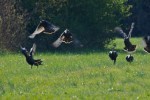
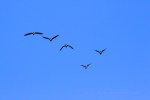
A small flock of sandhill cranes flying overhead

A small flock of sandhill cranes flying overhead

Because it’s a wildlife refuge, dogs are not welcome.  So, Tisen had to go to doggy daycare for a few hours.  This put a slight damper on the event for us, although I understand why dogs aren’t allowed.  We chose not to stay for the birds of prey show the Eagle Foundation was scheduled to provide, for example.

Same flock, regrouping

Same flock, regrouping

The cool thing about the festival was the TOS volunteers.  They set up scopes on the observation decks and called out sightings of interesting birds.  Were it not for the TOS volunteers, I would not have seen a Whooping Crane for the first time (although I’m hesitant to count it–it was so far away that even with my binoculars, it was just a flash of white amongst a flock of Sandhill Cranes) or a Golden Eagle.

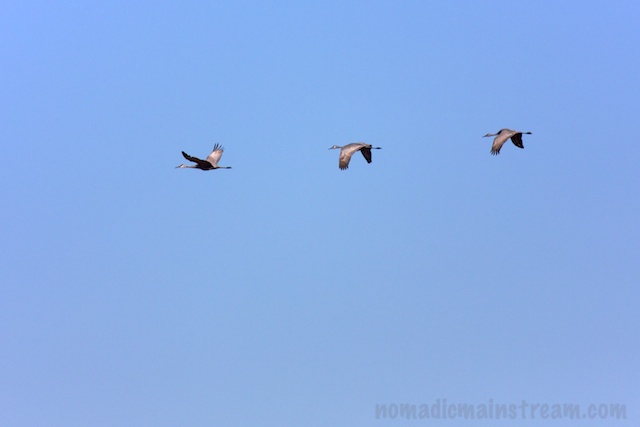
A trio of cranes

A trio of cranes

The Golden Eagle was perched amongst some trees on a far away island.  I could only see it through a scope.  It had its back to us, so were it not for one very experienced TOS member who knew how to tell the two apart, I’m not sure any of us would have realized what we were witnessing.

We saw immature Bald Eagles, one adult Bald Eagle in the air and a second on a nest through a scope, Ring-neck ducks, and Canvas-back ducks all thanks to the skills of the volunteers.  I would have spent a lot of time figuring the ducks out and then not felt confident I had it right.  It’s just more exciting to bird with people who know what they’re doing.

Same trio with wings down, up, and flat

Same trio with wings down, up, and flat

The weather also made it exciting to be outside again.  Bright blue skies, tons of sunshine, and warming temperatures all made me smile ear-to-ear.

Although, during the festival you have to park at an elementary school in the nearby town (village might be more accurate) and take a bus to the viewing areas.

The recent rains created a slight delay in our return shuttle ride.  A couple of miles from where we were parked, a flatbed tow truck pulled out across the road, blocking traffic in both directions.  They stopped to pull a backhoe out of a muddy ditch where it was stuck.

This ended up taking about 20 minutes.  So, we got to sit on a school bus and watch while these guys used a winch from the truck and another guy pushed the backhoe with a front loader and together, they hauled the backhoe out of the mud and onto the truck.  When we got going again, we passed the giant mud puddle–it was a red, gooey mess that looked like a giant wound.  Hopefully the sun will “heal” it quickly.

Single crane over the lake

Single crane over the lake

Raptor Experience

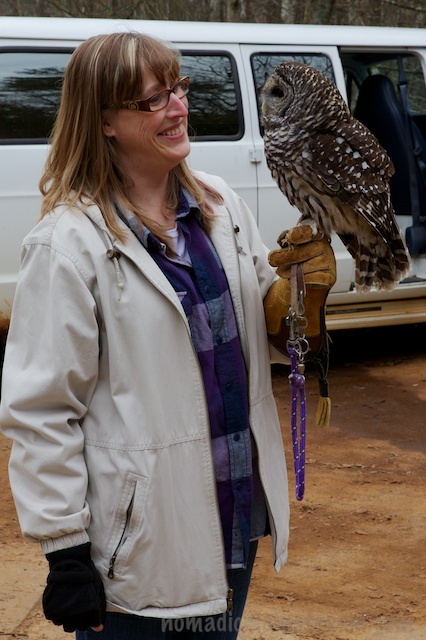
Artie always impresses his new friends

Artie always impresses his new friends

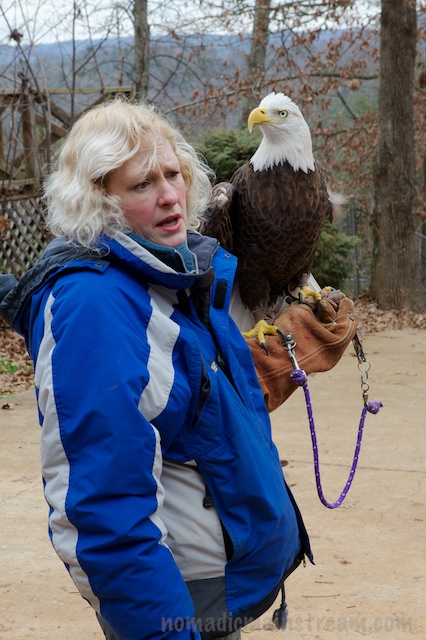
It’s been a while since I’ve posted about S.O.A.R.–Save Our American Raptors.  This is a fantastic, and very tiny, organization that cares for about a dozen or so unreleaseable birds of prey, making a life-long commitment to care for birds that may outlive the current organizers.

These birds stay fit and happy by participating in educational programs that help spread awareness of the importance of predators to our ecosystem and provide an up-close, one-of-a-kind experience for the human participants.

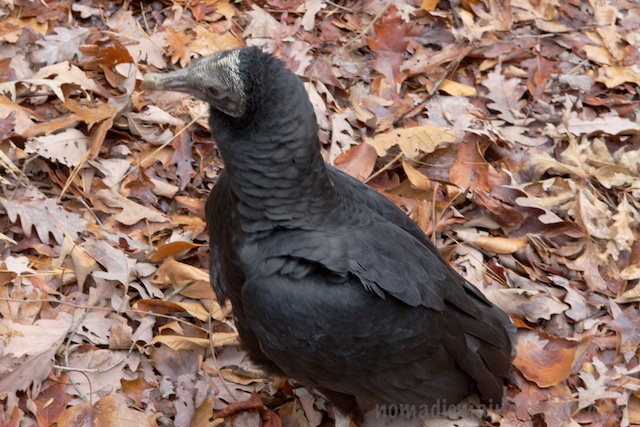
Unfortunately, not all of the birds can fly.  Some have eye injuries and wing injuries that make flight impossible for them.  The ones that can fly usually are human-imprints that cannot or will not return to the wild because they perceive humans as their parents.  Cayce, the black vulture, as a case-in-point, has been released to the wild three times only to return to her human parents.

Not a great shot, but Cayce is usually the star of the show, playing with the visitors and flying for them

Not a great shot, but Cayce is usually the star of the show, playing with the visitors and flying for them

S.O.A.R. offers an opportunity to have an intimate experience with their birds called “The Raptor Experience.”  This is actually how I first met Dale and John, the birds caretakers and directors in the organization.  About a year ago, I saw their poster at the Lookout Mountain Flight Park when we were taking hang gliding lessons.  Pat and I called and scheduled our experience and were amazed by the whole thing.

This participant enjoys meeting Buddy, an Eastern Screech Owl

This participant enjoys meeting Buddy, an Eastern Screech Owl

Since that time, I’ve been volunteering for S.O.A.R. whenever and however they need me.  When Dale called me over the holidays and asked if I could assist her with a Raptor Experience, I was thrilled to have the opportunity.

Two couples and a friend arrived at the S.O.A.R. location in a van driven by Dale.  Because the road back to S.O.A.R. is a bit tough on the suspension, Dale or John meets attendees at a nice, smooth parking lot a couple miles away and then shuttles them to the site.  Sometimes the ride up can be a bit of a thrill–slick mud made for some tricky maneuvering on this particular day, but Dale’s experience negotiating the road makes it a very safe ride.

Artie watches his new friend carefully, probably hoping he'll get petted (he did)

Artie watches his new friend carefully, probably hoping he’ll get petted (he did)

I helped get birds out, put them on gloves, and talked about them in a sort-of tag-team with Dale.  I realized that while I think I know a lot about the birds, I have much to learn.

The owls are always a favorite for visitors–perhaps because they’re the only raptors in the program who enjoy being petted.  If you scratch the back of Artie’s neck just right, he rolls his head back, his eyelids close and you could almost swear you hear him moan.

Jerry enjoys being petted, too.

Jerry enjoys being petted, too.

Like Jerry and Buddy, the Eastern Screech Owls, Artie, a Barred Owl, was hit by a car.  All 3 owls are unable to fly as a result of their injuries.  Most people are surprised when they hear the owls were hit by cars, but statistically, this is the most common way that owls are injured.

Maybe we should put up owl crossing signs?


Theo like to flap a lot--he's one of the human-imprints that can still fly

Theo like to flap a lot–he’s one of the human-imprints that can still fly

Atsa Yazi, the littlest eagle, is a small male Bald Eagle who was shot when he was only a year old, costing him his wing

Atsa Yazi, the littlest eagle, is a small male Bald Eagle who was shot when he was only a year old, costing him his wing


Christmas Bird Count

One of my favorite winter birds--I love to hear their song when I walk the dogs.

One of my favorite winter birds–I love to hear their song when I walk the dogs.

This was a somewhat rare sighting at Audubon Acres--I have a much easier time shooting them at Renaissance.

This was a somewhat rare sighting at Audubon Acres–I have a much easier time shooting them at Renaissance.

Not 100% sure, but I think this was a yellow-rumped warbler flying away.

Not 100% sure, but I think this was a yellow-rumped warbler flying away.

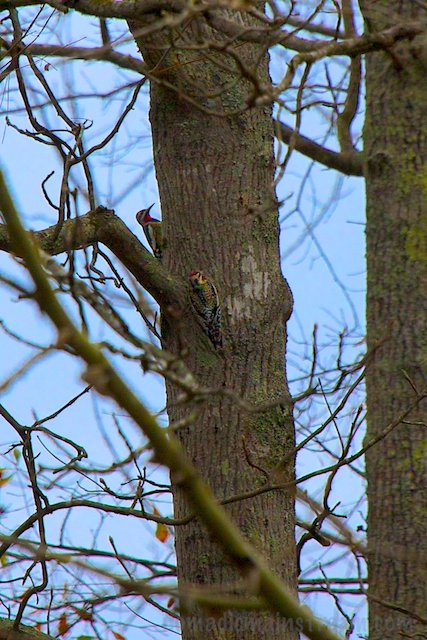
The only thing better than a Yellow-bellied Sapsucker is two of them.

The only thing better than a Yellow-bellied Sapsucker is two of them.

I love these birds.  Just a great name.

I love these birds. Just a great name.

I’ve always wanted to participate in the Christmas Bird Count, but never really understood how it worked.  Every year, the National Audubon Society sponsors a Christmas Bird Count.  Each area organizes a specific day for participants to count birds.

The idea is to collect data on how many birds of each species seen are present in a given area at Christmas time.  Counts are scheduled from early December through January–I don’t know of any that actually happened on Christmas Day.  Ironically, the name of the event always prevented me from participating–I assumed the Christmas Bird Count happened on Christmas Day and I wouldn’t be able to join.

This year, because I’ve been volunteering for the Chattanooga Audubon Society, I learned that I didn’t have to count birds on Christmas Day to be part of the event.  In Chattanooga, the count was scheduled on December 15th.

The most challenging part about the count (other than getting any decent photos) was trying not to double count birds.  We walked around Audubon Acres for 3 hours before I had to leave.  It was pretty tough to ensure the Eastern Towhee we heard on one part of the property wasn’t the same Eastern Towhee following us to another part of the property.

The guidelines are clear for counting at a feeder.  You only count the maximum number of a particular type of bird you see at one time.  That way, you know you’re not counting the same bird over and over as it returns to feed.

Because we were roaming over 4 miles of trails, we had to try to segregate areas in the hope that the birds were staying on one part of the property.  For birds that we saw few of, that was a little clearer than birds that were everywhere.

I can’t remember ever seeing so many Flickers in one day.  There are either hundreds of Flickers at Audubon Acres or we were being stalked by a group of 5-10 of them.

I discovered several things during the Christmas Bird Count.  First, I really need to get back in the habit of hiking every weekend.  I felt like it was a desperately needed breath of fresh air to get back outside after many weeks of neglecting that part of my life.

Second, there is something wrong with my brain that makes me see only similarities and not differences.  The problem is worsened when the light is bad.  I was mistaking bluebirds for robins.  That’s not good.  They’re not even close to the same size–even in silhouette they can be distinguished.  But, I would see red on the breast and automatically go to Robin even though there are as many Eastern Bluebirds at Audubon Acres as there are Northern Flickers.

Finally, 400mm is not enough for shooting song birds.  Although, I was very pleased with the shot of the two Yellow-bellied sapsuckers (it’s cropped).  Now I just need to win the lottery to get a 600mm lens.


King of the Hood

I needed to get outside, I needed exercise, I wanted to shoot, and the dog needed to go for a walk.  The perfectly logical course of action was to take the camera, the dog, and go for a long walk on a beautiful fall day.

The dog has his own agenda.  He’s determined to claim the neighborhood between our neighborhood and Stringer’s ridge.  It’s a neighborhood full of dilapidated chain-link fences and scary looking dogs who bark at us endlessly.  Tisen ignores these dogs.  He takes a cat-like approach to tormenting these fenced-in dogs.

He takes his time sniffing every blade of grass, marking each clump taller than 6 inches–he does this so slowly I expected him to sit down and start grooming himself.  The poor neighborhood watch dog goes ballistic throughout the whole show and I try to get Tisen to move on quickly.

Having two hands free might have come in handy, but letting go of my camera and bending down to reach Tisen was not an option–at least not without risking knocking Tisen in the head with my swinging camera.

At the ridge, I sit on a tree log placed at the overlook to shoot the view.  Tisen pulls on the lead and I knock the lens hood off my camera and watch it roll halfway down the hill.  I manage to leave Tisen at the top leashed to a branch in full view as I slide my way down to retrieve my lens hood.  Being a klutz and a multi-tasking photographer are probably a bad combination, but I make it safely back to the top where I am treated to exuberant adoration from my dog who apparently had little faith I would return at all, let alone safely.

As we return home, we pause once again in front of the barking dogs.  I look around and realize that if you value having a really affordable place to live with beautiful surroundings, this is a great neighborhood.  There are nothing but colorful trees on the three hillsides that nearly form a bowl around this little valley.

But then, we pass a house with a porch covered in glass objects.  They were scattered around, fallen over, abandoned like the porch was a miniature dump.  This might not have been so disturbing by itself, but the glass was mingled with a child’s toys that looked like they had been left in the middle of play.  It made me shudder.

A motion in a tree above the porch caught my eye and I spotted a Eurasian Collared Dove sitting there, looking at me as if it wondered how long it would take me to notice him.  It’s a somewhat rare sighting here at the edge of their range, and rarer to me having grown up in a part of the world where they don’t roam.  I smile and wonder what this bird thinks of the neighborhood.

Bad Birds

The plentiful song birds migrating through Chattanooga right now have not only evaded my lens, but also my vision.  I haven’t even been able to figure out what they are.  Usually when I can’t see a bird well and I run into it for several days in a row, after I obsess about trying to identify it for a while, it will perch in front of me and I will discover it’s something as exciting as a house sparrow.

Because I find the difficulty of shooting such small birds amusing, I’ve decided to share some photos today that I would mostly not choose to share under ordinary circumstances.  As any wannabe photographer will tell you, most actual photographers advise never to put your crap photos on the web; only show you’re best.  But what’s more amusing than headless birds cut partly out of the frame completely out of focus and under exposed?

I guess what’s funny to me about them is not the actual image I ended up with so much as the story behind it.  If you can visualize me crouching patiently with my camera, firing as rapidly as I can while I try to keep a tiny songbird in my frame and walk towards it in the hope of ending up with something bigger than a tiny dark spot that is indistinguishable from a leaf.  Inevitably, this ends in the bird flying away and me tripping over something.

Or, there’s the blurry shot of Cayse coming right at me in a flare.  I’m sitting there trying to refocus on her as she perfectly spreads her wings and even fits in my frame.  But, no.  She’s closer than my lens’ minimum focusing distance.  Or, the fact that her solid black feathers present no contrast for my camera’s focusing system to work with prevents reaching focus before she’s flying over my head.

I would love to have a video of me trying to follow a hummingbird with my lens and get a shot of it in flight.  I’m amazed I got even the shot in the gallery, but I must have looked insane bobbing and weaving with my camera trying to follow the flight pattern of the hummer.

Whenever I am in Florida, I am relieved by the large, cooperative birds who will gladly stand around and pose for hours at a time.  Northern waterbirds are far less cooperative.  This is apparently true in Europe too–we were at the Bodensee on the southern border of Germany when I attempted to shot a group of swans.  Much like a fly that will shoot out from under your hand when you try to slap it, these swans would tip upside down as soon as I pushed the shutter button.

I suppose much like the rare bird seems more beautiful than the common one, the rare decent shot seems more beautiful because it’s rare.  In the meantime, I keep watching eBay for a great deal on a used 600mm lens.

Pelican Jarts

While birds are pretty darn fascinating to watch, there is no bird like a Brown Pelican for entertainment.  I don’t know what it is about watching their repetitive pattern of rising over the water, nearly hovering as they reposition their bodies for a dive, and their sudden transformation from giant seabird to giant feathered jart as they dive, leaving behind a splash that probably wouldn’t get them a gold medal if this were the Olympic diving competition.  But, I could watch them perform this dance between feast and famine over and over again.

On the Washington side of the Astoria-Megler Bridge, which, if I were inclined to bet, I would bet is called “Megler,” we found a park where we could sit and watch the Brown Pelicans in their unique approach to dinner.  It’s amazing to me that such a large bird can so completely disappear under the water for several seconds after diving head first after a fish.  I feel certain the military could learn a lot from these birds.

The Brown Pelican is, in fact, the only pelican who dives from the air after its prey.  If I were a White Pelican and I watched the Brown Pelicans I shared my territory with snatching up fish from below the surface of the water this way, I would probably want to give it a try–it looks awfully fun.

Seaside Seagulls

From Cannon Beach, we drove North to Seaside.  Perhaps we needed to do a little more research and there is a really beautiful beach somewhere in Seaside.  However, what we found was a ridiculously overdeveloped tourist trap looming over a nondescript stretch of sand with more litter than we’d seen in downtown Portland.

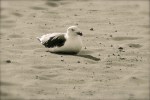
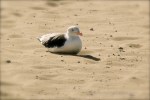
Having just come from Cannon Beach, I was so unimpressed that I didn’t shoot a single beach scene.  Instead, I put my 100-400mm lens on and started shooting the gull stragglers that didn’t seem to know the gull party scene was down at Cannon.

Two observations about photography:

  1. While 100mm sometimes surprises me with how tight it really is when I point it at a landscape scene, 400mm always surprises me at how wide it really is when I point it at a bird.  Even a big bird that’s relatively close to me physically.
  2. Number 1 often leads me to shoot the eye of the bird near the middle of the frame to make cropping easier.  Unfortunately, by focusing both the lens and my brain on the eye of the bird, sometimes I all together lose sight of composition.

With regard to the first observation, the 4th photo in the gallery is the original, unadjusted image out-of-the-camera (other than having been converted to JPEG and greatly reduced in resolution for the purpose of posting).  As you can see, the gull appears quite far from the camera.  This isn’t helped by the fact that I was standing on an observation area raised well above the beach.

As for the second observation, it frustrates me when I sit down at my computer and look at my shots on my big bright screen and smack myself in the forehead and say, “Man–that would have been a great shot if . . . ”

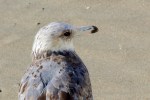
For example, the young Herring Gull checking out its own shadow probably would have been a more interesting shot than the one I brought home.  I don’t know if he was actually checking out his shadow, but that’s the story the image would have told if I’d back up far enough to get the entire shadow of the bird into the frame.

Sometimes my husband walks up behind me and says, “Oh, that would have been great if you would have . . .” when I am reviewing images.  That’s even more frustrating.  A word of relationship advice:  if you’re in a relationship with a wannabe photographer, don’t ever say that.

As it is, these gulls gave me a good opportunity to expand my horizons a bit in Aperture.   Normally, I don’t do much beyond cropping, adjusting the levels, and balancing highlights and shadows.  The poor lonely Herring Gull looked like it really needed something more than that.  So, I played with edge blur and antique effects and Black and White.  Nothing ground breaking here, but it was fun.

Mt Hood and the Mighty Ducks

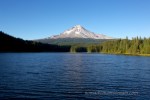
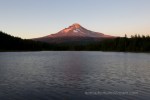
If the Tualatin River Wildlife Preserve wasn’t enough for one day, taking a drive up to Trillium Lake by Mt Hood sure did top it off nicely.  Trillium lake has a lovely two-mile trail  around it and we were promised a great view of Mt Hood by the internet, which is always right.

We decided to get there a couple hours before sunset so we’d have plenty of time to walk the two miles and pick out the perfect spot to shoot Mt Hood as the light changed.

We didn’t get there two hours ahead of sunset.  In fact, by the time we parked and were walking to the lake, sunset was about 45 minutes away.

Thankfully, the best view of Mt Hood was about a 5 minute walk from the car.  In fact, they built a deck there and put some benches on it so we could be comfortable while we watched the sunset.

Instead of sitting and relaxing, I got busy setting up the tripod I’d borrowed from my father and getting my camera ready to go.  Moving quickly kept me warm–even with my many layers (a light fleece plus a leather jacket plus a huge, thick fleece borrowed from my dad), it wasn’t exactly toasty.  The wind was whipping up a pretty good froth on the lake, meaning there were no glass-like reflections to be had of Mt Hood.  But, it was still beautiful.

And, sunset took long enough that we had time to take a break from shooting the mountain to walk part way around to get up close enough to identify some ducks that eluded me.

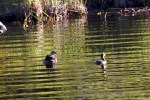
After looking at them through binoculars, shooting them with a 400mm lens, and after enlarging the images to look closely at them, I’m pretty sure the little ones are Pie-billed Grebes and the larger ones are Ring-necked Ducks.  I feel more certain about the Pie-billed Grebes than I do about the Ring-necked Ducks.  They were fun to watch in any case.

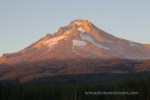
We returned to the deck so I could shoot as the sun faded.  The light turned amber and the mountain shifted from gray rock to glowing orange.  The trees below timber line moved from green to purple on the color wheel.  It’s almost hard to believe I didn’t change the tint or white balance between the early and late shots, but the sun did all that for me.

I kept hoping the wind would die and let me get one good shot of the mountain reflected on smooth water, but the wind only got stronger and I only got colder.  About the time we were going to call it quits, we spotted two otters making their way towards us across the lake.  This was the first time I’d seen wild otters anywhere other than the ocean.

Pie-billed grebes, check.  Ring-necked ducks, check.  River otters, check.  Mt Hood at sunset, check.  Definitely time to call it a day.

Two Strangers at Tualatin

While in Portland, we made a stop at the Tualatin River Wildlife Preserve to see what birds had stopped over on their way South.

When a sparrow appeared to me, I was hoping it was going to be something I don’t see at home.  However, I would say it’s either a Chipping Sparrow or a young White Crowned Sparrow, both of which are also found out east.  I’m rooting for a White Crowned Sparrow–it’s more exciting than a Chipping Sparrow.  Plus, it has an orange beak–although this isn’t normal for a young White Crowned Sparrow as far West as we saw this one according to Sibley.  But a Chipping Sparrow doesn’t have an orange beak, either, so I’m going with the White Crowned.

Sparrows are often tortuous to identify.

This leads me to a species definitely not seen East of the Mississippi–the Scrub Jay.  I don’t know who named this poor guy after something that sounds like it should be used to clean toilets, but they really must have been annoyed with these noisy, persistent buggers when they named them.  After all, the Scrub Jay is a beautiful, brilliant blue bird with gorgeous markings.

My appreciation of the Scrub Jay reminds me of a visit from a Korean family when I was a teenager.  They were amazed by the Northern Cardinal.  We had dozens of them visiting the feeders during their visit and the Korean children couldn’t get over how beautiful they were.

What is it about rarity that makes us prize beauty more?  Once it becomes a common occurrence, we forget to be amazed.  This seems related to the old adage, “we only want what we can’t have,” usually applied to dysfunctional relationships.

Instead of appreciating the ubiquitous Northern Cardinal when we are in the East and the equally ubiquitous Scrub Jay when out West, we look for the birds that are hard to find.  We revel in sighting the birds yet to get a check mark on our life list.  We yearn to see a bird we’ve never seen before.

I admit I fall into this thinking.  I was excited to add two birds to my life list while at the preserve.  First, there was the Cackling Goose (or the Crackling Goose as it seemed to come out more often than not).  I had dismissed them as Canada Geese to be honest.  I had no idea there even was such a thing as a Cackling Goose.

Fortunately, my father had recently learned about the Cackling Goose, which led me to play its call compared to a Canada Goose.  Sure enough, different calls.  All of the birds in flight were Cackling Geese.  They seemed to be confused as they tried to create a formation.  Perhaps that’s why they were still as far North as Portland in October.

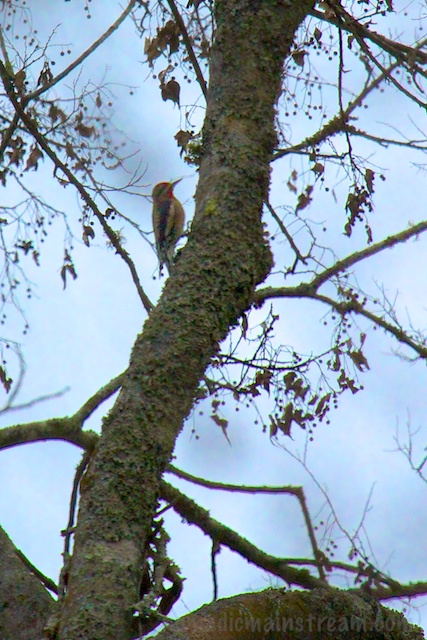
But more exciting than the Cackling Goose, we also got to see a Red-breasted Sapsucker.  Definitely a nice treat, although probably a daily sighting in this preserve.