Leaving the Pod

Waiting for the perfect moment

Waiting for the perfect moment

This was a first for me.  Inside the same milkweed pod spilling its guts in yesterday’s post, a single row of seeds remained, waiting for the order to jump.

Just like the silk dangling from the edge of the pod, these quiet soldiers let go of the pod one filament at a time as I watched.  Their progress was faster than their siblings hanging below.  I watched several threads spring free before my eyes in a matter of minutes.  And they really did spring.  They recoiled from their attachment point as if they’d been pulling against it trying to get free and were suddenly released when they least expected it.  A miniature wrestling match taking place in slow motion.

Having never watched the silk in a milkweed wind itself from its cocoon before, I was disappointed when the show was interrupted by the ring of my cell phone.  My husband hard returned home as was making dinner.  It was time to pack up my gear and make my way back home.

As I was rushing to try to get one last shot, hoping to get something sharp (the blowing wind was not helpful–my moving subject kept blurring on me), two men walked along the walkway.  They looked like they could have been homeless.  Or they could have been something entirely different.  It’s hard to tell.

They stared at me with an intensity that made me nervous.  So, I did what I always do when I’m nervous:  I smiled.

They smiled back at me.  I admit that their smiles did not exactly put me at ease.  Sometimes when someone smiles at you, you feel like you’ve just been smiled at by a shark or an alligator who’s thinking you might make a tasty next meal.

But Tisen looked nonplussed.  I can’t say that Tisen has necessarily demonstrated good judgment of character, but I think he would at least be alert if there were any eminent danger.

As the men walked by, one looked at Tisen and then smiled even bigger at me and said, “That’s an awesome dog.”  I smiled again and said, “Thanks.”  I don’t know who those men were, but at least they had good taste.

I can’t remember having ever been afraid in the park.  The park has an entire collection of security cameras.  There can’t be a square inch that’s out of range of one of them.  I’ve never seen or heard of any crime being committed in the park.  Although, I’m not sure I would know about it–I tend to shy away from the news.

I sometimes feel like I’m the dangerous one lurking in the dark when I walk Tisen long past sunset.  Not that I’m normally dangerous–just don’t make me mad.

As I put the lens cap back on my lens and collapsed the legs of my tripod, I found myself grateful for this pod of a park that provides a safe haven to shoot milkweed.

Escape

Milkweed silk dangling from the pod

Milkweed silk dangling from the pod

As Tisen and I made our way around the park with me keeping an eye out for small things to shoot up close, I spied a milkweed plant with an open pod.  The pod dangled in the breeze with a waterfall of filaments cascading out the front.  It would have resembled a frozen waterfall had it not been bouncing in the wind.

I climbed down the embankment between the walkway and the milkweed, coaxing Tisen to follow once he had sniffed the tall weeds along the way to his satisfaction.  I setup my tripod so the lens was at eye level with the spillage from the pod.

As the wind blew, the filaments moved.  They didn’t just move in the breeze; they were gradually released one by one from whatever force suspended them.  In all the time I stood there waiting on cycles of wind, I saw only 3 or 4 filaments spring free.

I wondered about this process.  I always imagined a milkweed springing open and firing its downy interior into the wind, releasing all of its seeds at once.  Instead, like a parent terrified of becoming an empty nester, it clings to its progeny in a delicate finger hold.  And there the seeds stayed (even the next day), hanging by a thread between the safety of the pod and the freedom of the wind.

Perhaps this allows the milkweed to ensure its seed is spread further–it must take a pretty strong wind to blow the down out of the shell.  But what happens if the seeds remain forever suspended?  Eventually, the shell must rot and fall off the plant.  Are the seeds still viable by the time this happens?  Do they plant themselves at the base of the parent plant?  Do they end up living next door to their parent?  Are there advantages to having an extended family all on the same block?

In this arrangement, what I really see is me.  The feeling of being perched on the edge of freedom with a finger hold on security is a familiar one.  What I yearn for and what I’m willing to give up are diametrically opposed.  I want to jerk the pod off the stem and take it with me as I fly into a new world.

Yet, in the effort to keep the pod, I expend the time and energy I need for flight.

I wonder how the milkweed feels about it.  Does the milkweed silk contemplate whether it really wants to fledge while the pod wonders why it was foolish enough to spring open?

Is it a uniquely human attribute to debate what it is we need to do?  Is it a uniquely human attribute to have choice in what action we will take?  Every time someone makes a statement about what distinguishes humans from the rest of life on the planet, someone makes a discovery that debunks the assertion.  I will not make the mistake of presuming ambiguity is unique to humanity.

Tiny Brushes

Naturally occurring brushes

Naturally occurring brushes

As I wandered Renaissance Park looking for small, interesting things to shoot, I noticed these little guys.  The entire length from the base of the “flower” to the tip of the bristles is between ½ – 1 inch.

I didn’t have my glasses on, so I couldn’t see them all that clearly.  Through the blur, I thought an artist had dropped her paint brushes as she made her way out of the park.

When I saw the high-resolution version of the image on my 27” screen, I was even more amazed by how much they really do resemble tiny paint brushes.  I’ve never noticed these little bristles before, but I probably would recognize the flower if it were still blooming.

This is yet another example of how the brain filters out information that seems irrelevant.  This filter is a great tool–we’d be completely overwhelmed if our poor brains had to process all the information within view every second of every day.  But it also can prevent us from seeing what’s in front of us even when it’s really important that we see it.

Take, for example, a data point I heard when I was taking a motorcycle skills course quite a few years ago.  In interviews with car drivers and motorcyclists following non-fatal collisions between the two, in the vast majority of cases, the motorcyclist reported having made eye contact with the driver shortly before realizing the driver wasn’t going to yield.  The driver reported having never seen the motorcyclist.

While this may seem unbelievable, think about the number of times you’ve been looking for something and it was right in front of you the whole time, but it was a different shape or color than you remembered.

Your brain was pattern matching and the object didn’t match the pattern you were looking for.  That’s what happens with motorcycles (and bicycles)–they don’t match the patterns the brain is most familiar with when looking for “objects to avoid hitting,” so the image doesn’t make it from your eyes into your brain.

When it comes to really small stuff, we probably see it, but like an impressionist painting, we mentally allow all the tiny dots to blend into a single image with varying colors.

From a distance

From a distance

As I’ve learned from photography, the eye goes to light spots and bright colors if they’re large enough to register on the radar.  We’re more likely to notice a tiny metal object twinkling in the sun (which also taps into our predator roots that hone in on movement) than a small red flower.  We’re more likely to notice a small red flower than a small yellow one.

These little paint brushes are unlikely to get noticed.  They’re small.  They’re tan and dark brown.  They don’t reflect light.  They’re low enough to the ground to hold perfectly still.

Perhaps the difficulty of seeing them is partly what makes having captured them satisfying.

Early Dandelion

Dandelion in half-bloom

Dandelion in half-bloom

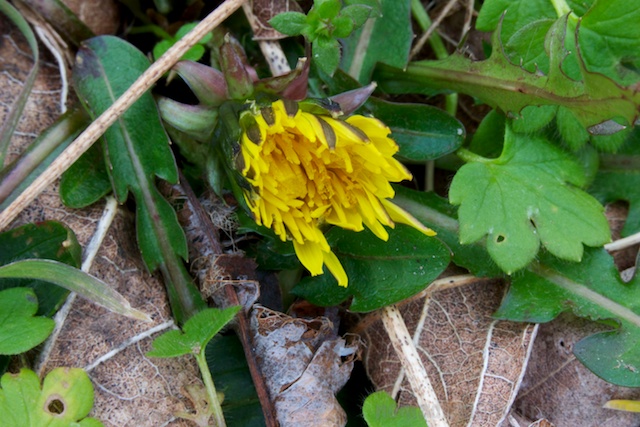
About this time of year, I find myself searching for signs of life.  This used to be more challenging when the ground was covered in snow and the temperatures were far below freezing.  Having move about 500 miles South, I don’t have to search hard to find a little color even at the end of January.

That said, I was still surprised to discover a dandelion attempting to bloom.  In fact, it was making some darn good progress.  I expect it will be fully open in another day or two if we don’t get a severe freeze.

Dandelions are one of those plants that I want to hate but I just can’t help but enjoy.  I know they’re an invasive introduced by European immigrants.  I know people hate to see them in their lawn (although I prefer a yard full of dandelions over a yard with nothing but grass).  Yet, there is something eternally cheerful about a dandelion.

perhaps it’s their sunny color against what is often a field of green.  Or maybe it’s the pure audacity of these little buggers in their insistence in popping up in the tiniest crevice.  How many times have you seen a dandelion blooming from what seems like an endless expanse of concrete only to discover a microscopic crack the flower has magically sprung from?  I suspect dandelions have some sort of jack hammer technology that allows them to forge through every manmade surface we can invent and make their way to the sun.

It’s probably not about the color or the persistence, to be honest.  It’s probably about my childhood memories of growing up in a house with an herbicide-free lawn (more because of the frugalness of my parents than because of any environmental or health concerns) that always had a healthy population of dandelions.

I used to pick them and make what seemed like giant bouquets for my mother.  She was always so pleased by the thoughtfulness that she would put them in a vase and act like I’d brought her a dozen roses.  In fact, I think she preferred them to roses.  They were the only flower I was allowed to pick.  I assume this was because it was the only one I could readily identify, so my mom didn’t have to worry about me picking any intentionally grown flowers this way.

I remember learning how to tell if you like butter by holding a blooming dandelion under your chin to see if it reflected yellow light onto your skin.  Of course, it always did unless it was near dark.  And, of course, we blew dandelion seeds off the head as we made a wish, just sure it would come true.  When I was a little older, I learned to tie the dandelion stems together to make crowns and bracelets and necklaces.

Dandelions were a renewable, cheap, and available resource that required only a little imagination to turn into something incredibly fun.  <sigh>  Life was so simple.

Symbiosis

Moss neatly tucked into bark

Moss neatly tucked into bark

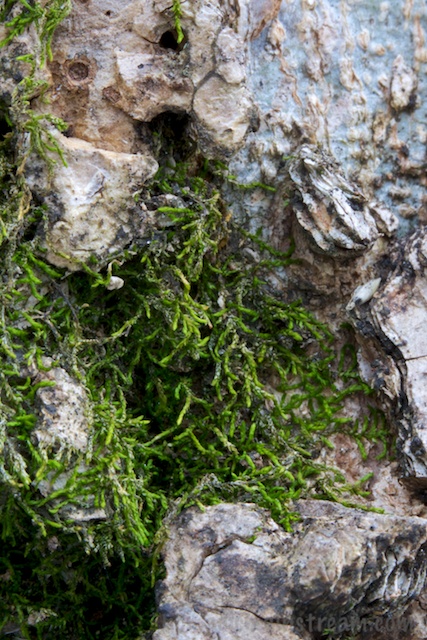
One of the things that always fascinates me is moss growing on tree bark.  This particular image was taken of a spot of particularly “tall” moss growing on some extremely rough bark.  I don’t know what kind of tree it is, nor do I know what kind of moss it is, but I had fun shooting it.

The thing is, it doesn’t quite translate in the image.  I considered shooting from an angle that’s parallel to the tree trunk to get something more interesting.  However, the bark would have blocked the view of the moss had I done that.

I like the relationship of the moss and the bark.  The moss has found its way into the cracks and crevices and filled a gap in the surface of the tree.  I don’t know if the moss benefits the tree in any way or if this is a one-way relationship.

According to eHow (of which I am somewhat skeptical in general, but the tiny bit of information about mosses on trees seems like it might be correct), mosses are considered epiphytic plants.  According to Merriam-Webster, an epiphyte is a plant that obtains its nutrients and water from the air and rain, but lives on another plant.  This seems to support eHow’s claim that most mosses are harmless to the trees they grow on.  It also seems they do not benefit the tree, but who knows, maybe we just haven’t discovered how yet?

But, this view of the relationship suggests mosses are squatters.  I am somewhat envious of this way of life.  Tiny moss spores float on the breeze, land in a nice, moist crevice protected from the sun, sprout and flourish.  They are off the grid.  They produce their own food through photosynthesis.  They collect moisture and the tiny bit of sun they need from their perch.

I imagine the tree bark makes an appealing location because of the moisture it collects and the shade the tree provides, but imagine the view!  As a tiny little plant, the view of the park before it must seem as impressive as a view of the Grand Canyon to us.  Granted, it might be better enjoyed if the moss actually had eyes.  But, how do we know the moss doesn’t have it’s own way of appreciating the view?

Some birds use moss in their nests.  At least, I think that’s true.  I was thinking of hummingbirds, but they actually use lichens woven together with spider webs, not moss.

A quick google turned up about 9 types of birds that use moss to line their nests, including the Robin.  So, there you have it.  The moss grows on the trees, the birds gather the moss to line their nests, probably contributing to propagation of the moss.  Birds benefit trees by eating insects off of them, spreading their seeds, and fertilizing them.  Therefore, moss benefits trees by attracting birds.  It’s an indirect symbiotic relationship.

Native Grass

Grass seed heads on a dead leaf

Grass seed heads on a dead leaf

When Tisen and I walk the park, we pass an area planted with grasses that are apparently native to Tennessee.  I don’t know if they grow in Ohio–I don’t recognize them.

They grow in tall bunches and produce lovely seed heads that look decorative from late summer all the way through winter.  In the spring, the park landscape crew clears out the dead grass and they grow fresh green sprouts and start all over again.

Tisen is fond of these grasses.  They have the obvious attraction of providing a place to leave his scent that’s fairly high off the ground.  This, however, creates a problem related to the second reason Tisen is fond of these grasses:  he likes to scratch himself by throwing his body against them and/or swaying his rear end back and forth under their curving stems in a weird sort of move that makes one wonder exactly what his intentions are.

Now, the problem is in that he’s rubbing himself against the very same grasses he has previously . . . uh . . . watered.  Fortunately, he has the wisdom not to water and rub in the same place.  He wants to leave his scent behind, not carry it off on himself.  However, as I mentioned, we walk the park 3 times a day.  He doesn’t really keep track of where he “watered” on the previous walk.  As such, we sometimes return from walks with a slightly smelly dog, but at least not a wet one.

In any case, a handful of seed heads from these grasses had fallen onto the sidewalk.  Since those still attached to the grass were blowing around a rates of speed that just weren’t going to work for a macro shot, I set up my tripod and camera so the lens was pointed down and directly over the seed heads on the sidewalk.  No sooner than I got completely set up, my four-legged photographer’s assistant decided to stand on my subject.

So, for this particular shot, I arranged the seed heads.  I picked up one strip of seed heads along with a dark brown dead leaf and laid them down on the sidewalk where Tisen wouldn’t step on them.

They look better against the dark brown leaf than they would have on the gray sidewalk, so I guess Tisen really was assisting.  At least he didn’t eat them.

Tisen is actually a very good assistant.  Most of the time.  He patiently waits while I shoot.  He usually doesn’t walk on the subject unless it’s for a good reason.  And, he makes me feel perfectly safe walking around a park late on a winter afternoon carrying my equipment.

To tell the truth, I’ve always thought my gear would make a pretty good weapon in a worst case scenario, but I feel like I won’t have to risk damaging my camera with Tisen around.  Although, I’m not sure how seriously people take him as a protector when he’s carrying his yellow duck in his mouth.

The Seed Pod

Seed Pod

Seed Pod

One of the unintended consequences of shooting macro is what might be called “everything is interesting syndrome.”  This happens when you suddenly realize you can take a picture of something miniature and see it in striking detail.  The fascination with just seeing that detail for the first time makes everything interesting.

Of course, setting up for a macro shot takes quite a bit of time.  At least, for me it does.  First, there’s spreading out the trash bag to have a dry spot to kneel on.  Second there’s the positioning of the tripod to get the lens at the optimal distance from the subject.  This is the part that seems to take me the longest.  Then there’s the realization that the subject you’re trying to shoot is hopelessly blowing in the wind and you could kneel there taking shots for hours and not one of them will be in focus.  This leads to trying to find a new subject that is not blowing in said wind.

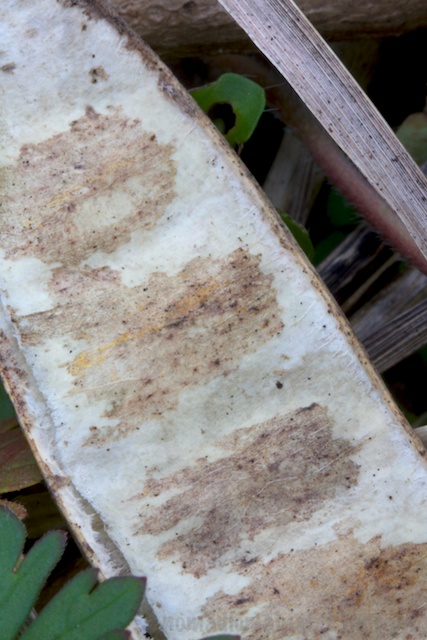
That’s pretty much how I ended up shooting seed pods.  They were laying in various places on the ground near the yellow berries in yesterday’s post.  While not very colorful, there’s something hopeful about a seed pod–especially in late January.  I also liked the pattern of brown spots where the seeds caused the pod to bulge.  It doesn’t quite look natural to me, yet every seed pod had that same pattern.

I can’t explain why I like this photo.  It’s not particularly artistic.  It has no striking colors.  I like the framing less than I thought I did when I took it.  The only explanation I can come up with is the aspect of revelation.

The revelation of information I didn’t have before I stuck my lens about an inch from this seed pod and created an image of it.  The subtle stripes of light orange amongst the brown.  The almost black spots speckling the length of the pod.  The brown, dried “string” running around the outside of the pod.  The dipping surface of the pod that then swells again over the hidden seeds.

All of this detail suddenly visible when I couldn’t see it before–not with the naked eye, not with my glasses, not even looking through my lens.  Only seeing the image exposed the mysteries of the seed pod to me.

So, it is not the photo that I love.  It is the experience of having discovered something new to me.  The experience of uncloaking a simple seed pod is not unlike discovering a magnolia warbler for the first time.

It was a bird that had probably been within sight hundreds of times in my life but until the fateful day it perched on a branch outside my office window, I had no idea it existed.  Granted, the Magnolia Warbler is quite a bit more colorful than a seed pod.  But, the seed pod is far more cooperative when it comes to shooting–even with the wind.

Yellow Berries

A slightly squished pair of leftover berries

A slightly squished pair of leftover berries

Sometimes I get into a rut.  A rut of not really feeling like shooting.  These are the times when having a commitment to post daily drives me to dig deep and find the energy to go shoot.

Today was one of those days.  I had a long list of things I wanted to get done.  But after spending nearly 3 hours on the first item on the list and failing to get it done, I really just wanted to take a nap.  I decided to give myself a half an hour to lie on the couch before heading out to pursue 4 shooting “assignments” I’d come up for myself.

I like to turn the TV on when I nap on a Sunday afternoon.  I don’t know why. Two things went disastrously wrong with this plan:  1)  My feet were cold; I can’t sleep when my feet are cold.  2)  While I was not sleeping, I got interested in the movie that was on.

So, instead of taking a short nap, I laid on the couch until late afternoon.  I almost didn’t manage to get myself out the door at all.  After all, it was gloomy, gray, and cold out there.  I was tired and, at last, my feet were warm.  But, Pat got motivated to go work for a bit, so I thought I could at least get motivated to do something fun.

I realized I was not going to get to all four of my photographic assignments, however.  I opted to take Tisen with me and do the most convenient of the four.  That was to shoot water droplets.

I have to admit I knew this was a long shot.  4:30 in the afternoon is not prime time for water droplets.  But, given that it was gray, gloomy, and cold, I thought maybe, just maybe, all those wonderful water droplets on the grass in the morning would still be there.

They weren’t.  As soon as I walked outside and felt the wind, I knew there would be no water droplet shots today.  But, having outfitted my camera with my 100mm macro lens attached to 3 extension tubes to maximize close-up focusing, I figured I might as well look for something interesting to shoot in lieu of water droplets.

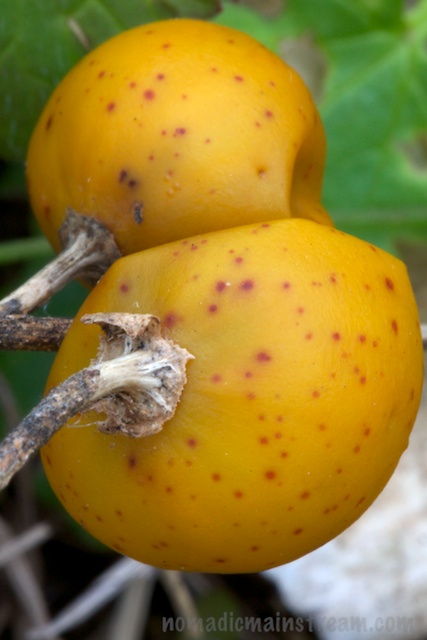
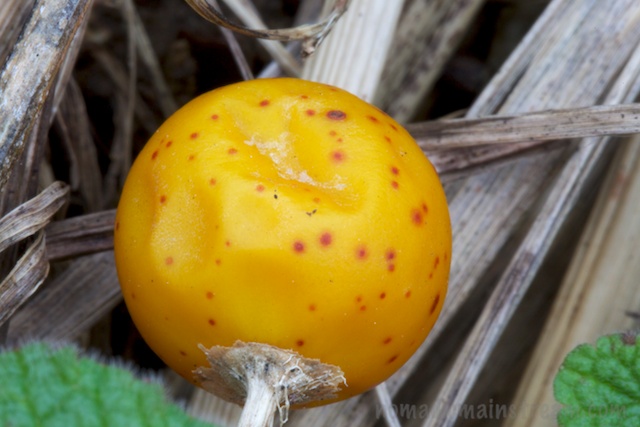
I found the berries above looking bright and cheerful on such a drab day.  In real life, they’re less than a ½ inch in diameter.  I walked by them every day, 3x a day without really noticing until I went looking for something small to shoot.

That’s one of the things I love about shooting macro–I suddenly see things I completely filtered out.  It’s like someone handed me a new pair of glasses and the world came into sharp focus.

Speaking of sharp focus, I experimented with using a higher ISO setting and a very small aperture to try to maximize the depth of field, one of the challenges of macro shooting.  I think it helped.

Berry starting to get a few sunken spots

Berry starting to get a few sunken spots

Cherokee Removal

Wide view of map of the removal routes of the Cherokee

Wide view of map of the removal routes of the Cherokee

The Hiwassee Refuge, like many natural areas in the vicinity of Chattanooga, was once part of the Trail of Tears.  As such, it includes the Cherokee Removal Memorial Park.  This park honor the Cherokee and memorializes those who died during their passage from Blythe’s Ferry or the after-math of living in a much harsher climate.

Looking at the routes from Chattanooga

Looking at the routes from Chattanooga

The memorial includes a map of the routes the Cherokee took to get to Oklahoma where they were given land in the form of a reservation.  It’s hard to imagine making one’s way from this part of Tennessee all the way to Oklahoma by foot–especially when there were no direct routes.

The road from the Memorial to the Overlook

The road from the Memorial to the Overlook

I try to imagine what it would be like to have someone tell me that I was no longer to live in my home and if I didn’t relocate to some reservation some 800 miles away (by highway today), I would be removed forcibly by the military.  It’s not the kind of thing one associates with being an American.

We like to think we are the land of the free.  As a culture, we believe we have the right to the pursuit of happiness.  It’s hard to understand that the Cherokee were seen as hostile non-American inhabitants who were preventing progress.  Those were different times.

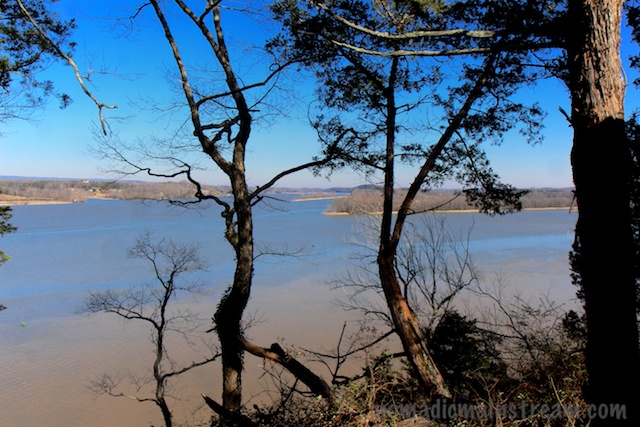
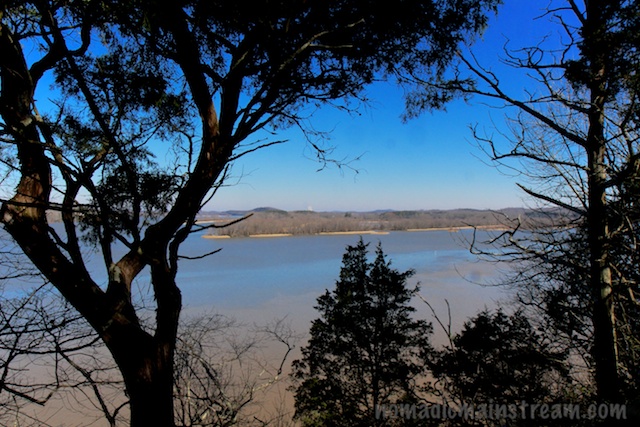
View from the Overlook at Cherokee Removal Memorial Park

View from the Overlook at Cherokee Removal Memorial Park

In the US today, we allow people to establish their own religions, create their own communities, and even exempt them from US laws that apply to other US citizens (for example, the Amish are exempt from registering for being drafted into the military; many groups are exempt from federal taxation).  I guess our willingness to allow these divergent views is based largely on whether these groups are perceived as a threat.

TOS volunteer with a scope on a Bald Eagle Nest

TOS volunteer with a scope on a Bald Eagle Nest

The Cherokee, who supported the British during the American revolution and periodically raided settlers’ establishments after, were perceived as a threat.  Yet, we were the foreigners at that time and we wanted what they had.  It didn’t really occur to people that perhaps it wasn’t right to take over land and displace the people who were living there.

I guess we came by our desire to conquer new lands honestly.  After all, our ancestors were Europeans who had a long history of seeking new land and taking over wherever they went.  If I recall my Western Civilizations history correctly, there were centuries of people committing genocide to claim new territories.

Another view from the overlook

Another view from the overlook

Unfortunately, it took a couple of world wars to figure out that when we try to destroy other cultures, it only leads to more pain.

The accessible walkway up to the overlook

The accessible walkway up to the overlook

Yet, maybe this lesson isn’t over.  I think of the contentious issue of illegal immigrants and the challenges people who wish to move to the US now face.  It’s as if we have become the Cherokee–we have a lifestyle and we want to maintain it.  We perceive newcomers to our land as a potential threat to that lifestyle.  I suppose the Cherokee were not the first to claim the land–and we probably won’t be the last.

How to tell when your sensor is covered in dust (taken with Pat's camera)

How to tell when your sensor is covered in dust (taken with Pat’s camera)

Home Again

There's a Golden Eagle perched in the Sycamore, but it was only visible through a scope

There’s a Golden Eagle perched in the Sycamore, but it was only visible through a scope

Perhaps you didn’t notice, but I was out of town for the past 3 days.  It was a work thing.  So, yes, another post with photos from the Sandhill Crane Festival.  While I would like to have lots of cool pictures from the Atlanta Marquis Hotel (where I did not get to stay because it was full by the time travel approval came through, but I did spend at least 12 hours a day there), it just wasn’t a good time to be lugging around my giant camera and tripod.

Adult Bald Eagle

Adult Bald Eagle

In fact, it wasn’t a good time to do anything.  Had I not been staying 2 blocks away, I might not have seen daylight for 3 days.  Several of us commented that we felt like we were in Vegas–no sense of time, confined to a conference center all day, moving from room to room, meeting to meeting, session to session, the only things missing were gambling and booze.

I did get to go out to dinner with some of the folks I work with whom I rarely get to see in person, which was great fun.  But, of course, it was well after dark (and even after bedtime the second night) by the time we went to dinner.

Adult Bald Eagle a little closer

Adult Bald Eagle a little closer

If you have never been to the Atlanta Marriott Marquis, it’s worth seeing. In fact, I need to plan a weekend in Atlanta that includes shooting the lobby.  I shot the Marquis lobby many years ago with my old PowerShot G3 and no tripod.  I would love to see what I could get with my current camera on a tripod.  If you want to see what it looks like, here’s the post with the old photos.

The thing about going to work events is that it sounds like fun, and some of it is fun, but it’s really tiring.  Pat and Tisen delivered me to Atlanta on Monday night.  We stayed in a La Quinta hotel a few miles North of the Marquis.  This is because La Quinta allows dogs.  They don’t even charge extra.

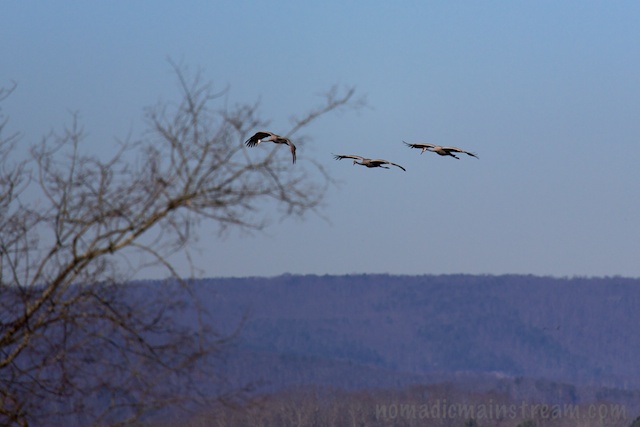
Three cranes circling the refuge

Three cranes circling the refuge

However, La Quinta is not in the best of locations and they don’t have the most comfortable of beds.  So, I started my 3 days already tired and slept less and worse the next two nights alone in a hotel around the corner from the Marquis.   Between limited sleep, walking around all day, eating crap, and being on my best behavior from 7AM to 11PM for 3 days, I’m pretty darn beat.

I think it’s probably the being on my best behavior part that’s so darn tiring–it’s be so much easier to just be myself.

Clearing the tree

Clearing the tree

The saving grace was that I was only a 2-hour drive away and in the same time zone.  Given that many of my colleagues were there from Europe and a few from Asia, I didn’t really feel like I could complain.  I’m feeling ready to go to bed (and to perhaps stay there through the weekend) none-the-less.

AU0A9138

Looking across the lake