Wild Ride

Having gotten a decent shot of a red-shouldered hawk at Audubon Acres yesterday, I have the itch to practice wildlife photography today.  I also have the itch to ride my bike.

I slather on several layers of 50 SPF and head off.  It’s about 2PM in the afternoon–not exactly prime time for either wildlife or light.

I cruise casually along the Tennessee Riverpark–the 94 degree heat dissipates as I coast down hills and suffocates me when I go uphill.  At least riding generates a breeze.

I continue on to the Amnicola Marsh.  I find a shady spot to set up and I wait.  This is where I start to question just how much desire I have to be a wildlife photographer.  It’s ridiculously hot for early May.  I feel the heat pounding at me the way I feel the beat of a bass drum at a high-powered rock concert.

Then, the bugs find me.  I am the incarnation of Pig Pen–I have my own cloud.

Sweaty, bitten, itchy, and aching from my heavy pack, I have a hard time being patient.  I have been in the field 5 minutes.

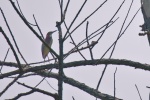
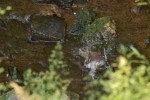
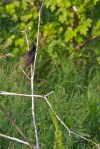
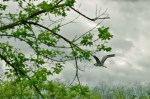
Then, low-and-behold, two green herons fly in and land in a dead tree.  The lighting is horrible, and I’ve arrived without my polarizer, but I do my best to get a decent shot.

I am too far away.  I decide I should try to get closer.  I carefully creep through the scratchy weeds, leaving my bike behind, but hoisting my pack back onto my sore shoulders.  I pick my way around thorns, through spiderwebs, and avoid poison ivy until I am all of 10 feet closer to the tree in question.

I consider moving further in, but the underbrush looks a little thick, I won’t be able to keep an eye on my bike from there, and, well, it looks like my feet might get wet.  I decide to shoot from where I am.

I see a flash of white in my peripheral vision and I swing the lens around to find a snowy egret landing among the lily pads.  Then, it disappears so completely that I believe I’ve imagined it.  The lily pads blow in the breeze and flash white glare back at me, fooling me into thinking there was never a snowy egret at all.

A belted kingfisher makes an appearance.  Although the light is pretty hopeless, I fire off a few shots anyway.  Then, the green heron starts to make his way from a low perch to a high one, catching my attention once more.

Eventually, I head on home. Tisen, having spent 2 whole hours at home alone, had foraged through my not-yet-unpacked suitcase and found the squeaky balls I brought back from Columbus.  I’m happy he entertained himself.  I’m even happier when I see my photos on the big screen and realize there really was a snowy egret!

Not a bad way to spend a Sunday afternoon.

Squirrel!

Every year, we go to Portland, Oregon to visit my father and his wife.  Every year, we discover some new and fascinating part of Oregon that makes us think about living there.

For example, I thought hiking in Hawaii Volcanoes National Park was the kind of experience that nothing on the mainland could even suggest.  As it turns out, Oregon has Lava Lands National Park.  While you can’t creep out over still crackling hot lava that’s only a couple of weeks old, you certainly can experience walking through a vast stretch of nothing but cooled lava.  Who knew?

The entire area is amazing.  The Three Sisters mountains stand watching over the lava fields, a reminder of where the lava originated from.

But an interesting reality came home to me while we explored the area:  there is something about me that attracts mosquitoes and chipmunks.  To be honest, I discovered the mosquito thing many years ago when I realized that I averaged anywhere from 5 to 10 times as many mosquito bites as the people sitting around me at a campfire.  Anytime I need to feel attractive, I just take a walk in the evening while the mosquitos are buzzing.  But, it wasn’t until we were walking around lava lands that I realized chipmunks seem to follow me wherever I go–especially when I’m carrying a camera.

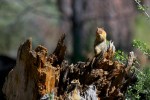
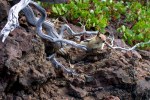
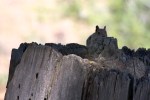
To be more accurate, these are golden-mantled ground squirrels, but they look like overgrown chipmunks to a mid-westerner.

I have nothing against chipmunks.  They are extremely cute.  I was slightly embarrassed when I tried to identify a bird I kept hearing for about two years until I finally saw a chipmunk making the mysterious chirping I could never identify.  But, I don’t hold it against the chipmunks.

I appreciate their willingness to pose for me when no other wildlife dares to appear.  I particularly enjoy the range of caution these little guys display.  Some seem to be out trying to attract attention while others appear to practice careful camouflage.

They all freeze when they see me swing my lens their way.  I wonder what they think?  I suspect what they think is something like, “I wonder if I sit real still and let that woman take pictures of me if she’ll eventually throw me something to eat?”

The lava fields make for an incredible playground for the ground squirrels.  They have an infinite number of crevices to jump into, tunnels to run through, and rocks to sun on.  If it weren’t for the predators, I imagine there would be a ground squirrel on every rock, every one of them hoping for a hand out.

As it is, they appear and disappear frequently enough to demonstrate that the static field of lava pulses with life.  The rhythm of their movements becomes the heartbeat of a place that might appear dead to the casual observer.  They remind me to stop and look closely.

Waiting for a Bird Like You

Tisen and I take a loop around Renaissance park looking for something interesting to shoot.  Well, to be fair, Tisen is more about looking for vertical objects to mark while I am looking for something to shoot.

Today, I’m out for birds.  I cock my head to one side as we walk, listening to the songs and identifying the ones I recognize as I decide whether they’re worth trying to wait for them to appear.

The thing is, song birds are really tough to get a decent shot of.  Especially when the longest I can go with autofocus is 400mm.  Since I don’t see well enough to focus manually unless the subject is sitting still, I figure I need the autofocus.

This means that unless a song bird flies down and perches on a branch about 10 feet away, I’m not going to get a very usable image.

So, I forego waiting to see if I can find the song sparrows, the carolina wrens, or even the yellow-rumped warbler I hear singing.  However, when we cross the bridge over the wetland. I notice a white-throated sparrow down in the creek below.  White-throated sparrows are winter birds in this part of the country, but they seem to be hanging out late here in Chattanooga–I still hear them every morning.

This white-throated sparrow isn’t singing, though.  He’s taking a bath.  I’m amazed as he completely submerges himself in the creek.  Then he fluffs out his feathers like he’s sitting in some kind of pool float.

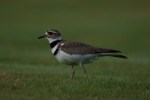
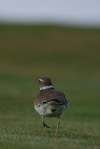
Next, on the hillside above the wetland, a killdeer wanders back and forth above us.  Having staked out the blue bird house a few yards behind the killdeer, I ignore it, waiting for the blue bird to return.  The killdeer charges me like we’re playing chicken.

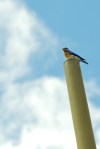
I manage to get a few shots of the killdeer without missing the return of the blue bird.  And when the blue bird flies off to the other side of the wetland, it lands in a tree right next to a red-winged black bird.  They are so close together, it’s hard to believe they manage to ignore one another, but they do.

As I sit focusing on the song birds, a large, mostly white bird flies through my peripheral vision.  I pull away from the camera just in time to see it fly out of sight.  It’s shaped something like a mourning dove, but it’s too big.  I find myself wondering if it’s a bird of prey, but it’s probably a giant pigeon.  When I go back to shooting the song birds, it flies by again and I miss getting a good look for a second time.

Tisen is getting impatient.  It has been an hour and a half since we started shooting, so I supposed I can’t blame him.  I skip waiting for the return of the mysterious bird, pack up, and head on home.

Walkin’ in a Spider Web

Tisen and I arrive at the gate to the training hills; there are already two trucks waiting for the arrival of the instructors.  I pull off as far as I can so cars can fit between us, hop out and start putting on my pack mule costume.

My costume consists of: a rain jacket, a book-bag sized backpack that weighs over 30 pounds, my tripod bag, my loupe, my camera with my 16-35mm lens, my five-in-one reflector, and my extension tubes.  I hang each accessory off of my body in a fashion best described as “sherpa.”

A man waiting in a truck rolls down his window and asks if I’m a professional photographer.  I assure him I am not, but I’d like to play one on TV.  After swapping stories about professional photographers, I excuse myself on the basis that the sun is rising rapidly.

Tisen gets very excited when he realizes we’re going for a hike.  He runs ahead of me doing his happy-dance-prance, with tail wagging, and turns to look back at me as if he thinks this is too good to be true.  I love his happy-dance-prance.  Never fails to make me smile.

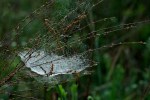
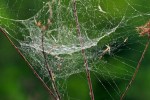
We make our way down the gravel road until we reach an open field at the base of the mountain.  This field provides a home to what might as well be an infinite number of life forms, but today, I am mainly interested in the homes built by spiders.  Every time we’ve driven by this field early in the morning, the light has hit these dew-covered condos that are shaped roughly like a ball.  I’ve said at least a dozen times that I want to come out some morning and shoot these spider webs; today is the day.

Tisen gets a little frustrated that our walk is so short, but he amuses himself by running around exploring in the vicinity, occasionally disrupting my shot by brushing against the plant holding the spider web I’m shooting.  But once the vibration settles down, the spider web itself is undisturbed.

Interestingly, even though I end up shooting at least a dozen different spider webs, I never see a spider.  This could be because I didn’t put on my reading glasses to look at the spider homes, but it at least implies that the spiders who build these webs are small and hard to see.

Eventually, I decide I have enough spider web pictures and we head down the road to see what else we can see.  I grab a quick shot of a bend in the creek with the mist rising off of it with the 100mm lens still on my camera.  When I hear a Pileated Woodpecker call, I switch to my 100-400mm and 1.4x teleconverter in the hope he’ll fly our way.  We never see the woodpecker, but I do get a couple of shots of flowers high up in the trees.

Break Time

Taking a break from my first attempt at a self portrait, I pack up my gear and head to the park across the street.  My collection of gear seems to be growing.  I have to leave a lens behind to make space for my loupe with a 3x magnifying viewer (which, by the way, kicks the but of any pair of reading glasses–not only can I actually tell if I’m in focus or not, but I can even use it to read the impossibly small icons on the control panel on the top of the camera).  I tuck in a garbage bag in case I want to lay in any mud (you never know when the urge will strike), and I stuff in my new 5-in-one 22” reflector in the event I decide to do some macro photography while I’m over there.

I go to the park prepared  to shoot macro, wildlife, and/or landscape.  I’m nothing if not flexible.  I am also prepared for rain.  Besides my trash bag, I carry my rain jacket just in case.

I swing my camera bag and my tripod bag over my shoulder with my camera hanging around my neck.  As I pass the gym across the street, I see my reflection in the windows.  I look down at my feet, clad in five finger shoes.  I find myself thinking it’s a good thing I don’t have children–they would never go anywhere with me in public.

As I enter the park, I see an eastern blue bird.  It looks like it may have a nest on the light–it’s carrying a bug and acting like it’s feeding something.  I cannot see any baby beaks from where I’m standing, however.

Next, a great blue heron lands in the wetland.  I creep behind the cattails, hoping to get a shot.  As I get close, I see him standing with a frog hanging out of his beak.  But he flies off and I am left wondering why I didn’t change to my longest lens before sneaking up on him.

I head back towards the paved path, looking for a spot to shoot clouds, and then blooming trees.  I switch back and forth between shooting macro and landscape, wishing I had that second camera.

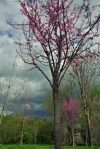
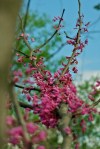
I make good use of the trash bag getting a new angle on blooming trees.  My reflector comes in handy when I need some shade on the red bud blooms.  However, the wind is picking up and macro shooting at 3 feet above the ground does not go well.

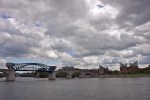
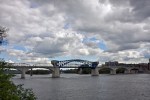
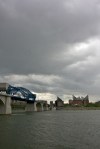
I shift back to shooting landscape.  As I stand overlooking the Tennessee River, it starts to rain.  My garbage bag transforms into a rain cover for my camera.  My rain jacket goes on, the hood goes up, and I head back home.

Tisen is frantic when I return home.  He jumps at my legs as if demanding an apology for being gone for so long.  Maybe someday he’ll be OK.

Portrait Anyone?

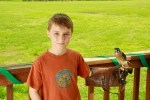
The S.O.A.R. event on St. Patrick’s Day went wonderfully.  Over 200 people came and I think the event exceeded their expectations.  Watching children hold birds was especially a treat–how many people get to hold a bird of prey on their arm before they’re even a ‘tween?

As far as my venture in trying to get people to donate in exchange for photos, well, it turned out to be quite the challenge.

I did a few things right:

  • I practiced with my new lighting as much as possible beforehand.
  • I worked out a workflow ahead of time.
  • I setup my camera to shoot in JPEGs since there would be no time for post processing.
  • I took all my equipment out to the site the night before and did lots of testing to pick a good location to set up.
  • I tested my 100mm f/2.8 lens in the space I had to work in and prepared to shoot with my 17-55mm f/2.8 lens based on the results.
  • I did a lot of test shooting with my strobes at home with the 17-55mm lens.
  • I brought Pat along so he could help solve some of my more difficult problems.

I also did a few things wrong:

  • I should not have tried to use recently purchased lighting equipment at an event given my lack of experience with artificial lighting in general–it created extra stress
  • I didn’t set a custom white balance, which I really needed because of no post processing.
  • I forgot my CF card reader, which blew away my workflow until Pat went to Wal-Mart.
  • My extension cord crossed a major traffic area; Pat and a roll of duct tape to the rescue!
  • I didn’t test the process for burning CDs beforehand.  Having not burned a CD in about 10 years, this wasn’t wise.  My workflow resulted in drive failures, ruining several CDs.  I found a work around, but it wasn’t easy.
  • Finally, and most humiliatingly, a weird shadow suddenly appeared in my photos and I couldn’t figure out why.  After rearranging lighting about 1000 times, Pat came along and asked, “Are you sure it’s not the thing on your lens?”  Apparently, I bumped my lens hood and the wide part was in the wrong position, causing the shadow in the frame.  I can only explain the failure to recognize the problem immediately as a brain malfunction given this is something I’ve seen in the distant past.  Unfortunately, it’s one of those things that screams, “SHE DOESN’T KNOW WHAT SHE’S DOING!” to your potential customers.  <sigh>

While these mishaps didn’t negatively affect my fund raising in the end, they did negatively affect my confidence.

As you can see from the gallery, I did not exactly produce stellar images.  While the circumstances were challenging, I have to face the fact that I didn’t have the skills for the challenge–yet.  So many things to work on!

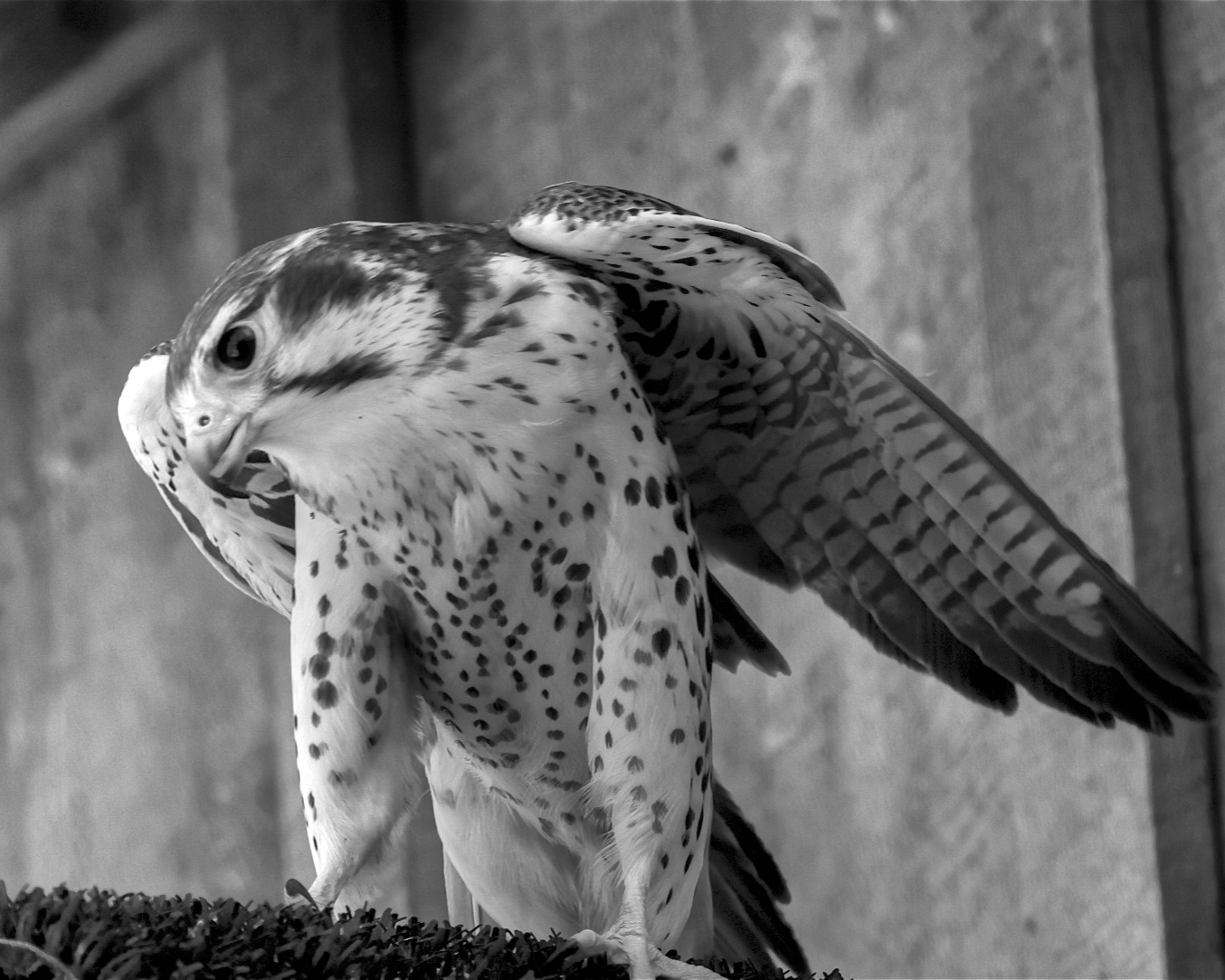
On the up side, my black and white Prairie Falcon portrait sold in the silent auction.

Women Hang Gliding Festival

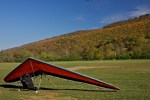
Today is the last day of the biannual Women’s Hang Gliding Festival at Lookout Mountain Hang Gliding.  We thought long and hard about whether we wanted to participate or not.  In the end, we decided not to because we figured it would be crowded on the training hills–crowds on the training hills mean fewer flights and less progress.

Instead, today we will drive out to the mountain launch in the hope of finally seeing someone take off from there.  We have been up to the mountain launch at least 5 times now, but each time, the wind has been blowing the wrong direction and no one was launching.  We’re hoping the wind will be with us today.

We take our time getting going this morning–after all, it is a Sunday morning. When we get to Trenton, GA, the closest town to the flight park, we’re both hungry and it’s almost lunch time.  We decide to stop for a bite to eat.  Where to eat in Trenton is always a question.  They have a lot of fast food choices and handful of family places, but we’ve not had a lot of luck with the places we’ve tried in the past.  Today, we decide to give the one Italian joint a try.

Perhaps they have good pizza, but we made the mistake of ordering pasta.  It was edible, but that’s about the best I can say about it.  The manicotti was over cooked and had the texture of something that had been cooked, frozen, and cooked again.  The sauce really had nothing going for it other than that it was wet, and the salad was entirely made up of iceberg lettuce that had seen better days.  The most amazing thing was the sweet tea.  I mixed half a glass of sweet tea with half a glass of unsweet tea and it was still too sweet.  But, we got through the meal and on our way with full bellies.

When we arrived at the mountain launch, it was about the time of afternoon when we’d expect to see hang gliders setting up.  No hang gliders in sight.  We look at the wind sock and sure enough, it’s a tailwind.  Having studied the first 3 chapters of the beginner hang glider’s training manual, I now know why this is so important.  While one might think a tailwind would make things easier because it pushes the glider along, a tailwind actually creates negative airspeed over the wing, which prevents the glider from lifting, which is very bad indeed.  So, hang gliders, because they rely on the wind and the wind alone when launching from the mountain, do not launch in a tailwind.

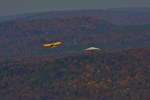
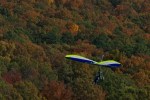
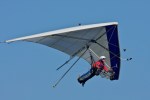
However, there are lots of aerotows going up this afternoon.  With a plane creating the airspeed needed for the glider to lift and an open field that lets the plane change the direction of takeoff according to the wind, aerotows are not so wind-direction dependent.  We stand and watch some of the gliders and I shoot, trying to capture both the gliders and the amazing fall leaves.  Unfortunately, once again I am shooting in the early afternoon and there is both sharp light and distant haze to make me wish I’d gotten there earlier.

A woman standing on the observation deck with two cameras around her neck walks over upon seeing my big lens.  She says she’s jealous of my lens.  We end up talking to her and her husband for several minutes.  Turns out they do people’s taxes for a living and only work from January to April.  The wife has gotten into photography of late, but it seems the husband is not so keen on the amount of money she’s spending on equipment, even though it appears she’s buying less expensive lenses.  She talks about wanting to start shooting portraits for money and how much she enjoys “making pictures” (this Southern expression has always thrown me, but when you think about it, it probably makes more sense than saying “taking pictures”).

The husband starts complaining about the expense again–he says, “I bought her that camera for $1000 and then she wanted another one so I bought her that one too and it was another $1000.”  I commiserate on the expense of good equipment and comment that the lens I really want is $12,000.  He turns to Pat and says, “I bet you said no to that!”  Pat and I both laugh at the notion and Pat says, “It’s her money.”  I say, “I said no–I’ll never be able to justify that expensive of a lens.”  I find it interesting that the husband has shared with us that he and his wife run their tax business together, yet he seems to think that their income is his income.  Even more interestingly, he assumes every man makes all buying decisions.  I feel sorry for the wife, although working 4 months of the year does sound fun.

We spend a little time in the hang gliding office before we head down to the landing zone to watch aerotows take off.  First, we talk about the different training packages and what would make sense for me given that I really don’t want to launch from the mountain, but I’m enjoying the training hills.  Then, we schedule coming out to the training hills next weekend and Pat takes a sudden interest in how much hang gliders cost.  This catches me off guard.  We learn that he and I could potentially share a glider and that a beginner glider starts around $3000 new.  I watch Pat’s face as he looks at the gliders the instructor points out to him on their website and I try to determine whether he is seriously thinking we’re going to be buying a hang glider or not.  I flash back to the months, even years, of getting rid of possessions in an effort to simplify our lives and try to imagine how a hang glider fits into this picture.  But, I let him look without comment.

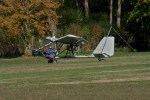
Next, we drive down to the landing zone and sit for a while, watching aerotows.  For the first time, we see someone on a tow line that’s on a winch rather than an ultralight.  We’ve seen winch launches on TV before, but didn’t know this park had a winch.  The glider gets about 50 feet in the air before releasing and then comes back down and lands immediately.  I assume this is part of an aerotow training package.

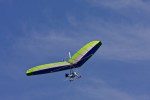
We watch several tandem aerotows take off, and I practice focusing manually with my long lens with the extender attached.  I quickly learn that panning with an aerotow and manually focusing at the same time are not possible for me.  I’m not able to see clearly enough to tell if I’m in focus or not through the viewfinder and I can’t use live view in the LCD while panning.  I go for a small aperture opening in the hope of having enough depth of field to cover the difference.

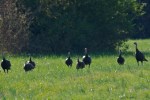
After a while, Pat is bored and I have so many shots of hang gliders that I’ll be at the computer for hours, so we decide to leave.  As we drive out, we spot a flock of wild turkeys across a field.  Pat pulls over and I get out of the van slowly and grab my camera and tripod from the back.  By the time I get set up, another car has approached from the other side and a woman with a point-and-shoot gets out and starts walking towards the turkeys, spooking them.  I get only two quick shots in before they take flight and I have no time to make any adjustments to better capture them flying.  I make a mental note (not for the first time) that I really need to find a class on wildlife shooting or I’m going to end up always shooting landscapes.

Shooting Hawks and Clouds

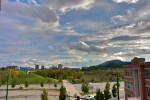
I am sitting at my desk on a conference call.  I have been working on a spreadsheet for hours and, as I listen to the call and tweak numbers, I suddenly start seeing double.  I take off my glasses, rub my eyes, and then look out the window at the sweeping view of downtown.  Something between me and the city moves across my line of vision.  I look and recognize one of the hawks I’ve been seeing in the park across the street for the last few days.

There are two mounds in the park.  According to the sign, the mounds were created as part of the process to contain hazardous waste.  Not exactly comforting, but they look nice.  The mound on the right has low-growing plants all along the sides that flop over and create lots of little dark hiding places for rodents that scurry through the plants whenever someone walks by.  Pat and I have been trying to get a good look at exactly what lives on that mound for a long time.  We know it’s grayish brown and larger than a mouse or mole.  We decided they were voles after getting a quick glance at one, but part of me secretly fears they might be rats.

Whatever it is that lives on that mound, a pair of hawks discovered the colony the other day and seems to be returning regularly for an afternoon picnic.  I’m relieved to see the hawks.  Not just because they will help control the rodent population, but because I miss seeing birds from my window.  Other than the house sparrows and starlings who seem to have an ongoing war over who will roost in the crevices above our windows, most the birds hang out in the park and are too small to see from my desk.  However, I’m confused by this hawk.  It looks to be on the small side, but it has very bright reddish coloring around it’s head, chest, and shoulders.  I would normally assume it was a Red-shouldered Hawk, but it looks awfully small.  It’s also more vividly colored both in the red areas and in the strong contrast in the spots on its back.

When I see the same pair again that evening, I spend some time looking up Red-shouldered Hawks and Cooper’s Hawks trying to determine for sure what it is.  Now, most people who have any interest in birds do not have trouble telling a Red-shouldered from a Cooper’s.  I, however, am wired to perceive connections and similarities.  This is probably due to some genetic misfortune in my brain that causes me to see commonalities that may or may not exist, but others rarely see.
This same feature of my perceptions causes me to mistake people I’ve never seen before in my life for people I know quite well.  I had to start applying a rule of probability in deciding whether to enthusiastically greet someone or not in order to avoid frightening complete strangers.  The rule of probability takes into account the likelihood that the person I think I’m seeing would actually be where I am.  I will say, though,  that I did run into a co-worker once when both of us unknowingly took vacations in Scotland and then happened to end up waiting on our completely unrelated groups outside of Edinburgh Castle at the same time.  What are the odds?
Fortunately, I did not fail to greet my co-worker in that case because I heard his voice and knew definitively it was him.  Similarly, with the hawks, if I could hear them calling, I would know for sure which species I have the pleasure of watching.  If they are calling, the traffic noise drowns it out and there is no hope that I will ever be able to use their voice for identification.

But, back to comparing Red-shouldered hawks and Cooper’s, in my defense, a young, molting Cooper’s Hawk can look like a Red-shouldered Hawk if they turn a certain way, stand in direct but muted lighting, and the viewer has a vivid imagination.  Plus, the size of these birds seems more like a Cooper’s to me than a Red-shouldered.

However, after looking at pictures of both in various settings, I have to go with Red-shouldered.  I continue to be puzzled by their size.  I manage to get a few shots, although I struggle with focusing with my long lens pointed out the window.  It’s a pretty good distance to the bird, so I’m not surprised that my shots are disappointing.  I leave the camera set up just in case I have another opportunity the next day.

In the morning, I start watching for the hawk as soon as the sun is bright enough.  When I get too busy to look, that’s when movement catches my attention out of the corner of my eye.  I look out and there is one of the hawks, hunting on the hill.  She has something in her talons that she carries to a light post to snack on.  I cringe when I see it’s a rodent with a long tail.  I really didn’t want to see any evidence that those voles really might be rats.  I say a quick thank you for the presence of the hawks and hope for some owls, too, while I’m at it.
When I go for a walk, I see the hawk in the park again, only this time I am looking up at it.  I realize it’s size is correct for a Red-shouldered hawk after all.  I’ve been looking down at it from a distance.  Now that I am standing on the ground looking up, I remember the old trick in photography that says if you want your subject to look bigger, get down and point up at it.  If you want your subject to look smaller, stand above it and shoot down at it.  Apparently it is this phenomena that has been at work on my perception.

Now that this is settled, I can move on with my life.  Next step:  learn how to shoot the suckers so that they are in focus and doing something interesting.  For now, the sky is cooperating more than the hawks, so I switch from shooting wildlife to shooting clouds.