The Blind Shooting Blind

One of the skills in photography I try to work on is composition.  The easiest aspect of composition to focus on (pun!) is what is in or out of your frame.  For example, not ending up with a sign post in the background sticking out of the head of your subject.  Or, not cutting off your subject’s hand.  Or not chopping off the edge of a shape in an awkward and inexplicable way.  These are things I pay attention to.  Sometimes, I pay attention to them after the shoot, in which case, I say “shoot!” in a different way.

Shooting loose is a cheat.  This means leaving lots of space around your subject so you can crop later to get what you want in the frame.  I’m not very good at shooting loose.  I always end up with some awkward position where I have to either cut off the subject’s hand or foot to get the framing I want.

For this reason, I try to come home with at least the framing right.  This is not to imply that how you frame a shot is the only thing to think about when it comes to composition.

In any case, shooting at the haunt over the weekend was a completely new lesson in composition.  When I was shooting in unlighted areas, I literally could not see my subject at all when I looked through the viewfinder.  My technique was to take a shot with my flash, look at it on the LCD screen, and then try to guess where I was positioned and which way I needed to move to get the subject completely in the frame.

This is a case where shooting loose was absolutely necessary.  I ended up with a lot of headless people on my first shot.  Then I would zoom out a bit to make sure I at least got the heads included in the second shot.  After a few dozen wasted shots, I finally started getting to where I could get the subjects into the frame in one shot.  On the one hand I was excited I was managing to get subjects into the frame.  On the other hand, I was really wishing I had a floodlight I could use to frame up the shot I wanted.

As a side effect of shooting blind, I ended up with a lot of strange things in the background.  This is also the side effect of shooting at an event.  There are lots of people milling about so you end up with someone’s nose sticking out of your subject’s ear or a rear end in the background next to the head of your subject–sometimes my flash was just a little more powerful than I really wanted it to be.  This all led to more time in Aperture cloning black areas over top of unwanted objects.

Perhaps that’s a life lesson:  shooting blind leads to spending more time cleaning up the mess.
Event Shooting

I am gaining a greater and greater appreciation for event photographers.  Think about it.  You show up, you’re supposed to get great photos in what may be the most difficult of circumstances to shoot in and you’re supposed to do it without distracting from the event.

We went to a wedding reception Friday night and I found myself feeling incredibly grateful that I am not a wedding photographer.  I’m not sure I could take the pressure of shooting that kind of once (or twice or thrice) in a lifetime event.  I watched the two photographers at the event and they seemed so calm and collected.  They were both young.  They shot for a while, took a break to eat cake, and then started shooting again.  They seemed to feel no stress at all.  I admire that.

I got to play event photographer Saturday night in the lowest stress situation possible when it comes to event photography.  First, it was a volunteer job, so I didn’t have to worry about people feeling like they didn’t get what they paid for.  Second, the group is fun and appreciative, so I felt like they would be patient.  And finally, this is a recurring event, so it will happen again next year and there will be more opportunities to get better shots.

However, what did create stress is that it was a Halloween Haunt.  And that means it was dark.  Very dark.  And I am not exactly an expert with a flash.  In fact, I had kind of given up on learning how to use my flash a few months back when I broke a hot shoe adapter that allowed me to put it on an umbrella stand.

I seem to take little interest in flash photography until the moment of panic when I realize I’m going to need to shoot with a flash.  Then I suddenly wish I’d spent a lot of time becoming an expert with the thing.

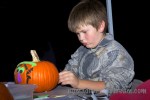
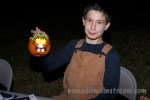
Saturday night, I decide to warm up in the family area.  This area is well lit by comparison.  It still requires a flash, but people are sitting at tables for pumpkin decorating and face painting, so I have the opportunity to shoot and reshoot without having to worry about missing the action.

With my flash unit attached to my camera directly, I couldn’t shoot vertically.  It was like having a hand tied behind my back.  Having a manual flash turned out to be quite a bit more difficult than I expected.  For one thing, it has no auto focus assist feature so I had to pull out my iPhone and use the flashlight app to find focus in the dark.  It was also hard to see to adjust the settings.

I found myself creating a shopping list:  flash bracket, speedlite, portable battery pack.  I guess I’d better decide if I like event shooting or not before I start buying more equipment!

Visual Effects

At times like these, I wish I had the kind of job that could be blogged about.  I say this only because I have been spending way too many hours working the past few weeks and, as a result, am running out of more universally interesting things to write about.

Normally, I would have done enough shooting over the weekend to have brand new photos for you and stories to tell about them for the next five days.  Unfortunately, between my photography-free road trip on Saturday and working all day Sunday, I am out of new photos.

Even more frighteningly, I am nearly out of old photos I haven’t previously shared as well.

So, for today’s blog, I thought I would experiment with some old photos from our second trip to Mt. St. Helen.

It’s pretty amazing what can be done with a photo in even relatively simple photo editing software like Aperture, my personal favorite.  In today’s gallery, I’ve posted a series of photos that are quite similar.  I processed 3 exposures using the Photomatix HDR plug-in for Aperture and created two unique exports from Photomatix.  In the one, I used more natural-looking settings.  In the other, I used an “artistic” lighting effect that made the foreground and sky look lit differently.

Then, I used my standard post-processing adjustments on them in Aperture.  Mainly, I played with highlights and shadows and the levels.  Once this was done, I made a duplicate of each version and then tried something new.

The first image used a built-in effect for black and white with a red filter.  I also pulled the black point up–many greens disappeared into the shadows.  I experimented with different combinations of lifting the shadows and then raising the black point and finally settled on this one.  It’s dark and gloomy.  I hope it shows up OK for folks–sometimes photos look brighter to me on my iMac than they do after posting to my blog.

The other crazy thing I did was with the second duplicate.  I played with tint and saturation and took the photo to the point where I thought my eyes would bleed if I looked at it any longer.  Then, I backed it off to the brink of pain.

I have no explanation for why I did this.  It just looks too purple when I look at it now.  Perhaps I thought it was time to start exploring the possibilities instead of remaining stuck in reality.

Wouldn’t it be nice if it only took a slider control to add saturation, luminance, and vibrancy to real life?

Fall Color

Wanderlust is a chronic illness for which there is no known cure.  Treatments range from acceptance and indulgence to denial and deprivation.  Every once in a while, a little indulgence really pays.  Especially in the fall.

If there is one thing I miss about the midwest, it’s the intense colors of the fall leaves.  But, a road trip through Northern Tennessee and Kentucky provided a fantastic surprise.  The leaves are amazing here in the South this year.  There was one major drawback, however:  I didn’t get to take any pictures.

The images in the gallery were taken several years ago in Columbus, Ohio.  One of the big problems about wanting to take photos of leaves in Columbus is that it’s really flat.  It makes it difficult to find a perspective that really shows off the leaves.  It hadn’t occurred to before why everyone goes to Vermont for fall color viewing.  Not only does it have more hardwood trees that provide the intense colors we see in the midwest only multiplied, but it also provides lovely mountains completely covered in these brilliant leaves.  Until I drove through the Southern version of Vermont today, it had never occurred to me what a difference mountains make, and, specifically, mountains in the East, in how spectacular the color looks.  You don’t get that in the Rockies.

I really wanted to pull off the highway, get out my camera and start shooting.  I was worried about two things however.  First, I was really tired and I wanted to make it back home before I started falling asleep at the wheel.  Second, I’m pretty sure the shoulder of a freeway is for emergencies only.  Would the highway patrol accept perfect lighting hitting brilliantly colored leaves as an emergency condition?  If there would have been an exit with an obvious route to the same view I had from the freeway, I definitely would have pulled over when beams of sunlight burst through dark clouds and highlighted some of the trees on the hillside.  Or, when the sun was setting and the light was hitting the tops of the mountains while thick cloud cover above provided the perfect contrast from above.

I started plotting whether I could find time to take another drive on Sunday.  But, the sun went down and left me guessing as to how colorful the leaves were as I got closer to home.  I was still two hours away when the light faded.

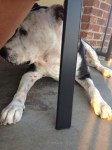
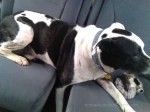
Tisen curled up on the passenger seat and took no notice of the leaves.  Maybe it’s true that dogs only see in black and white.

Honorable Mention

As many of you may know, last month, for the first time ever, I submitted photos in the local club’s quarterly photo contest.  My goal was to get feedback because the judges often provide comments on each image.

After much deliberation, the photos I chose were the three that I had the most visceral response to.

Molten Sky was my favorite.  It was one of those mornings when you get up and think it’s just another day and then step outside and the sky is doing crazy stuff.  I had to grab my tripod and camera and shoot.  I’ve never seen a sky that looks like molten lava before–or since.

As I might have predicted, my favorite image was the judge’s least favorite.  In fact, in the score sheet of all the nearly 100 photos submitted, it wasn’t pretty close to the bottom.  What was disappointed me was that the judges provided no comments on this image, so I still don’t know why my taste is so different from the judges’.

The second image in the gallery was my second favorite shot.  This was taken right around sunset one winter night when the rays of the sun shot across the clouds, creating sunset stripes in the Southern sky.  This was an image I took to a photography club critique and did some post-processing on based on feedback from other club members.  Had they not suggested I submit this image to the club contest, I would not have submitted any images.

I like this image, but I actually like some of my other shots I didn’t submit better.  Having no discernment between “contest-worthy images” and not-so-worthy images, I defaulted to the recommendation of the folks who gave me pointers on editing it.  It scored just a point or so below the top 10 images.  However, still no comments.

The third image was one I really had a hard time selecting.  I shot so many amazing images of the sky that evening.  I had about 30 shots from the same evening that turned out really well.  I guess that’s what happens when the sky does amazing things–it’s hard not to get a good shot.  There was a dramatic sunset in the western sky, the reflection of that sunset in the eastern sky, a double rainbow, and a rain storm that blew through in a line all in the same shoot.

I guess since I’ve never seen a sunset reflected in the clouds like this one before, I chose this shot, hoping it would be a bit more unique.  It got an honorable mention, meaning it scored in the top 10.  More importantly, the judges did provide comments for the top 10 images.

Unfortunately, the comments were a little vague for me.  They liked the color and the lighting that draws attention to the sky over the rest of the image given the theme of the contest.

Maybe photo contests aren’t the best way to get critiques.

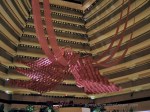
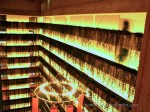
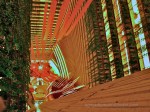
The Marriott Marquis

I was recently at a Photographic Society of Chattanooga meeting when the speaker displayed an image so familiar to me, I almost thought is was one of mine.  But, then I realized it was better than my version.

I don’t feel bad about this–the subject was the Marriott Marquis hotel in downtown Atlanta.  It may be one of the more striking architectural features in Atlanta (from the inside), but it’s also quite a challenge to shoot.  Plus, the day I got to shoot inside the Marriott Marquis, I had owned my PowerShot G3 for about 2 weeks and knew about as much about photography as my elderly aunt (who couldn’t figure out how to use a camera with only one button).

I was in Atlanta for work at the time.  There was a huge tradeshow there and I was playing “booth babe.”  This is a joke because I worked in the telecom industry at the time and it was considered bad form to have anyone in any booth looking anything other than geeky.  I got to don a men’s button-down shirt that would have fit great if I were shaped like a large block and was long-waisted and short-legged.

But, I digress.

Just by good fortune, I was staying at the Marriott Marquis.  I had no idea at the time that it was going to be a photographic opportunity.  I brought my brand new, fancy point-and-shoot camera purely because I was so excited about having what was then by far the nicest camera (digital or film) I’d ever owned that I brought it along purely out of the desire to learn how to use it.
The problem with the Marquis is the difficulty of getting what you want in the frame without getting what you don’t want.  For example, you cannot get the entire stunning view of the balconies into the frame.  My focal length was 7mm for these shots.  I don’t know of an SLR lens that will go that wide unless it’s a fisheye.  Additionally, it’s a hotel with lots of people milling about doing what they want without concern for your shot–they’re there day and night.  A long exposure on a tripod might have done the trick for removing some people, but there are always people standing on the balconies gazing down and up and taking in the incredible structure.

Another problem is the lighting.  Higher up, the balconies get quite dark.  It’s difficult to get a balanced exposure that shows both the lower and upper balconies.

As someone who was:  there for business, without a tripod, in a hurry, and using a point-and-shoot I barely knew how to use, I think I walked away with some surprisingly good shots.  Of course, I cannot look at them now without thinking about how much better I could do today.  Atlanta is only a 2 hour drive–maybe I’ll have to actually go test myself one of these days.

Dogs and Tents

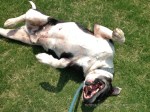
We have decided to take two days to go backpacking.  It’s been a long time since we spent the night in backcountry.  We have chosen a pretty easy place to re-introduce ourselves and expose Tisen for the first time.  At least, we think it will be easy.  What’s 7 miles with 35 pounds on your back?

We have a checklist of things to pack for our dog:

  • Medications (the only one with no insurance is the only one on medication!)
  • Vitamins
  • Special food (because he has allergies, which led to the medication in the first place)
  • Insulated and padded sleeping roll for dogs
  • Collapsible water bowl
  • Water bottle
  • Wipes to remove poison ivy from his fur (for my protection, not his)
  • Super glue (in case he cuts a paw pad)

Given the list, it seemed logical to me that Tisen would carry some of his own stuff.  At least his own food and first aid items.  So, I had him fitted for his own backpack.  Pat vetoed the backpack idea.  He thinks Tisen will be sore from walking so much and doesn’t need to carry any extra weight.  He has a point.

Of course, once we agreed no backpack for Tisen, it was like he knew he wasn’t going to be carrying anything so he started adding to the pile of gear.  First Blue Dog appeared on the pile.  When I moved Blue Dog, Lion showed up.  Most recently, it was Duck.  I haven’t broken it to him that he’s not going to be able to bring any of them on the trail with him.

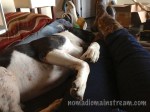
We have, however, had pre-camping lessons in the living room.  We wanted to see if Tisen would fit in the tent with us.  It’s going to be a tight fit, but if he lays parallel to us, we can put his sleeping mat under our mats (which are narrow at the feet) and he can lay between our sleeping bags.  As long as no one moves, it should be super comfortable.

We also practiced entering and exiting the tent.  We wanted to make sure Tisen would get in and out quickly so we don’t end up with a swarm of mosquitos cuddling up with us.  After a couple of practices, he was coming in and out like a trooper.

Next, I practiced getting up to heed the call of nature (which happens about 8x a night when I am camping just because it’s so inconvenient, I think) and leaving Tisen in the tent.  He did pretty well lying still while I got out and back in again.

I think we’re ready.  Now we just have to figure out how to stuff it all into our backpacks.

On a photography note, what’s really amazing about the shots in the gallery is that all but the first one were shot at 25,600 ISO.  The darker images have some grain, but they look better than the Canon 40D did at 800 ISO.  That’s pretty impressive.

Portraits without Flash

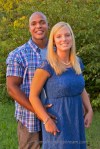
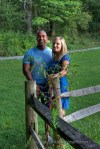
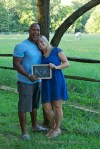
Having spent several hours on post-processing more images from my latest attempt at portraiture, I thought I would do a second post from this shoot.

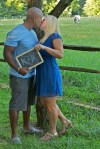
I mentioned some of the challenges I was unprepared for in my previous post on this topic, but what I didn’t talk about was the flash.  Several month ago, I had the realization that I needed portable lighting while shooting the same couple.

At the time, I had recently invested in some studio lights.  When, however, the couple who volunteered to model for me wanted to shoot outdoors, I was stuck with nothing but the built-in flash on my Canon 40D.  In other words, no lighting at all.

So, I invested in an off-brand, all manual flash and started learning how to use it on a flash stand.  But, when I subsequently upgraded my camera, I got distracted relearning the things I thought I already knew how to do and the flash sat in a corner, unused.

I had started taking an online course on flash photography and learned that maybe my off-brand manual flash wasn’t the best equipment to start with.  That led to me delaying purchasing radio controllers for the flash, thinking I might end up buying the latest, built-in radio flash unit if I figured out what I was doing and decided it made sense.

All of this led to me continuing to use a long cord from the flash stand to the camera when I wanted to us my flash.  And, in case you thought I was never going to get to the point, led to an accident involving knocking over my light stand with the cord when I was attempting to light a mimosa tree a couple months ago.  What I didn’t know was that the adapter broke when the stand fell over.

Having put off scheduling this follow up shoot for so long, I hadn’t had my flash unit out for many weeks.  And, of course, we had a last minute invitation to have dinner with friends before they left to go out of town.  So, in a nutshell, I was rushing to get ready for the shoot before racing off for an early dinner with our friends and then racing back to meet my models for the shoot.

Which means, I didn’t discover the broken adapter until I got to the location and was trying to figure out how to make it work.  After fiddling around with it enough to get it to mount sideways with the flash twisted back to the front, I realized I wasn’t going to have enough power to light both of my subjects from far enough away to shoot wide enough to capture the setting, which my models wanted in their images.  So, after waiting months to shoot them outdoors with a flash, I was stuck with natural light after all.

This is a really long way of saying being prepared might be a good idea.  🙂

Shoot

I haven’t used the flash in many weeks.

I actually bought the flash because I needed it when trying to shoot a couple for their “Save the Date” announcements.  The plan was to do a follow up shoot to get something they can use for a decorative idea the bride had for their wedding reception.  However, it took weeks for me to get the flash unit and figure out how to use it.  Then, I had the new camera I was trying to learn to use and they were busy.  Finally, we scheduled a date but then it rained.  I would love to shoot in the rain, but I don’t think that’s what they’re looking for.

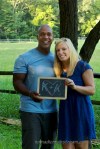
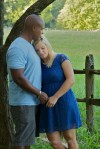
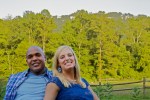
At long last, this Sunday I pulled out my flash stand and flash again and we went off to the Nature Center and Arboretum.  Assignment:  Get a shot of the happy couple in a natural setting that reflects how much they enjoy the outdoors.

Fortunately, they are members of the Nature Center so we were able to shoot up until dusk.  This was very helpful.


When we arrived, the first problem was the weather.  It was so incredibly hot and humid.  It hurt to breathe.  I felt a little sorry for myself lugging around so much equipment in the heat, but the bride-to-be was wearing what looked to be the most uncomfortable dress, so I stopped feeling sorry for myself and was grateful I didn’t have to wear anything hot.

The second problem was the insects.  I know my precious birds wouldn’t survive long if there weren’t a gazillion insects for them to eat, but I really resent that insects find me so tasty.  I guess better me than the bride.

The third problem was the sun.  It was far too bright when we arrived, leading to many squinty pictures.  We moved into a shady area to shoot until the sun started to drop, but this led to the fourth problem:  the place was completely surrounded by trees.  The sun went from too high and bright to too dark in a matter of minutes.

But the final, and most difficult problem to solve was me.  I find myself having no interest in thinking of interesting poses (or looking for poses on the internet).  I’m so focused on the subjects faces that I have to force myself to notice anything else.  I’m looking for a moment of expression when the muscles relax and just do what they really do.  Sometimes it’s very subtle.  I don’t really care if the hair is perfect or if the clothes are smooth or anything else because all I want to see is that split second when the muscles of the face sink into an unforced expression.

I find I do care about the out-of-place clothes and hair after the fact, unfortunately.  They make a difference when they distract, I find.  I just wish they would distract me a bit before I shot the photo.

Off the Wagon

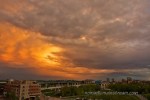
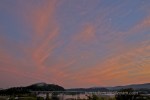
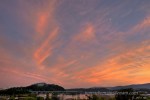
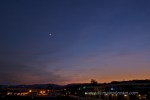
After a long hiatus from shooting the Chattanooga riverfront, I had another relapse.  We’ve gone through this together before.  Usually, it’s amazing clouds that pull me off the wagon and cause a relapse.  This time, it was the chance at a new angle.

As you may have seen in earlier posts, we were dog sitting Twiggy for several weeks.  That included access to Twiggy’s clubhouse which has an amazing view.  So, when the sky started doing interesting things, how could I resist?

I went out on the 7th floor balcony and was immediately reminded I’m afraid of heights.  I can shoot from our 4th floor balcony without so much as a quiver, but our balcony is even with the building.  The clubhouse balcony, in contrast, was not only 3 stories higher, but it also jutted out from the building.  Why do I find overhangs so much scarier?  It makes no sense.  I compensated by staying back from the rail.

This made taking advantage of the level built into my camera to keep my shots straight more challenging.  I love that feature–especially when shooting a scene with as many hills and angles as the riverfront.  Imagine a tripod with a camera setup so the camera lens is hanging over the edge of the railing.  Then imagine the photographer trying to stay 3 feet back from the tripod at all times.  I was never so grateful for my freakishly long arms.

Each time I struggled, got frustrated, and took a step forward, I would suddenly see the ground out of the corner of my eye and get dizzy.  I still managed to get the camera positioned before the sun set.

I was tempted to try the in-camera HDR capabilities for the first time.  There were two things that stopped me.  First, I didn’t have the manual with me.  Second, I really would have had to get close to the camera to try to figure it out from the menus.  I decided today wasn’t the day.

Instead, I took a series of 5 exposures so I could play with my HDR post-processing software again.  Something I haven’t done in a long time.  I don’t know if my eye is changing or if I’m getting better at using the software, but I am starting to like the HDR processed images more.  Not ready to say I want to use HDR post-processing all the time, but it is nice to be able to see both the sky and the ground closer to how I saw them in reality.

That said, I really like the first two shots in the gallery, which are not HDR processed.  They were taken when it was still pretty light out and the camera did pretty well with the dynamic range all on its own.  Also, I do not like the HDR processed shots from later in the series–something funky happens with the oranges.  But some of the HDR processed shots in between are interesting to me.