

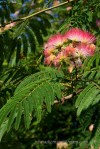


I’m saddened to learn that the Mimosa tree is an invasive tree from Asia that doesn’t belong here. In fact, the Tennessee Exotic Pest Council ranks it as a severe threat. This makes me sad because I was really enjoying the blossoms, but I feel strongly that invasive plant species need to be removed from non-native habitats. Now I feel like a traitor–aggrandizing the enemy.
But, I can’t help but indulge my irresponsible self one last time before I turn my back on the Mimosa tree (don’t worry, I’m sure I’ll continue to indulge in the beverage on the rare occasions the opportunity presents itself–too bad it’s not the drink that’s invasive instead of the tree).
In case you are unfamiliar with the problem of invasive species, I confess it’s a bit of a sore spot with me. Having spent many weekends trying to remove plants that were taking over my own yard as well as the neighborhood, I know how difficult these plants are to control first hand.
In the US, we tend to plant what we think is pretty and/or is easy to grow. We fiercely defend our property rights and believe what we plant in our yard is our own business. Unfortunately, invasive plants don’t stay on our property. They spread through an amazing variety of means and grow quickly out of control since whatever keeps them in check in their native habitat doesn’t exist in the ecosystem they have been introduced to.
While we sometimes call native plants “weeds” because we don’t like the way they look and they grow in places we don’t want them to, these aren’t the same as invasives. Invasive species do outright harm to an ecosystem.
As we all know (I hope), every living thing has interdependencies with other living things. Whether it’s for shelter, food, temperature control–all of the above, no creature can exist without other creatures to support it (depending on what you call a “creature,” I guess). Plants are a critical component of this web.
Invasive trees like the Mimosa reek havoc upon the availability of necessities by crowding out the native trees and plants that would provide them. Because invasives didn’t evolve with the rest of the ecosystem, they fail to provide the critical (and often subtle) requirements that the native plants would provide.
This is my plea: the next time you plant something, remember that what you plant will spread far and wide whether you know it or not. Make a choice that everyone can live with (including wildlife) instead of just what looks good.
A chunk of our tax dollars is spent trying to control these invasive species–even if you care nothing about your ecosystem, why would you want to make a choice that will be an ongoing cost to you and the rest of the tax-paying population for generations to come?
All right, I’m off my soapbox now. Back to taking pictures. 🙂
Related articles
- 89 invasive plant species present a threat to Kerala’s biodiversity (thehindu.com)
- Mimosa Anyone? (nomadicmainstream.com)
- Flooding Disperses Invasive Plant, Fish Species (abcnews.go.com)
- Biofuel Crops Make Great Invasive Species (sustainablebusiness.com)









 nomadicmainstream