Catch the Moon

I have been using the moon as a model a lot, but I find it is not as cooperative as I expected.  While, like a model, it’s a heavenly body, unlike a model, it presents itself on a predictable schedule.  As such, you would think it would be easy to schedule a shoot.  However, I have learned that a) there is such a thing as cloud cover, b) the moon doesn’t always rise before I go to bed, c) the moon often rises out of sight from where I am looking.

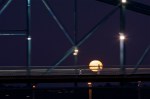
As a result, I have started to worry more about missing the shots of the moon rising behind the Walnut Street bridge in August.  I now wonder if perhaps that was a once-in-a-lifetime opportunity that I missed.

Now that I have a lunar calendar that tells me what time the moon rises, a good tripod, and the ideal composition in mind, I just need the moon to return to it’s former position in the sky.  In doing a little research, I found www.photoephemeris.com for planning outdoor shoots in advance and even tools to figure out where the moon will rise and the path it will travel.  (Maybe we can all be Ansel Adams after all?)

However, this doesn’t answer my question as to how long it will be before the moon rises in the same location.  I am having some troubles finding an answer to this.  I have found articles on the difference in appearance of the moon at apogee vs perigee, the repeating cycle of maxima and minima delineation that takes 18 1/2 years, and calculating the differences in brightness, but I still can’t find how long it takes for the moon to rise in the same location.  I’m guessing that it will repeat within my lifetime, but probably not soon.  In the meantime, I keep watching the moon when it chooses to show itself and looking for opportunities to shoot it rising.

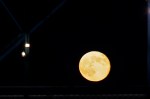
The shot here is a full moon rising through clouds, shot with my iPhone (which was convinced it needed to flash) from a rest area while driving back to Chattanooga from Columbus.  While this looks more like something I might, say, paint during a continuing education class on impressionist painting, I am still impressed by the improvements in the iPhone camera from the 3GS to the 4S–just don’t expect to get good landscape photos at night.

I am particularly impressed with the LCD flash on the iPhone 4S.  I was a little surprised by how brightly it flashed when I took a picture, but when I discovered the flashlight app now has a setting that lets you turn on the LCD light continuously to use it as a flashlight, I was amazed.  I was able to find my workout clothes in the dark this morning and successfully determined the difference between black and dark purple.  If you haven’t upgraded, it’s time.

Shooting the Moon

People walk in Chattanooga a lot. It’s part of the city’s identity. It’s also part of the reason we ended up here. Chattanooga offers total coolness when it comes to places to take a walk–both literally and figuratively. The Walnut St Bridge tops the charts for popularity.  Connecting downtown to the North Shore, Walnut St Bridge was converted from an old wooden bridge for cars to a pedestrian walkway. The entire bridge is dedicated to people-not-in-cars–imagine that!  Paralleling Walnut St Bridge to the West, the Market St bridge also has sidewalks on both sides and a good share of its own pedestrian traffic, although there is plenty of car traffic too. There aren’t many places that you can’t walk safely in Chattanooga. Maybe that’s why they don’t have traffic problems?

I intended to shoot the moon (I know it’s a pun, but it makes me giggle) after hang gliding last weekend, but I missed the true full moon because hang gliding was so exhausting that I slept right through the moonrise. So, I shot the almost-full moon the next night instead.  [Photography lesson learned: a monopod is not the right solution for long-exposure shots with a big, heavy 100-400mm lens. That said, some of the blurry shots are still interesting.]  We raced out to the Market St Bridge to find a place to shoot just before moonrise.

Standing on the bridge after another hot day provides the relief of the cool breeze that seems to be constantly blowing over the river. I admit that when we visited last January, we didn’t find this breeze so refreshing, though. People go by in all shapes, sizes, ethnicities, and fashion styles. My favorites are the cops on Segways. The blue lights on the Segways always make interesting light patterns as they travel across the bridge. You can hang out on the Walnut St bridge–there are benches. The Market St. bridge is not so hang-out friendly. As we wait for the moon to rise, our fellow pedestrians rush by without pausing, although usually with a friendly greeting.

No one seems to wonder what we are doing there–I suppose a camera offers it’s own explanation. I imagine this town is familiar with gawkers and photographers alike. I have seen photographers far better equipped than me wandering around the riverfront, shooting the fantastic views of Chattanooga’s downtown area–there are a lot of subjects to choose from.

Shooting requires concentration. Trying to hold a big lens still in a strong breeze becomes a sort of meditation: position yourself, take a deep breath, set up for the shot, breathe out, hold everything as still as possible, snap the shot. The moon rises quickly–as if it’s worried it’s late for it’s nightly appointment. In the fading sunlight, it glows big and orange. I see the man in the moon clearly through my lens and wonder who decided it looked like a man. But, I feel the pull of it’s magic.  What is it about the moon that makes my blood run at a different pace?  It looks so naked hanging there in reflected light, yet what does its nakedness reveal?  That the moon still seems mysterious in a time when it has been picked clean of all its secrets speaks to just how magical it is.  This night, it looms large and poses for me only briefly.