Birding with Enthusiasm

Tuesday night, I set up the coffee maker and set the timer so it would start brewing at 5:15AM.  I put out the clothes I would wear for rowing.  Everything I needed was ready to go so that when the alarm went off at 5:30AM and I was stumbling around disoriented and wondering why in god’s name I continue to get up at 5:30AM, I wouldn’t have to think.

Wednesday morning, hot coffee in hand, I looked at my schedule for the day and there, low and behold, was a bird walk on my calendar for 7:00AM.  As in a bird walk I was leading!

Startled by my oversight in planning, I shifted gears, pulling together my bird walk backpack and gathering binoculars and my camera.  I pulled up the flashlight app on my iPhone and went searching in the darkness for a different outfit.

I admit I was feeling slightly resentful about giving up my rowing time as I imagined sitting alone in the park waiting for others who never show up.

At 6:50AM, it wasn’t even the crack of dawn yet.  I sat in darkness until I was surprised by a silhouette that turned out to be the Audubon property manager.  Next, a father with 4 enthusiastic children arrived.  Then, a regular from the condos arrived.  I stopped feeling bad about missing rowing.

I started my lesson about birding during fall migration.  I talked slowly and told more stories, hoping the sun would rise.  Every time a shadow went by, one of the children would turn, point, and shout, “What was that bird?”  I need to find out what kind of coffee they drink in the morning!

The amazing thing was how much the kids knew about birds.  They knew which birds were locals and which birds would not be found in Tennessee (even during migration).  The girl immediately recognized a Brown Thrasher she had barely seen for a split second.  Her older brother told me all about the birds he sees at his feeder at home.  Their father told me the interest in birds was the kids passion.  I thought that was pretty cool–also an advantage of home schooling.

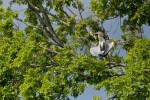
I didn’t do so well on photography that morning.  First there wasn’t enough light.  Then I was just a bit flustered by all the questions and exclamations (LOOK!!!  THERE’S A CARDINAL!!!  LOOK!!! THERE’S A TURTLE!!!  LOOK THERE’S A BLUE HERON!!!  LOOK!!! THERE’S A SQUIRREL!!!).

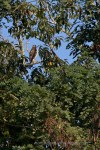
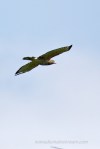
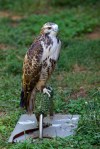
As much fun as it is to be surrounded by little people who think everything is fascinating, it does make it a little more challenging to take a moment to shoot.  I’ve filled in the photos a bit with some leftovers from the previous walk and one shot of Cody, an unreleasable Red-tailed Hawk who has appeared in this blog several times as part of the S.O.A.R. raptor program.  I saw Cody again over the weekend, but that’s another blog post.

Migrants in Disguise

This past Saturday was the first October beginning bird walk.  Fall is an interesting time to bird.  In the fall, I have a love-hate relationship with birding because the birds are migrating, so there are tons of species in town who haven’t been here since at least last spring.  On the other hand, they are wearing their drab fall colors, blending in with the fading colors of the leaves.  And they are quietly eating everything in sight with little more than a peep to even let us know they’re there.

This means paying careful attention to ever flutter and flick among the leaves.  It also means throwing out all the learned images and looking for pale yellows and browns where, in the spring, one might have looked for brilliant red.

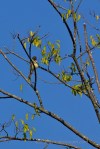
Take, for example the Scarlet or Summer Tanager. We eventually decided it was a Summer Tanager after we saw it several times, but it was almost impossible to decide for sure until looking at the photos.

The Summer Tanager is an all-red bird in the summer.  In September, it’s yellow and green.  Not only are these birds busy getting ready for their long journey to warm climates, but they’re also expending energy completely replacing their wardrobe each fall.  I guess it’s necessary.  I know that I’ve seen many Scarlet Tanagers prior to the leaves on the trees growing in the spring.  I’ve seen only 1 after the leaves are fully out.  In spite of having neon red coloring, the Scarlet (and Summer) Tanager manages to stay well hidden in the canopy of the trees.  Once the trees drop their leaves, however, all bets are off.  So, I guess it makes sense that they would turn to a dull yellow before beginning on their annual trek to mecca.

We saw Magnolia, Nashville, Tennessee, Yellow, Yellow throated, Common Yellowthroat, and Chestnut-sided Warblers. If you have never seen these birds, take a look.  They are tiny, beautiful birds that don’t come to feeders.  Many people die having never seen one, yet they are often nearby (at least during migration season).

While the changes between the breeding and non-breeding plumages for these tiny warblers is not as dramatic as for the male Scarlet and Summer Tanagers, they still got through some dramatic changes.

I wonder how their parents prepare them for this?  Do they tell them that they shouldn’t despair over their dull colors when they’re young?  Do they sit them down and have the “birds and bees” talk?  Or do they call it something different like “the humans and the fish”?  And do they warn them that they will return to the dull yellow every fall like some sort of magical curse in a fairy tale?  And do they have controversy over whether this needs to be taught in the public schools or handled at home?

However bird parents handle preparing their young for “the change,” the birds are well-prepared for blending in.  They all look like leaves.


Hummingbird Band

Pat and I were planning to set out for two days of backpacking on Labor Day weekend.  However, a friend asked if I would like to attend a hummingbird banding on the 1st.  It was a long weekend, so of course I decided to postpone our backpacking trip by a day so I could see hummingbirds being banded.

Who wouldn’t postpone a backpacking trip to see hummingbirds being banded?  I would have postponed all kinds of plans to see how, exactly, this works.

When we arrived at the banding location on Saturday morning, the first stop was the banding table.  The bander educated us while she banded.

The house we were at was someone’s home who happened to love hummingbirds.  They put out feeders every year like so many of us do to attract them to their home.  What was unique about this location was that it was in the middle of two ridges that created a funnel effect for migrating hummers.  So, this time of year, hundreds of hummers would stop at the feeders to fill up on their way South for the winter.  By replacing the feeders with specially designed traps that wouldn’t harm the hummers, the banders were able to capture about 35 birds before we’d even arrived, about an hour after the event started.  1 bird every two minutes is pretty impressive.

I was a bit disturbed when I was asked not to show any photos of a complete trap on the internet.  Apparently there are people in the world who think Hummingbirds would make good pets and are looking for information on how to create a trap.  If you are such a person, please be assured that you cannot keep a hummingbird as a pet and that all will be much better served if you simply feed them and let them go on their merry way.
Watching the bander handle the tiny hummers with a confidence that belied how delicate these birds really are made me wish I had the dexterity to perform such a task.  I asked her if she had started as a jewelry maker–it seemed like the appropriate skill set to me.  She laughed.  Apparently she also didn’t believe she had the dexterity to handle hummingbirds when she got started.

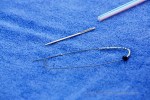
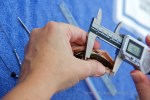
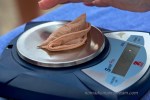
I watched her move through the measurements performed on each bird with a systematic rhythm, rarely interrupted by talking to us.  She measured each beak, each tail, each wing, used a straw to blow apart the feathers to see if there was fat, and then placed each bird on a scale.  She always banded them first.  She said that was in case they got away before she got through all the measurements.

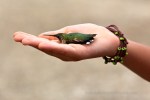
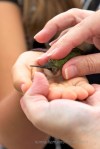
When she was done, she carefully set the bird in a waiting child’s hand and they held it until it suddenly decided it could fly and buzzed away.  Sometimes, this took several minutes.  It was fascinating to see a hummingbird hold so still.

Bird Kings

I have a lot of funny stories about birding.  Let’s start with the 2 years I spent getting out my CD-set of bird songs every time I heard a particular bird calling, trying desperately to figure out what it was, only to discover (eventually) it was a chipmunk.

Or, how about the time I managed to convince myself that a Great Blue Heron (one of the most readily identifiable birds around) was a Tri-colored Heron because its feathers were hanging at a weird angle, making a pattern of color around its neck I hadn’t seen before.

Then there’s the time I was sure I was seeing a Louisiana Waterthrush only to realize I was looking at a female Red-winged Blackbird.  While I think all birders have been fooled by a female Red-winged Blackbird, I’d bet there aren’t too many who thought they might be a Louisiana Waterthrush.

But besides my identification mishaps, I also have physical ones.  For example, at the end of this month’s Wednesday morning bird walk (which I was leading), I got excited trying to see a bird in a tree right above us and I walked right into a concrete bench and fell over it, landing on my rear.  Fortunately, my fellow birders managed to catch me enough to keep me from falling all the way over the bench and onto the ground.

There’s also the time I was so busy looking up that I walked into a branch that smacked me right in my wide-open mouth.  I guess that’s better than a friend of mine who made the mistake of looking up with an open mouth just in time to catch a not-so-tasty snack.

Oh, and then there’s the time I drove off the road trying to identify a hawk perched on post at the side of the road.  Friends, don’t let friends bird and drive.

Perhaps it’s all of these antics that often give me the feeling that the birds are as amused watching me as I am watching them.

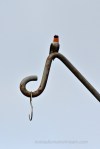
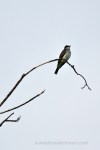
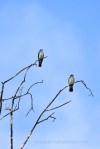
On our Saturday morning bird walk, which I was also leading, we discovered a family of Eastern Kingbirds.  It appeared the baby had fledged and Mom and Dad were trying to encourage it to start feeding itself (sound familiar, parents?).  But the baby wasn’t ready to give up on getting spoon (or beak) fed.

Perched low in a shrub near eye-level, we had quite a treat watching these wonderful flycatchers swoop in and encourage the baby to make an effort.  Baby, on the other hand, demanded to be fed loudly, squealing at Mom and Dad with a bright pink, open mouth.  No tasty treat for Baby either.

I love Eastern Kingbirds. They’re the easiest flycatcher to identify by sight.  The white rim along the tip of their tails and their size along with their pure white breast make them striking and distinct.  That’s what makes a bird a favorite for me–easily distinguishable features.

Feeder Watch

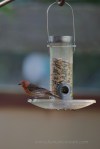
Apparently there were more exciting things going on in Chattanooga last Saturday than sitting around watching bird feeders because I was the only one at the visitor’s center diligently watching the feeders.  However, this gave me the opportunity to get some shots of the birds that I wouldn’t have been able to get had a crowd of people showed up, so it worked out just as well.

The House Finches were the most plentiful by far.  There seemed to be a couple of males who had collected large harems.  Or, perhaps they were couples who had many almost-adult daughters but no sons?

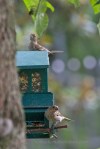
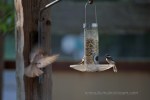
The cardinals and titmice were close seconds in number.  One of the feeders at the visitor’s center has a mechanism that closes off access to the seed if something heavy lands sits on the perch.  This keeps squirrels off of the feeder.  However, it also means only one bird can perch and feed at a time.  This creates a great study of bird learning.

Some arrive, see another bird on the feeder eating and attempt to join it.  If the bird eating is an experienced and assertive bird, it will flap and squawk at the newcomer, attempting to deter it from landing.  If successful, the newcomer will go perch nearby and wait until the first bird leaves or it gets impatient.

If it gets impatient, it may land on the perch far enough away from the second bird so that it leaves it alone.  However, the extra weight causes the perch to lower and the doors to the seed close.  Then both birds fly away and, usually, a third bird swoops in to take advantage of the opening before the other two birds can regroup.

Some birds simply give up and join the squirrels on the ground hoping for someone to knock out a bunch of seed while eating.  They are joined by the birds that prefer to eat off the ground regardless.

For me, I got a rare close look at both a male and female Eastern Towhee.  I say rare because I rarely saw them in Columbus and so far, in Chattanooga, they have mostly been perched high in the tree tops when I’ve seen them.  Apparently all I needed was a feeder.  Chipping Sparrows seemed to keep them company.

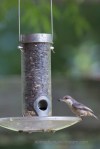
Even though the brown-headed nuthatch is a common bird here, having never seen one before, I was pretty stoked to get to see three of them gathering at the feeder.  They don’t make it up North, so I’ve only seen white-breasted and red-breasted nuthatches in the past.

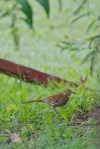
Not at the feeders, but nearby, a Carolina Wren called from the gate.  Then, a Brown Thrasher showed up under a feeder-less tree.  If that wasn’t enough, a wild tom turkey went strutting by the parking lot fence and crossed the railroad tracks in plain view.  We’d seen a whole family the last time I was there, but Tom was fun to watch, too.

Not a bad birding day.

Birding 101

Birds reveal themselves to me slowly.  I must see them many times before I understand who they are, what they look like, what interests them, what they sound like, and I can recognize them like an old friend.

When I hear a bubbling American Goldfinch flying by behind me, I smile to myself, envisioning it’s scooping flight pattern, called “zooming” in hang gliding school.  How the goldfinch must love the zip of the dive followed by the lift, stalling and diving again and again, riding its invisible roller coaster and able to stay airborne because, unlike a hang glider, it can flap.

When I see a Great Blue Heron gliding in for a landing at the wetland, I know that the theory that dinosaurs did not all become extinct but some evolved into birds is true.  If ever there was a remnant of a pterodactyl, surely it’s the great blue heron with its crooked neck gliding awkwardly on giant wings, miraculously able to perch high in a tree on it’s fragile, stilted legs.

And now, I am pursued by brilliant Indigo Buntings.  They perch and sing their songs to me, over and over, determined that I will recognize the sound of their voice.  At long last I have learned to know them by their song.  I can smile and look and see a tiny silhouette off in a distant tree top, point, and say, “There is an Indigo Bunting.”  It seems like magic to those who have not listened to the bunting’s song 3x a day for months.  It seems like magic to me, even though I have.

No matter how familiar a few birds have become to me, there is always another bird to meet.  My latest friends are fly catchers.  The Blue-Gray Gnatcatcher is easy to recognize.  But the Eastern Phoebe and the Eastern Wood Pewee still manage to confuse me even though I thought I knew what a Phoebe looked like for many years now.  My human friends play the same trick on me–I often recognize them only to discover I’m saying hello to a complete stranger.  At least the Phoebe tells me its name over and over again in its distinct call of “Fee – bee.”

These are things I like to share with others.  I love to see people get excited about seeing a bird for the first time that they’ve walked by without notice for decades.  I love to see someone realize that a bird they thought they knew looks completely different up close through binoculars.

For this reason, I have started leading beginning bird walks for the Audubon Society.  I am not the best birder in the world–there are many species I would be hard pressed to even guess at.  But, having struggled long and hard to learn what I do know, I know what’s helped me learn it.  Maybe that’s why people say “those who can’t do, teach”?

Regardless, I’m happy to share smiles, even if it’s over a robin.

Not a Beach

Unlike yesterday’s post, this one isn’t about the beach.  In fact, it’s pretty much as opposite as it gets from the beach.

Pat and I fell in love with a place called Jasper in the middle of Jasper National Park in Alberta, Canada.  After spending a week hiking in the area, we started fantasizing about living there.  We figured before we got too far with this fantasy, we should go back in the winter.

We had flown in and out of Edmonton the first time, so we thought we’d try flying in and out of Calgary this time and return to Calgary a few days before our return home so we could spend New Year’s Even there.

This was the second time we decided to travel over Christmas.  It was the first time we went somewhere where it was -15 Fahrenheit (-26 Celsius) for the high during our whole trip.  (We loved it anyway.)

By the way, if you are considering going to Jasper, I recommend flying into Calgary if it’s summer, but flying into Edmonton if it’s winter.  The drive up Icefields Parkway is beautiful in the summer, but it’s down right terrifying in the winter.  I suppose one might intuitively know that driving up a highway called “Icefields Parkway” in the middle of December could be a bad idea.

We, however, having been there in the summer to see the glaciers, assumed the name referred to the glaciers rather than the actual road.  The Toyota Camry we rented faired far better than one might expect, but we really should have been driving with chains.  It was supposed to be a 5 1/2 drive.  We were about 3 hours late getting to Jasper.

The drive back to Calgary went much better–there hadn’t been any fresh snowfall for days and we left in the morning, driving in daylight.

After spending 9 days in the snow and ice, we thought it would be nice to return to the city, thinking it would be warmer between being further South, at lower elevation, and being made of heat-holding materials.

It’s quite possible it was actually colder in Calgary.

I think it was the wind tunnel effect of all the office buildings, but it might have been psychological.  It’s hard to notice that you’re cold when you’re surrounded by incredible mountains.

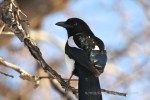
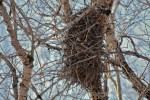
We made it to the local bird sanctuary for a little bird watching in spite of the cold and a lack of binoculars.  I even managed to get a few shots.  I was fascinated by the Magpie nests at the sanctuary–they looked like multi-story condominiums.

I struggled to identify what kind of large bird of prey I got a shot of.  At the time, I assumed it was a hawk.  When I reviewed the photos again tonight, I suspect it’s actually a second year bald eagle, but will have to confirm.  I remember thinking it was extremely large for a hawk, though, so it would make sense.

Feeder Birds

Watching the Audubon Visitors’ Center is not exactly an arduous task.  In fact, the only reason it’s nice to have at least 2 people there is so that one of them can go do something else from time to time.  While visits are picking up as more and more activities are scheduled, it really isn’t like there is ever a line of people trying to check in.

As such, when I was asked to be the backup volunteer last Saturday, I took my camera along and thought I might get an opportunity to do a little shooting while I was there.

Not wanting to assume anything, I decided to come back for my camera after establishing how much help the main volunteer was likely to need.

I hopped out of the mini-van and immediately heard the plaintive cry of a red-shouldered hawk.  She was flying straight at me over the roof of the visitor’s center.  I stood there admiring her and simultaneously kicking myself for not having my camera at the ready.  She flew overhead and perched on some wires briefly.  When I started to move back towards my car, she flew off.

Now, I might have gotten a clue and grabbed my camera right then and there, but I figured that was going to be my one big sighting for the day and continued on my way into the center. And of course, I got to chatting with the other volunteer and one of the board members who stopped in and didn’t get back out to get my camera right away.

And, of course squared, as we were chatting, a family of wild turkeys suddenly appeared in the parking lot.  There were 7 chicks with two adults working there way across the parking lot.

I have a history with wild turkeys and my camera.  Whenever I see a wild turkey, I think “wild goose” and I don’t even try to chase it.  It’s just fortunate I’m shooting digital.  Otherwise, I would really resent all those shots of bushes where a turkey had been a moment before.

I did, however, learn my lesson and go get my camera.  I didn’t, however, see any more birds that were exciting.  I did, however, manage to get some shots of the birds at the feeders.  I particularly like the female house finch drinking the water that collected in the indentation in the hummingbird feeder.  Who says you have to go all out to create a water feature attractive to birds?

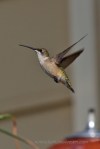
I also really like the hummingbird and the bee racing to the feeder.  I wish it were a better shot (not enough depth of field), but I was at least pleasantly surprised that I managed to get them both in the frame at the same time.

The titmouse peeping at me also makes me smile.  I can’t say I’ve ever seen a titmouse from quite that angle. It took me a while to remember what kind of bird it was.


It Bears Repeating

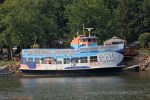
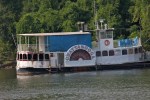
The Tennessee Aquarium not only offers a diverse collection of aquatic life, but they also have these fantastic river cruises.  Pat and I took the 3-hour tour (but the weather didn’t get rough) last September.  It was such a great experience, we decided to do the 2-hour version with Pat’s family during their recent visit.

In my mind, there would be a cool breeze blowing across the river that would somehow wipe the 106 degree heat away and leave us feeling cool and refreshed.  Or, worst case, we’d be in a cool air conditioned cabin.

Allow me to mention that when we took the sunset tour in September, it was about 30 degrees cooler and it was, well, sunset.  Between the extra 30 degrees and the very direct sunlight during the brightest part of the day shining through a mostly glass-enclosed cabin, the A/C had a little trouble keeping up.  Oh, wait, I forgot to mention that in September, there were 13 of us on the cruise.  This time around, there were about 70 people sitting together sweating.

The circumstances kept us from regretting that it was only a 2 hour cruise, at least.

On the plus side, we had a knowledgable and hysterical guide.  He kept us all laughing in spite of the heat–he may have missed his calling as a stand-up comic.  We also learned quite a bit–I think I’ve now been on enough of these tours and to enough historic sites that the history of Chattanooga is finally starting to sink in.

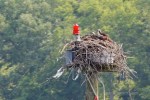
We also saw a lot of Osprey–something we didn’t see in September.  I was so excited by the Osprey that I stood up on the deck the entire time we were allowed up there regardless of feeling like a slowly frying egg.  There was enough of a breeze at first to prevent the sweat from pooling and dripping.  But then we turned around and the breeze died.  Everyone went below except for me a couple of die hards.  I felt bad for the woman sitting next to me when I finally returned to the cabin–I’m pretty sure my deodorant failed.

My photos also failed.  Between the extraordinarily bright sun (one of my friends recently asked if we were still the 3rd rock from the sun–I think she’s onto something) and the moving boat, I can’t say I got any really great shots.  I really wish I had one of the two Osprey chicks both fully visible, but I was shooting between people’s heads to get the shots I did get.  I’m thinking about starting an etiquette blog for photographers where I can offer my advice on tough questions such as “when is it OK to knock over a dozen tourists because they keep passing in front of your lens while a nest of Osprey is in full view?”

I suppose I will have to go on a private cruise if I want really good shots.

The Return of Dunwoody Fourscore

When my friend Dale (from S.O.A.R.) called me and told me that the Peregrine Falcon they recently released at Rock City was continuing to return for meals and that I might get some good close ups of him eating if I could come up to Rock City soon, I decided it was the perfect time to take Pat’s family (who was visiting) up to see the birds.

We arrived early and walked out to the feeding platform with John and Dale.  John tossed a chick into the feeding box while he looked for Dunwoody (as named by Dale and John because the falcon was found in Dunwoody, Georgia) Fourscore (as named by the Rock City naming contest in honor of Rock City’s 80th anniversary).  Pat and his family crouched further back behind a tree while I hid behind a bush closer to the feeding platform.  John walked around in the open, known to the bird and symbolic of breakfast, he figured Dunwoody Fourscore might be enticed to come eat.  However, the falcon was no where to be seen.

Since it was about time for the first Rock City Raptor show of the day, we all returned to the amphitheater.

Watching the intro video for the 4th time, I still got chills watching the birds maneuver through the air.  It’s an amazing feat to watch and the video shows just how agile these birds are in slow motion.  I could watch that video all day.

But, seeing the birds live is an even bigger thrill.  Cayce gave me a special treat by flying straight at my head.  Unfortunately, she got so close I would have needed extension tubes to get a good shot of her just before her tail rearranged my hair, causing the whole audience to take a collective gasp.  It’s always fun to be part of the show.

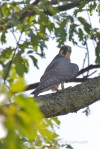
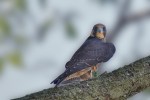
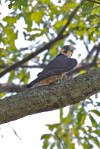
After the show, Pat and his family went off to explore Rock City and I followed Dale and John back to the feeding platform to see if we could find Dunwoody Fourscore.  The first clue that he had been by was the missing chick.  Of course, he’s not the only raptor in the area, so that wasn’t solid proof of his presence.  We walked around looking to see if we could spot him.  Eventually, John managed to spot him hanging out in a tree nearby.  He had his wings partially spread, trying to cool off.  It was about 102 degrees by then, a few degrees cooler than down in Chattanooga below.  Dunwoody Fourscore was making the most of the breeze coming up over the cliff.

Fourscore didn’t move while I circled underneath him.  Well, not quite a circle–a true circle would have taken me off the cliff.  As I came around to the other side of him, he switched his stance, looking down at me as if he was thinking, “What in the heck are you with that big glass thing growing out of your face?”