






In my early 20’s, a co-worker invited me on a group caving trip. In preparation, I put on approximately 7 layers of cotton. Cotton underwear, cotton long underwear, cotton jeans, cotton shirt, cotton sweatshirt, cotton everything.
We, of course, decided to do a crawl (more like a drag–there wasn’t enough space to actually get up on your hands and knees) through a 160 foot long “tunnel.” I was immediately behind the leader, who was wearing waterproof coveralls.
My co-worker was the last person in the group. When we caught up in a large cavern, I was soaked through. I said, “I thought you said it was a dry cave?” He replied, “What are you talking about? It was completely dry.”
This was probably true, but only because my 7 layers of cotton had absorbed every drop out of every puddle I drug my body through. I have since read that you will actually stay warmer stark naked than you will wearing wet cotton. I believe it.
I shivered for about 3 hours straight. The group debated on whether to take me to the hospital, figuring I was on the verge of hypothermia. I was OK as long as I kept shivering. I’ve never been so cold in my life.
Since then, I haven’t been so excited about caves. But when I learned that Outdoor Chattanooga offered a kayaking tour to a bat cave, I couldn’t resist.
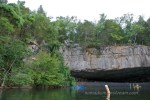
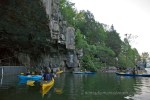
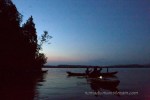
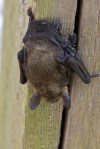
We kayaked across a small section of Nickajack lake to the entrance of the bat cave. This is not a lair for a superhero, but rather a cave occupied by approximately 80,000 gray bats.
We sat in our kayaks near the fence that keeps people from getting too close to these endangered mammals. While we waited, we learned that the gray bat is not just important for mosquito control (one of the reasons I adore bats), but that it’s also a major pollinator. The fact that it’s endangered has vast implications for our ecosystem.
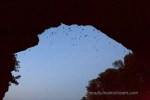
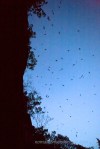
As the sun dropped, a whir started deep within the cave. After a while, there were so many bats flying out of the cave, it was like a blur of black motion rising from the opening and heading into the woods.
When we looked against the still-light sky, we could see hundreds of them darting around above our heads, collecting the insects around us.
It took at least 20 minutes, maybe 30, for all the bats to exit the cave. We sat in awe, watching until our necks ached. Then, we paddled back in the dark, each with a single light on our kayak.
As we arrived back at the launch, the crescent moon sank towards the horizon, setting very early (or late). It loomed larger as it approached the horizon, beginning to take on a golden cast.
We sighed and said out loud what a nice way it was to spend a Saturday evening. I wasn’t wearing a single stitch of cotton.










 nomadicmainstream