Bridge Over Troubled Water

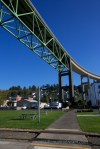
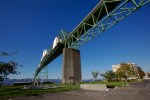
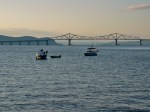
On our trip to Portland oregon, we made a stop at Astoria, a town as on the corner of Oregon as it gets.  In fact, the 4 mile long Astoria Megler bridge crosses from The north-most, west-most corner of Oregon to Washington.

We planned to drive across the bridge, but decided to make a stop to see the under-side of the bridge before making the crossing.  To be honest, this was because we couldn’t figure out how to get onto the bridge and were circling around confused when we spotted a Naval memorial under the bridge.  We pulled off and checked out the nautical monument and coastal scene.

The nautical monument is like a miniature wall that captures the names of those who have died in service to the sea.  The roles of the people range from boat captains to daughters of boat captains.  It’s an interesting exercise to read the names of the people and what is described as their job. I wonder if it was difficult work to be a sea captain’s daughter?

Seaside Seagulls

From Cannon Beach, we drove North to Seaside.  Perhaps we needed to do a little more research and there is a really beautiful beach somewhere in Seaside.  However, what we found was a ridiculously overdeveloped tourist trap looming over a nondescript stretch of sand with more litter than we’d seen in downtown Portland.

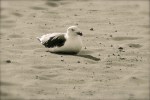
Having just come from Cannon Beach, I was so unimpressed that I didn’t shoot a single beach scene.  Instead, I put my 100-400mm lens on and started shooting the gull stragglers that didn’t seem to know the gull party scene was down at Cannon.

Two observations about photography:

  1. While 100mm sometimes surprises me with how tight it really is when I point it at a landscape scene, 400mm always surprises me at how wide it really is when I point it at a bird.  Even a big bird that’s relatively close to me physically.
  2. Number 1 often leads me to shoot the eye of the bird near the middle of the frame to make cropping easier.  Unfortunately, by focusing both the lens and my brain on the eye of the bird, sometimes I all together lose sight of composition.

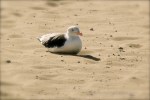
With regard to the first observation, the 4th photo in the gallery is the original, unadjusted image out-of-the-camera (other than having been converted to JPEG and greatly reduced in resolution for the purpose of posting).  As you can see, the gull appears quite far from the camera.  This isn’t helped by the fact that I was standing on an observation area raised well above the beach.

As for the second observation, it frustrates me when I sit down at my computer and look at my shots on my big bright screen and smack myself in the forehead and say, “Man–that would have been a great shot if . . . ”

For example, the young Herring Gull checking out its own shadow probably would have been a more interesting shot than the one I brought home.  I don’t know if he was actually checking out his shadow, but that’s the story the image would have told if I’d back up far enough to get the entire shadow of the bird into the frame.

Sometimes my husband walks up behind me and says, “Oh, that would have been great if you would have . . .” when I am reviewing images.  That’s even more frustrating.  A word of relationship advice:  if you’re in a relationship with a wannabe photographer, don’t ever say that.

As it is, these gulls gave me a good opportunity to expand my horizons a bit in Aperture.   Normally, I don’t do much beyond cropping, adjusting the levels, and balancing highlights and shadows.  The poor lonely Herring Gull looked like it really needed something more than that.  So, I played with edge blur and antique effects and Black and White.  Nothing ground breaking here, but it was fun.

Two Strangers at Tualatin

While in Portland, we made a stop at the Tualatin River Wildlife Preserve to see what birds had stopped over on their way South.

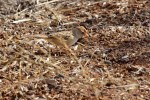
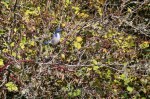
When a sparrow appeared to me, I was hoping it was going to be something I don’t see at home.  However, I would say it’s either a Chipping Sparrow or a young White Crowned Sparrow, both of which are also found out east.  I’m rooting for a White Crowned Sparrow–it’s more exciting than a Chipping Sparrow.  Plus, it has an orange beak–although this isn’t normal for a young White Crowned Sparrow as far West as we saw this one according to Sibley.  But a Chipping Sparrow doesn’t have an orange beak, either, so I’m going with the White Crowned.

Sparrows are often tortuous to identify.

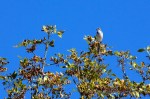
This leads me to a species definitely not seen East of the Mississippi–the Scrub Jay.  I don’t know who named this poor guy after something that sounds like it should be used to clean toilets, but they really must have been annoyed with these noisy, persistent buggers when they named them.  After all, the Scrub Jay is a beautiful, brilliant blue bird with gorgeous markings.

My appreciation of the Scrub Jay reminds me of a visit from a Korean family when I was a teenager.  They were amazed by the Northern Cardinal.  We had dozens of them visiting the feeders during their visit and the Korean children couldn’t get over how beautiful they were.

What is it about rarity that makes us prize beauty more?  Once it becomes a common occurrence, we forget to be amazed.  This seems related to the old adage, “we only want what we can’t have,” usually applied to dysfunctional relationships.

Instead of appreciating the ubiquitous Northern Cardinal when we are in the East and the equally ubiquitous Scrub Jay when out West, we look for the birds that are hard to find.  We revel in sighting the birds yet to get a check mark on our life list.  We yearn to see a bird we’ve never seen before.

I admit I fall into this thinking.  I was excited to add two birds to my life list while at the preserve.  First, there was the Cackling Goose (or the Crackling Goose as it seemed to come out more often than not).  I had dismissed them as Canada Geese to be honest.  I had no idea there even was such a thing as a Cackling Goose.

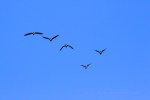
Fortunately, my father had recently learned about the Cackling Goose, which led me to play its call compared to a Canada Goose.  Sure enough, different calls.  All of the birds in flight were Cackling Geese.  They seemed to be confused as they tried to create a formation.  Perhaps that’s why they were still as far North as Portland in October.

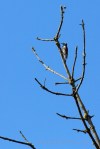
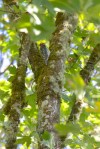
But more exciting than the Cackling Goose, we also got to see a Red-breasted Sapsucker.  Definitely a nice treat, although probably a daily sighting in this preserve.

Little Things

We have just returned from our annual trek to Portland, Oregon to visit my dad and his wife.  We made this a relatively low-key trip.  In the past, we’ve taken longer trips to Portland to allow time to meet our friends in Seattle and do things like take a side trip to Olympic National Park in Washington or spend a week in Glacier National Park.

This time, we spent a lot of time debating if there was a way to go to Portland with Tisen.

The reality was that we would need to spend 6 days driving if we didn’t fly and there was no way I was going to load Tisen into the cargo hold of a plane.  If we were going to take 6 days to drive to Portland, I wanted to make it an adventure through Yellow Stone–a place I have yet to go.  But, neither Pat nor I could afford to take that kind of time off work.

In the end, we opted for asking our friends to watch Tisen and keeping our trip short.  Our friends from Seattle offered to come down to Portland to spend a day with us so we didn’t have to take 2 or more days to see them.  My dad didn’t plan any multi-day side trips; we would have plenty of flexibility in our schedule to visit with our friends.

So, last Monday morning, the alarm went off at 4:00AM and I hopped out of bed like that was the time I got up every day.  By 5:45AM, Tisen was fed and walked and we were packed and ready to roll.  Tisen excitedly ran for the van just sure he was going on a new adventure with us.  I had a hard time dropping him off at our friends’ house.

We made it to Portland a little early and by 2PM were sitting in my dad’s family room with full bellies (having stopped for lunch on the way from the airport) and suffering from only mild separation anxiety.

It felt good to just sit and hang out, catching up.  I, of course, got out my camera and started looking for things to shoot.

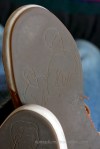
Pat sat across from me with his feet up on a foot rest.  I noticed for the first time that his shoes, which he has had for at least a couple of years, have outlines of the shoemakers on the soles.  I couldn’t resist trying to shoot the soles of his shoes.

Then, my dad was telling a story and chuckling.  I had to capture some of his facial expressions (although most of them didn’t come out so flattering).

Finally, I put my macro lens on my camera and went out to the garden.  My dad’s wife is an amazing gardener and can always be counted on to have beautiful flowers.  Although the surprisingly cool temperatures sent be back inside after only shooting a couple of flowers.

In a New York Minute

New York City is . . . You could finish that sentence with just about anything. For me, it’s mostly been a place I go for work or a place I go through on the way to somewhere else. However, there have been a few times when I’ve gotten to spend a justo here for fun.

The most recent time was a few years ago now. I stayed with a friend for the 4th of July weekend on a lagoon in NJ. Most of the Jersey shore lagoons are trapped in concrete and look like man made creations, much like the characters on the reality show (sorry, couldn’t help myself). But it’s surprising to someone who has spent as much time in “The Garden State” as I have just how much of the inner inner coastal areas are as dedicated to boating as the actual coastline is.

As someone who grew up as inland as it gets, the coast always seemed like a definitive line between land and ocean. In reality, the ocean gives way gradually to land, meandering its way deeply into every crevice. While me might intuitively guess at the movement of water, I tend to think of it as moving outward from the land to the ocean and had been oblivious to the interplay of water coming in.

My friend and I took a day off work and took the train from Brick, NJ to somewhere in New York City. We saw so many boats on the way, I thought we had taken a train to Miami.
Once we arrived in the city, however, the boats were all but forgotten. It’s hard to remember Manhattan is an island. It’s amazing it doesn’t just sink under the weight of all the sky scrapers it supports.

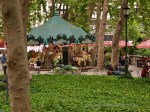
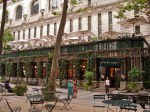
I suppose it comes as no surprise that of the dozen or so photos I took in the city, the majority were in the one park we stopped in. As much as I love visiting cities, I’m always relieved to find a bit off green space producing enough oxygen I feel I can breathe again. We were no where near Central Park, but Bryant Park provided exactly what I needed.
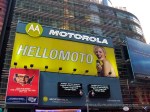
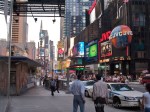
We had a fantastic dinner at a place that specialized in artisan cheeses and then headed to Times Square and Broadway where we saw Mama Mia–it had been running for so long, we had no trouble getting tickets.

The usher/bouncer yelled at me for taking a picture before the show had even started, so I put my camera away and enjoyed the show. I’ve only seen two broadway shows on Broadway, but it is way better than seeing the Columbus, Ohio version. Only London compares to New York for Broadway shows in my limited experience.

At about 11PM, we hauled our shopping bags from Broadway to the train and made our way back to Brick feeling like we couldn’t have stayed awake through one more New York minute.

Quiet Giants

Even as a dedicated tree hugger, I never thought going to stare at trees was particularly exciting. Arboretums, for example, fail to move me.

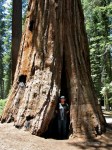
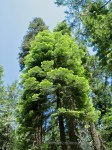
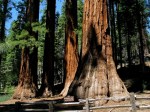
But, several years ago, after 6 days of backpacking in Yosemite, it was a nice respite to head to Mariposa Grove and see the giant sequoia there.

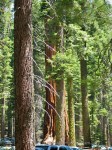
In the same inexplicable way in which the mountains evoke a quietude, these giant trees spoke to me like individual mountains standing amongst a forest of tiny hills. They are the largest living things on the planet by volume.

I once read a historical novel about the settlers of the Pacific northwest in the 1800’s. In that book, they had an intense hatred of trees. The trees stood between them and fertile farmland, sustenance, and shelter.

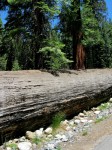
When I saw the sequoia looming down, as they had in some cases for over 3000 years, among some of the world’s oldest living creatures, I found myself wondering what the early settlers thought of these giants. The Sequoia survived in part because they were fire resistant, bug resistant, rot resistant, and not particularly useful for building anything.

The settlers couldn’t burn them–in fact, fires are quite helpful in promoting Sequoia reproduction and over-controlling forest fires led to a demise in their population.

Their seed cones are tiny pods that pop open and spread seeds when properly dried. The heat of fire, which has the additional benefit of clearing out most of the Sequoias’ competitors, dry out the cones and allow the seeds to disperse.

The Chickaree squirrel can also help disperse sequoia seeds. This little guy will eat sequoia cones and help spread the seeds in part by storing the cones.

Luckily for both the sequoia and the Chickaree in Mariposa Grove, controlled burns are helping to restore the natural ecosystem of the area, encouraging new generations of giant sequoia trees.

The famous “California Tunnel Tree” in the middle of the park probably serves as the best representation of how the early settlers felt about these giant trees. They cut a big hole through the middle of a tree wide enough to drive a wagon and a team of horses through it. Not exactly a sign that they had a sense of awe and wonder about the trees. Seems more like a Graceland tourist trap than a healthy respect for the diversity of life.

In any case, we are all fortunate that Galen Clark did come along with a healthy respect. He saw the testament to grace these trees represented and managed to preserve them.

I imagine life from the trees’ perspective, in which thing move at a pace proportional to a 3000+ year life expectancy. I imagine what a tree “sees” in the course of 3000 years as the make up of the air, the water, and even the very soil at its feet shifts and changes. I wonder if the older trees complain about kids these days or if evolution occurs at an altogether different pace?

The iPhone is Not Enough

On Labor Day, I was hiking my way back from an overnight in the backcountry.  The next morning, I was up at 5:30AM so I could get on a plane to Orlando for a work conference at Disney World.

Because our conference hotels overflowed, I was moved to The Animal Kingdom Lodge.  Having not been inside the Disney World gates since I was 9, I didn’t know that there would be an actual animal kingdom outside my window.

Had I known, I might have figured out a way to pack my camera.

Having reduced our worldly possessions by about 80% over the course of many years and moved into a small apartment with ridiculously limited storage space, one of my greatest challenges has been not to keep acquiring more stuff that won’t fit anywhere.

I make this point because I am starting to think about getting a small, point-and-shoot camera.  Something that will do a better job than my iPhone camera.  And something I can carry backpacking without getting an ache in my neck.

Now, some might argue that I should think about trading in my iPhone 4S for a phone that has a decent built-in camera.  But, I’ve had my iPhone for less than a year and I really don’t believe there is a phone with a built-in camera that’s going to suffice.

Let’s look at the camera in the iPhone 4S. Like all built-in phone cameras, all zoom capability is digital.  By this, I mean that when you are zooming, it’s enlarging the image in software, no moving glass around to magnify the image before it is captured digitally (also known as Optical Zoom).

When you look at the images in the gallery, you can see that as you move from left to right, the buffalo get bigger and the quality of the image gets worse.  This is the same thing that happens when you enlarge a low resolution photo on your computer and the pixels get spread too far apart for the image to look good.

In comparison, when optical zoom is used, the image is magnified by the glass and then captured on the sensor at that size, so there is no loss of resolution in the image.  Maybe instead of a point-and-shoot, I just need an adapter so I can use my lenses with my iPhone?  They really exist:
http://photojojo.com/store/awesomeness/iphone-slr-mount/


But, then I’d have to carry heavy lenses plus an adapter.  Besides, that little adaptor costs $250.  I’m pretty sure I can get a really good point-and-shoot for that much money.

I started investigating MILCs (Mirrorless Interchangeable Lens Cameras), which are smaller and lighter.  I’m not ready to spend that much money on a new technology that’s step down in quality, although they do seem quite promising.

Maybe fuzzy animal pictures on work trips and an aching neck on backpacking trips will just have to do for now.

Sunless in Seattle

I love flying over Seattle.  There’s almost always clouds below the plane, blanketing the sky.  Then, suddenly, the peak of a mountain pops through like a giant whitehead.  Only an attractive one.  Mt Rainier particularly stands out.  Perhaps because it’s so rarely been visible from the ground on any of my trips to the area.

These photos are from the first time I went to Seattle, which wasn’t until 2004.  We went to visit some friends who had moved out there from Columbus.  We spent most of our time North of Seattle, but we decided to spend the last day of our trip downtown, exploring the city.

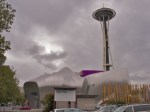
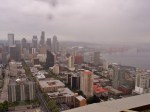
The Experience Music Project and Space Needle were two of the sites on our “must see” list.  Since they were co-located, it was pretty easy to work them both into our schedule.  As luck would have it, we had beautiful blue skies and sunshine that entire trip until the day we went into downtown Seattle.  I don’t know if this is because there is some sort of vortex over Seattle and causes it to be cloudy and rainy there all the time or if the maximum number of sunny days had been reached and the clouds were turned back on.

As we approached the EMP Museum, it looked mostly like a sheen of gray against a gray sky, drenched in gray mist.  We were happy to go inside.

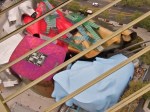
Seeing the collections of guitars was pretty exciting to my husband.  A little less so to me.  But, the tornado of guitars was pretty impressive.  In truth, there could have been absolutely nothing inside that building and I could have spent the entire day trying to figure out how to shoot its strange curves and intersecting angles.  Armed only with my PowerShot G3 at the time, I struggled with the lighting conditions for starters.  But more than that, trying to find a logical edge to decide on what to include and exclude from the frame seemed impossible as each shape flowed into the next.  Each attempt at framing a shot seemed like I was cutting off the flow.  Most of my shots are not even interesting enough to include with this post.

After exploring the interactive exhibits in the EMP, we made our way over to the Space Needle.  In spite of he rain, the view was pretty impressive.  We looked straight down on the EMP and got to look at the shape of tis exterior.  We also got a clearer view of how colorful the exterior really is.

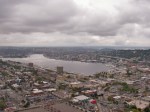
The Space Needle also afforded some great looks at the ports below.  Down in the park below, a group of kids were playing with giant water canons permanently mounted there.  I found it amusing that they were squirting each other with water while it was raining.

By the time we’d stood out on the observation deck for 10 minutes, we were both looking like drowned rats.

White Plains

Back a few years, which now seems like a lifetime ago, I used to go to White Plains, New York for work on a fairly regular basis.  There are several things I recall about White Plains, NY.  First, if you ever have to go there and someone suggests you should fly into LaGuardia or Newark, just say no.

The first time I went there, I flew into Newark on a Sunday and spent 3 hours trying to get across one bridge–there are really only 2 bridges to choose from when coming from Newark to White Plains and apparently the entire world is divided between those two bridges on a Sunday afternoon.

My second trip, I flew into LaGuardia and my transit time was cut to about an hour and a half.  On my third trip, when I arrived in Cleveland and ran for my connection, arriving at the gate all flushed and flustered just after the door closed, the gate agent asked me where I was going.  Not thinking, I replied, “White Plains.”  She looked at me and said, “The flight to White Plains is at that gate,” pointing at a gate across the aisle.  I managed to switch flights in time to go to White Plains.  When I arrived, I discovered that airport was exactly 8 minutes from the customer site I was visiting.

I asked the customer why they had recommended Newark or LaGuardia.  They’d assumed I wanted a direct flight.  They didn’t realize that I had to connect pretty much anywhere I flew to.  Still, I haven’t figured out why someone would think it was better to have a direct flight and a 3 hour drive (or even an hour and a half drive) than to have a connection and an 8 minute drive.  Even if I had an hour and a half layover, it’s more productive than an hour and a half sitting in traffic.

White Plains itself is quite beautiful.  Like most of the parts of New York I’ve been to (other than New York City), you see more trees than buildings.  Everything is cloaked behind stands of evergreens.  It’s hard to even tell when you’ve arrived at an office park.

For the less nature-centric, there is also good shopping, good food, great access to planes, trains, and any other imageable form of transportation (including horses, although I think they were all privately owned).  Just don’t try to drive there.

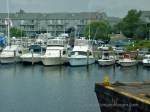
I had the rare pleasure of spending an evening alone with my camera on one of my trips to White Plains.  I made an exploratory pass around the neighborhood and found a lovely Spanish restaurant on the shore of the Hudson along with a park.  After filling my belly, I walked along the dock, taking pictures of the scenes on the river.

What was most surprising to me was the view of New York City.  Looking down the Hudson, Manhattan spread itself across the river like a bridge in the distance.

The Marriott Marquis

I was recently at a Photographic Society of Chattanooga meeting when the speaker displayed an image so familiar to me, I almost thought is was one of mine.  But, then I realized it was better than my version.

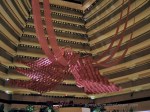
I don’t feel bad about this–the subject was the Marriott Marquis hotel in downtown Atlanta.  It may be one of the more striking architectural features in Atlanta (from the inside), but it’s also quite a challenge to shoot.  Plus, the day I got to shoot inside the Marriott Marquis, I had owned my PowerShot G3 for about 2 weeks and knew about as much about photography as my elderly aunt (who couldn’t figure out how to use a camera with only one button).

I was in Atlanta for work at the time.  There was a huge tradeshow there and I was playing “booth babe.”  This is a joke because I worked in the telecom industry at the time and it was considered bad form to have anyone in any booth looking anything other than geeky.  I got to don a men’s button-down shirt that would have fit great if I were shaped like a large block and was long-waisted and short-legged.

But, I digress.

Just by good fortune, I was staying at the Marriott Marquis.  I had no idea at the time that it was going to be a photographic opportunity.  I brought my brand new, fancy point-and-shoot camera purely because I was so excited about having what was then by far the nicest camera (digital or film) I’d ever owned that I brought it along purely out of the desire to learn how to use it.

The problem with the Marquis is the difficulty of getting what you want in the frame without getting what you don’t want.  For example, you cannot get the entire stunning view of the balconies into the frame.  My focal length was 7mm for these shots.  I don’t know of an SLR lens that will go that wide unless it’s a fisheye.  Additionally, it’s a hotel with lots of people milling about doing what they want without concern for your shot–they’re there day and night.  A long exposure on a tripod might have done the trick for removing some people, but there are always people standing on the balconies gazing down and up and taking in the incredible structure.

Another problem is the lighting.  Higher up, the balconies get quite dark.  It’s difficult to get a balanced exposure that shows both the lower and upper balconies.

As someone who was:  there for business, without a tripod, in a hurry, and using a point-and-shoot I barely knew how to use, I think I walked away with some surprisingly good shots.  Of course, I cannot look at them now without thinking about how much better I could do today.  Atlanta is only a 2 hour drive–maybe I’ll have to actually go test myself one of these days.