Tour to Karlsruhe

This is our last morning to eat breakfast at the wellness hotel. But when we all convene in the lobby at 8AM, we discover that the restaurant is already full of people. This surprises us because, all week, we’ve been operating on the belief that the restaurant doesn’t open until 8AM. Since we have a reserved table, it’s not a concern. We walk to our table and discover that there are 3 people sitting at it in spite of the neat little sign with Dieter’s last name on it identifying the table as reserved. As a non-morning person, I am thrown into a mental spin that prevents me from coming to any conclusion as to what to do. It seems like such a trivial problem, yet there is no where else to sit. Fortunately, the Germans take over and find the server who sets up the table we sat at the night before and gets us all back on course again. Ironically, by the time the new table is set, the people at our table have already gone.

This morning, the conversation is all about our plan for the day. We are riding to Karlsruhe with Dieter, Gisela, and Pat’s parents. Pat spent the early years of his life in a village just outside Karlsruhe. We will stay two nights in a hotel there, allowing time to get together with Pat’s aunts, uncles, and cousin who sill live in the area. Pat’s parents have reserved a room for us at the same hotel they’ve been staying at, which is in walking distance of several friends and relatives.

After the others come to a conclusion in German about our itinerary for the day, Dieter summarizes for me and Jim in English: We will take the scenic route to the Bodensee. We will stop in 3-4 villages along the way and have lunch in one of them. We will then take the scenic route to Karlsruhe through the Black Forest, stopping in another village there. We will arrive at our hotel around 5PM. After checking in and freshening up, we will walk over to Dieter and Gisela’s for sandwiches. We have a plan.

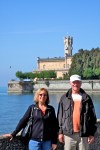
The scenic route to the Bodensee provides lots of view of the Alps, many of which are covered in snow at the top even though it is still quite early. Fortunately for us, today promises to be a bright and sunny day with warmer temperatures–a welcome change from the cold and rainy weather we’ve had since Berlin.

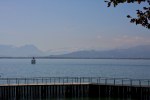
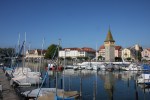
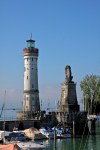
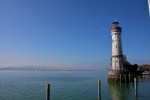
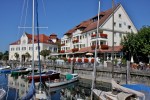
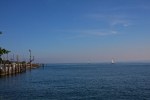
Our first stop is Lindau. We find a parking place immediately, but it is on the far side of the bridge to a small island we want to visit. With the weather being so nice, the extra walk is welcome and we make our way across the bridge into the main town area, and down to the shore. On the way across the bridge, I spot a duck with 3 young following closely behind. They are diving ducks. For a while, I try to get a shot, but they keep disappearing under the water as soon as I set my lens on them. Since half of our group has continued walking and is now getting quite far ahead, I am forced to give up on shooting wildlife. Given that I left my telephoto in the car, it is just as well.

We make a quick pass around the outskirts of the island, walking along the shore at the docks, pausing to look at the view and take a few quick shots. Then, we head back towards the car with only one quick stop for postcards. Dieter is nervous about the time and looks at his watch frequently. I imagine he feels pressure to try to get all of our planned stops into the allocated time for our trip without being late getting us home.

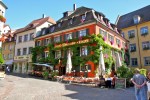
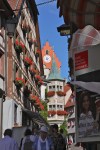
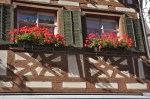
Our next stop is Meersburg. Here, the parking situation is worse. We spend a good 15 minutes circling around looking for a place. Finally, we make a wider circle and find a spot that is several blocks further away. We walk down steep cobblestone streets to enter the village. The tudor style buildings lining the streets look like they might have been constructed about the same time the earth was formed, although they are well maintained and in perfect condition. Everything about this village seems like it must be historically significant somehow in that each building seems so well cared for that it must be an heirloom.

We find a cafe with outdoor seating facing the lake. Almost all of us order one preparation of Bodensee fish or another. I am pleased with my fish, although I honestly can’t say that it’s significantly better than any other well-prepared mild, white fish I’ve ever had. It is tasty, though. I am amazed by the plain, boiled potatoes. I didn’t know that it was possible for plain, boiled potatoes to have so much flavor!

As we eat, we watch a group of young swans, still in gray down, gliding towards us on the water. When they are close to the docks, they start tipping over with their heads down, eating off the bottom of the water. Their size makes them look far funnier than any duck I’ve seen doing this. I don’t know if this is normal behavior for swans of if these were raised by ducks like the Ugly Duckling.

We are now far behind schedule. We stop only one more time along the Bodensee, skipping over at least one planned village. When we do stop, we do a brisk walk through the town and then head back to the car. Now we must skip stopping in the Black Forest as well–it is getting quite late. However, we still take the scenic route and the beautiful views of ancient villages tucked among the trees keep us entertained.

After a brief stop at the hotel to check in and get cleaned up, we meet up with Pat’s parents and then walk over to Dieter and Gisela’s house for dinner. It’s a relatively short walk, but it feels good to get out and stretch our legs after spending so much time in the car. When we get to Dieter and Gisela’s, Gisela has waved a magic wand and produced a massive spread of meats, bread, and accompaniments for sandwiches. Pat calls her Martha Stewart and I concur. I want to try everything. The Black Forest ham is particularly special. I haven’t had any on this trip, not even when we were in the black forest for 4 days.

After gorging on good German meats and sharing a bottle of Riesling, we thank our hosts one last time before walking home. The temperature has dropped and we walk as quickly as our full stomachs will allow. When we get back to the hotel, we walk through a lobby full of business people chatting one another up. We seem to be the only tourist at this hotel–it shares a parking lot with a large Siemens location.

The room lacks certain amenities (like coffee in the room), but it’s clean and comfortable and we are soon sound asleep.
Oktoberfest

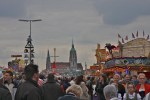
As we walk from the train stop to Oktoberfest, more and more people wearing lederhosen and drindl crowd the streets.  We pass a collection of port-a-potties and decide to stop.  At this point, I am envisioning a large collection of big white tents (like the kind people use for wedding receptions in the US) in a field with thousands of drunk people staggering around drunk.  Having not given a thought to restroom logistics, the fact that the Germans want to stop at a port-a-potty on the way there now makes me worry that there will be no restrooms at the fest itself.  This worry is reinforced when we pass a man urinating in the bushes just 20 yards from the port-a-potties.

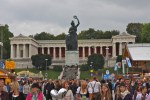
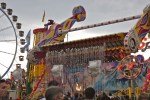
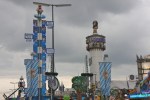
When we arrive at the entrance to Oktoberfest, I am surprised to discover that it is much like arriving at the Ohio State Fair.  The grounds are smaller, the rides are bigger and more sophisticated, rivaling the rides at permanent amusement parks, and the crowd is far more dense (in terms of number of people per square foot of space; I have no evidence to compare IQ levels).  Another interesting difference is that the people look like the same people we’ve seen all over Germany rather than the bizarre part of the US population, usually kept hidden from view, that mysteriously gathers at the Ohio State Fair.  And of course, the fact that at least half of the attendees are wearing traditional lederhosen and drindl just to be wearing it and not because they are participating in some act makes the crowd seem more interesting as well.

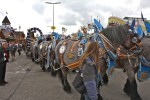
When we get inside the entry, first we discover there is no fee to get in.  Second, we find there are plenty of places to spend money to make up for the free admittance.  Each brewery has their team of draft horses standing around waiting for me to pet them.  I’m not sure who called ahead to arrange this, but I appreciate it.  It’s been a lot of years since I spent time with horses; having the opportunity to scratch some giant heads makes my day.  As we walk away from the horses, we see a group of young men coming out of one of the beer tents.  Two of them are supporting a third who has clearly not paced himself well.  As we pass them, we understand the value of wearing lederhosen with suspenders.  This guy is wearing only lose jeans and they have slid down over his rear end, leaving him leaning against his friends with his bare butt hanging in the wind.  We all look and laugh, tipping off the guys friends that he needs a little help.  They pull up his jeans and make a joke in German.  Everyone laughs and we go on our way.  As I look around, I realize that no one else in the vicinity is staggering and I am surprised.

We slip inside a beer “tent” and are surprised it’s not a tent at all but a permanent building with massive beams supporting the roof and a wood floor.  We’re surprised and ask our friends about the buildings being permanent.  They tell us that no, the site of the fest is a park and that the “tents” go up about a week before the fest starts and are gone again within a week after.  We look at the structure again and are amazed at what it must take to erect this building in a week,–when we go to the restroom and discover a huge room of flush toilets, we are even more amazed.

The original plan for Oktoberfest was that we would have a reservation for three hours at one of the tents.  We would be served all we could eat and drink for those three hours and then we would have to give up the table.  However, Dieter and Giesala had friends tell them that a reservation wasn’t really needed and that we could show up at any time, so we did not have a reservation.  This worked well from the perspective that it allowed us to switch days on when we were going with the rain and cold weather, but not so well in that even on a Tuesday afternoon, the tents were packed and finding unreserved tables with open seats was not easy.  At the first beer tent, we were able to sit at a reserved table where the reservation didn’t start for several more hours.  We ordered a round of beers and sat sipping away.  I practiced my new beer holding technique–my wrist was already tired from the beer earlier in the day at the Haufbrauhaus.  We sit and watch people.  There are an overwhelming number of people to watch.

I watch the drindls and lederhosen, fascinated that while the basic look is always the same, they come in wide varieties.  Most interesting to me is the shoe choices of women wearing drindls.  I don’t know what the traditional show would be, but each woman seems to have made up her own mind without consulting tradition or fashion on what footwear choice works for her.  I see one woman in rubber Hunter boots with her drindl.  Another with 4 1/2 inch spike heels–the heels are literally spikes, made from metal.  There is everything in between, although ballet flats seem to be the most popular.

After finishing our beers (once again, I am unable to finish mine and I share with Pat), we start strolling through the park again.  We stop at some shooting galleries where Giesala and Jim try out the shooting skills.  The guns don’t shoot straight and it takes a while to adjust.  Once Jim gets the hang of it, he makes every shot, having been a sharp shooter in the military.  After spending something like 10 Euro on shooting, he wins a prize and allows Giesala to pick from the choices.  She selects a small teddy bear, which she decides should go to me and fastens him to the zipper of my rain jacket.  He bounces along as we continue our walk down the strip.

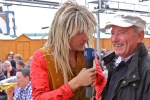
Eventually, we find ourselves in the Haufbrauhaus tent.  Here, the unreserved tables are jammed with people and the reserved tables are blocked off so they can’t be used even when no one with a reservation is there.  We wander around not sure of what to do.  Eventually, we find a table out in the beer garden.  It’s jammed up against the tables on either side so that when we sit down, we are literally using the people behind us as back rests.  No one whose been sitting there a while seems to notice.  The people already at the table we join are laughing and talking with the people at the next table over.  It seems like everyone knows each other with people switching tables frequently to visit with other people, but I think this is just the atmosphere of the fest.  We are surrounded by people from different parts of the country.  A guy with an odd long-haired wig on sits behind me.  He has a cart with what looks like karaoke machine in it sitting next to him.  Jim offers the guy 10 euro to sing.  The guy turns out to be a local personality there with a guy with a camera and they decide this will be a good bit.  They have Jim hand the guy 10 euro on camera and the guy sings.  Supposedly it will be on TV in Munich.  I find myself wondering what they are saying and hope that it’s not too embarrassing for Jim.

Before I can worry too much about the TV bit, a large group of Scottish guys in kilts arrives.  They greet the guy with the wig and walk around to join his table.  One of them immediately attaches himself to Pat’s mother and can’t seem to stop hugging her and telling her he loves her.  We end up in a conversation with him.  It’s a sort of odd transition, but we end up talking about Scotland and Pat’s own experience with wearing a kilt for a wedding.  This, of course, leads to discussion about what one wears under a kilt.  We learn that the Scots are traditionalists and the offer to prove it; Renate stops the one closest to her when his kilt is at about mid-thigh.  Back on the subject of Scotland, he tells us that we can have it–it rains too much for him.

It’s getting late in the day and Dieter wants to return to our country hotel in Wald.  We are trying to drink up so we can leave.  Pat and I are splitting a beer this time instead of me pretending I’m going to drink one myself.  I try to polish off the last bit of my half, but even half is a strain.  Pat takes an few extra sips for me and then works on helping Jim finish his beer.  I do some math and realize that I’ve had 1 1/4 beers since the first half beer at the Haufbrauhaus in Munich. But it’s 1.25 liters of beer, which is approximately 40 0z of beer or 3 1/2 US beers.  That’s a lot of beer!

We return to the train station at sunset.  We skipped the port-a-potty on the way, having all used the restroom at the tent.  But, it was a long walk from the Haufbrauhaus to the train station.  Pat needs a restroom now.  There are 7 minutes until our next train; Pat decided to risk it.  I will omit some of the more sordid details of the events of the rest of the evening, but Pat did not find a restroom, but did cause us to miss our train.  Having to wait 20 minutes for the next one with all of us having consumed much beer, that 20 minute wait led to much discomfort across the board.  Then there was the 30 minute train ride to to the park-and-ride and the discovery that the restroom there was closed.  Let me just conclude that we were pleased that the parking lot was surrounded by dense woods and there were very few people around by the time we arrived there.

When we returned to the hotel, we sit and allow Dieter to drink.  He had the least beer of all, having cut himself off early in the evening since he was driving.  The hotel is no longer serving dinner, but now we are hungry.  They fix us a spread of meats and cheeses that we enjoy with homemade bread.  Tired and full, we all retire as soon as the food is gone.

Intro to Munich

Tuesday morning, we wake up to find that it’s still cold and cloudy, but the rain has stopped. We cross our fingers that the sky will clear and the sun will come out–today is our day to go to Oktoberfest.

After our usual breakfast at the hotel, our little group drives off to find a park-and-ride. From there, we will take the S-bahn into Munich. Getting to the park-and-ride goes smoothly. We find a spot in the crowded gravel parking lot (although bike parking is completely full, the car lot has a few places left). We find a place to buy tickets, everyone uses the restroom and then we head up to catch the next train, which we miss by about 30 seconds. So, we get to hang out on the platform for an extra 18 minutes waiting for the next one to arrive.

As we wait, more and more people gather on the platform. About half of them are wearing traditional bavarian clothes: lederhosen for men and dirndls for women. It’s interesting how this traditional garb looks like a costume on some people and like heritage on others. I suppose it depends on how traditional the garb is–some of the dirndls seem to have taken a “naughty beer girl” adult halloween costume twist. By contrast, the men struggle to look sexy in their lederhosen. There is just something about the way suede hangs that makes it nearly impossible.

A loud and laughing group of young people get on the train at our first stop. It’s interesting to watch people’s faces and try to decide what’s going on. A middle-aged couple standing among the youngsters are laughing with them and enjoying the ride. Similarly aged people sitting around the group look disapproving and, in some cases, annoyed. I am unable to draw any conclusion except that several of the boys are pretty determined to get closer to several of the girls in the group. But I suppose even someone who wasn’t there could have guessed that would be true!

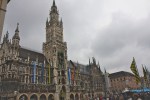
We get off at the Karlplatz stop in Munich. We will “tour” Munich for a couple hours before going to the fest. There is a tremendous crowd at Karlplatz. I’m surprised–I figured everyone would be at Oktoberfest. We walk to the Rathaus to see the famous clock there that has a bunch of figures that move at noon. It’s now quarter ’til. Dieter has timed this perfectly to make sure we get to see this clock. We position ourselves in the courtyard for photos, although I did not bring my long lens for this. As we stand there listening, we discover we’re surrounded by Americans. Americans and other tourists–we don’t hear anyone speaking German. Tourists (perhaps from Spain) ask an American next to us to take a photo of them. He takes his time lining up a perfect shot of the group with the courthouse clock in the background and just as he snaps the shutter, a German walks right in front of his camera. My husband laughs and comments to the man–it’s a cultural difference we’ve noticed frequently at various tourist stops. A crowd of foreigners will divide around someone taking a photo, but a German will invariably walk right through the shot.

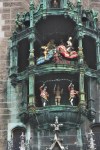
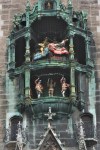
Eventually, noon begins to strike. Chimes start, music starts, and the ancient players in the clock come to life. My favorite part is the jousting on horseback. The jousters come out once and safely pass each other by, but on the second round, one of the jousters is struck and falls forward over his horse. After the top level of figures finishes their enactment, a lower level of dancing men goes into action. The way that the figures appear to hang on to the clockworks and the angle of their bodies make them look alive as they spin. We watch fascinated, trying to figure out exactly what it is that makes them look so realistic.

Once the clock finishes. we are ready for the next item on the agenda. This is to go to the original Haufbrauhaus in Munich. The Haufbrauhaus in Pittsburg has become a favorite place for my in-laws when they’re home, so going to the original version here is a must. It seems a bit odd to go there during Oktoberfest instead of going to their tent at the fest, but I am told that we will do both. I am surprised by the crowd there when we arrive–it’s a weekday after peak tourist season, and it’s competing with Oktoberfest, yet we have a hard time finding a table. Eventually, one frees up that is close to the action. We sit down and order beers. We’ve decided to have lunch here as well, so we check out the menus and pick out which form of sausage we will enjoy today.

The beers come and they are served in 1L mugs. Pat has to show me how to slide my hand under the handle with my thumb over it so I can lift the mug one-handed without injuring my wrist. This reminds me of a story a former colleague once told me. When he was a teenager, he worked in a grocery store. One day, he was restocking beer when a customer came in and picked up 2 40-oz beers. My colleague had seen this man buy 2 40’s every day for several weeks. Trying to be helpful, he pointed out the 12 pack of the same beer telling the man how much money he could save by going that route. The man replied, “No, that’s OK. My doctor told me I can only have 2 beers a day.” I will make sure I adhere to the same logic today. 🙂

When our food comes, a woman sitting behind me at the next table leans over and says, “Excuse me, do you speak English?” Everyone within earshot says, “Yes!” She asks what the pork knuckle is that Dieter has ordered–it’s a massive thing that looks like it should be held by a caveman and gnawed at vigorously. We explain what it is and show her which item it is on the German menu. I notice when her food comes she didn’t order it.

A girl selling enormous pretzels walks around the room for the second time since we arrived. This time Pat stops her and hands me a pretzel bigger than my head. I split it amongst 4 of us. It’s surprisingly good. The thick part is especially good–nice and fluffy on the inside like every good pretzel should be. Eating is periodically interrupted by a group toast led by the oompah band at the front of the hall. Everyone waves their beer back and forth and sings along until the final Prost. It’s like a piano bar in the US.

At the end of my meal, I still have 1/4 of my beer left and I cannot drink anymore. I hand off to Pat who polishes it off for me while the rest of the group finishes eating. When everyone is done, we track down our server, pay the bill, and head out. We have seen enough of Munich; it is time for Oktoberfest. But first, we must find a bank and exchange some money.

We find a bank on the way back to the train station. Pat goes in by himself while the rest of us stand outside waiting. The bank entrance has a life-sized statue of a lion outside the door. Two girls walk up and take turns posing with the lion while the other snaps photos. One hugs his neck, the other leans against him. I’m surprised neither gets up on his back like they’re taking a ride. Maybe it’s considered rude to ride a statue?

Pat returns and we head for the train. The closer we get, the more lederhosen and drindls we see. We are getting psyched for Oktoberfest even though we feel inappropriately dressed. We cannot wait to find out what it’s like, none of us having ever gone before.

Linderhof Castle

After touring Neuschwanstein castle in Schwangau, we head towards Linderhof castle. Linderhof is close to an hour drive from Neuschwanstein, which is why Pat and I didn’t go see it on our last trip to Germany. But I am immediately glad that we came when we approach the grounds. Crazy King Ludwig was obsessed with Louis XIV and built this castle with the intention of creating a miniature Versailles. The grounds, however, are more beautiful just because of the surrounding mountains and forests and the resulting vertical rise on either side of the castle. When we go inside for our tour, we learn that this is the smallest castle Ludwig built and the only one he actually finished. All but one room is decorated in gold leaf, all of it looking remarkably like Versailles in style. Even the statues and paintings are of French kings and court members from the time when France was a absolute monarchy. However, Ludwig must not have paid attention to French history given that he came along nearly 100 years after the French Revolution. In any case, he apparently created this castle as a little playhouse for himself where he could disappear into his fantasy that he was a real king in a time when kings had real power. I am less and less confused about why he was declared insane.

The castle is beautiful, however. Although, a horrific waste of resources considering Ludwig’s main intention was to be completely alone in it. He had his small dining table made on a platform that could be lowered into the kitchen below and completely set with his meal and then raised back into his room so that he didn’t have to see any servants at meal time. The table was barely big enough for a spread fit for a king, let alone for any guests.

Oddly, in spite of his desire to be left alone, he constructed an “opera house” in a fake cave off the garden. It is another salute to Wagner and apparently comes from the Rings. It has stalactites and stalagmites molded out of something like stucco. At the back, a pool simulates a lake and a swan-shaped gondola sits, still waiting to take the king adrift in the water where he apparently liked to listen to music. Even more oddly, it’s in this cave where the first electric lights in Germany were installed. They were even colored by putting colored plates of glass in front of them. The coup de grace is the waterfall that the tour guide turns on after giving her spiel. Water flows over fake stones and down into the pond. It’s so noisy, it would be impossible to hear music over the falls. I find myself wondering if Ludwig ever actually had a concert in this cave or if he just listened to the music in his head.

The castle is wonderful in its own way–strangely beautiful and certainly fascinating to see. The smallness of it makes it somehow more intimate and enjoyable than the real Versailles, although, I admit I haven’t been there since I was a teenager.

We return to our hotel in time for the dinner. Tonight’s soup is called “Leber Spaetzle.”. When they set a bowl in front of me, I am troubled. The “spaetzle” looks suspiciously like deer poop–nearly black and shaped in pellets. I look at Pat and ask, “What kind of soup is this?” and he replies, “It’s deer poop soup,” without cracking a smile. I laugh out loud and take a spoonful, glad I’m not the only one who thinks that’s what it looks like. I can’t give a comparison of the flavor to deer poop, having never eaten any, but I have to imagine deer poop wouldn’t taste worse provided you added salt. The saltiness got to me worse than the flavor of the liver, but neither was exactly pleasing. I gave up once I got down a respectable amount. The entree was more to my liking, but also very salty. It was a traditional German dish made of something described as pork meatloaf, but Pat told me it was like a piece of sausage shaped like a slice of ham, fried and served with an egg sunny side up on top. Had it been less salty, I might have been able to eat the whole thing, but I gave up about 7/8 of the way in.

Tonight, we are all tired and don’t sit as long over beers after dinner as we did the night before. A larger portion of the conversation is in German, as well, a sign of fatigue in my bilingual friends, I think. It’s tiring even for me to tell stories in English using vocabulary our friend are likely to know vs the casual idioms and expressions I would use with my American friends; communicating in a second language must be even more fatiguing for them. I wish I would have spent more time learning German before this trip–it’s been a couple of years since I took continuing education classes in German and I didn’t get very far. My mouth twists around many German sounds and the words come out unrecognizable. I am far more self-conscious attempting German than I ever was speaking French, Italian, Spanish, or evan Korean. But, I was younger then and I didn’t have a native speaker laughing at my pronunciation (well, except the Italians when I pronounce “penne” as “pene”, which means something entirely inappropriate for the dinner table). Oh well, I guess I will have to try again. Maybe Pat and I can start speaking German when we’re alone together if I can get him to stop laughing at me. 🙂

Return to Neuschwanstein Castle

When we wake up, it’s raining steadily. The temperature makes the rain feel bitterly cold. Up in the surrounding mountains, it’s snowing. But we will not be going that high. I layer up with silk long underwear under my jeans and an extra warm Underarmour shirt under my sweater. I put on my thin leather jacket and then pull my rain jacket on–loose enough to fit over everything, it will keep me dry as well as help trap my body heat. I even dig out the thin pair of Windstopper gloves I shoved into my bag just in case. We all pile into the mini-van and we are off.

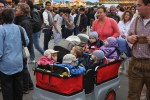
First stop is Neuschwanstein, the castle started by King Ludwig II of Bavaria intended to capture the opera The Rings in architecture. However, the castle was only 1/3 complete when Ludwig died mysteriously by drowning in a lake with his psychiatrist at the age of 40. He had been declared insane and removed from power only days before. We came to this castle years ago, but had taken the German tour. I’m happy that this time, we will take the tour in English. First, we must park. Then, we must walk part way up the mountain to buy tickets. Then, we must get ourselves from the ticket office to the castle, which is estimated to be a 40 minute walk up a very steep incline. There are three choices: walk in the rain, ride a bus, or take a horse drawn carriage. We head for the bus, but the line is so long to get a ticket that Dieter and I (at the head of the pack) think we must walk. But, a chorus of protest rises from behind us and we turn and go back to get a horse drawn carriage instead.

We start off in front of a couple walking arm in arm. Two average-sized horses pull the wagon loaded with 10 adults slowly up the steep road. The couple falls slightly behind, but when we are halfway, we pause to give the horses a short break and the couple nearly catches up with us while we wait. But then we are off again and either the horses are so revived that they move faster or the couple is so fatigued they move slower, but we leave them far behind.

When we arrive at the end of the wagon ride, we are told that the walk to the castle is 15 more minutes. But it is not too strenuous and we make it in less than 10. We are 15 minutes early for our tour. We stand under the arch of a giant gate leading to the courtyard, huddled together with about a hundred people from nearly as many different countries. When it is time for our tour, a lighted sign in the courtyard displays our tour number and we move back into the rain briefly to walk through the cattle gates with the rest of the English speakers on our tour. The girl who leads our tour speaks loudly and slowly, over enunciating each word, but in the first room, her voice bounces off the tiles and echoes so that it’s nearly impossible to understand what she says. The Germans in our group do not think she is German, as her accent sounds so strange. I ask her where she is from originally as we walk to the next room and she tells me she is from here originally; I assume Schwangau, the small village near the castle. That doesn’t explain her strange accent, though.

We learn a bit more about the crazy king who wanted his life to be a fairytale. We see rooms on two floors, starting in the servants quarters and ending in the concert hall. Unfortunately, there was an actual concert recently and the floor is completely covered to protect it. We did get to see the mosaic tile floor in the receiving room–we’re told that there are over 2 million tiles that were individually laid in the floor. The crazy pattern has a mixture of animals I can’t make sense of, but perhaps if I were an expert on Wagner operas, it would all become clear to me. Our tour guide offers no explanation for the decor choices and is too far away with nearly 50 people on the tour for me to ask. We are told that the tour is over and we should check out the kitchen on the way out.

A narrow spiral staircase takes us down four floors to where the king’s meals were prepared (with a detour through the gift shop, of course) and we wonder if he ever had a hot meal given that his dining room was at the top of the stairs. The kitchen is enormous and, apparently quite modern for the times. After looking at the signs, trying to figure out the layout, we return to the cold and rain outside.

Next, we walk back down to the drop off point to take a wagon back down. We are shoved into the back of the wagon with a strange man between me and Giesala who clearly doesn’t understand English or German. Then, three more people join. The four are all Asian, but the strange man is Japanese while the other three are Chinese. The strange Japanese man introduces himself to Giesala, but then keeps repeating her name. He won’t look up and remains in a hunched position, eyes on the floor. Then, when no one is talking to him, he starts muttering to himself. I don’t know lots of people from Japan, but I’ve never seen anyone act like this from any country that didn’t have some kind of problem going on. In any case, we are distracted by the group from China. They tell us they are from the Tsing Tao museum and the man produces many beer labels and gives them to Pat after Pat tells him that be likes Tsing Tao beer. We really aren’t sure if there is a museum or if they were from the brewery, but we laugh with them the whole way down the mountain. The man and Pat got into a beer belly contest with each of them pulling up their jackets and extending their bellies to show . . . well, I’m not sure what they’re trying to prove. Pat won in any case. Then, the man’s cell phone rings and his conversation has the two women he is with in stitches. One of them explains that the person on the other end of the phone had told the man to hurry up and he replied, “It’s not up to me, it’s up to a horse.” We all laugh, too. Pat asks if he can buy the man a beer since he’s given us so many labels, but he and his colleagues have to rush off.

We decide to wait to eat lunch until we got to the second castle on today’s itinerary–Linderhof. We walk back to the mini van and take off in the rain.

Self-Milking Cows and Wellness in Wald

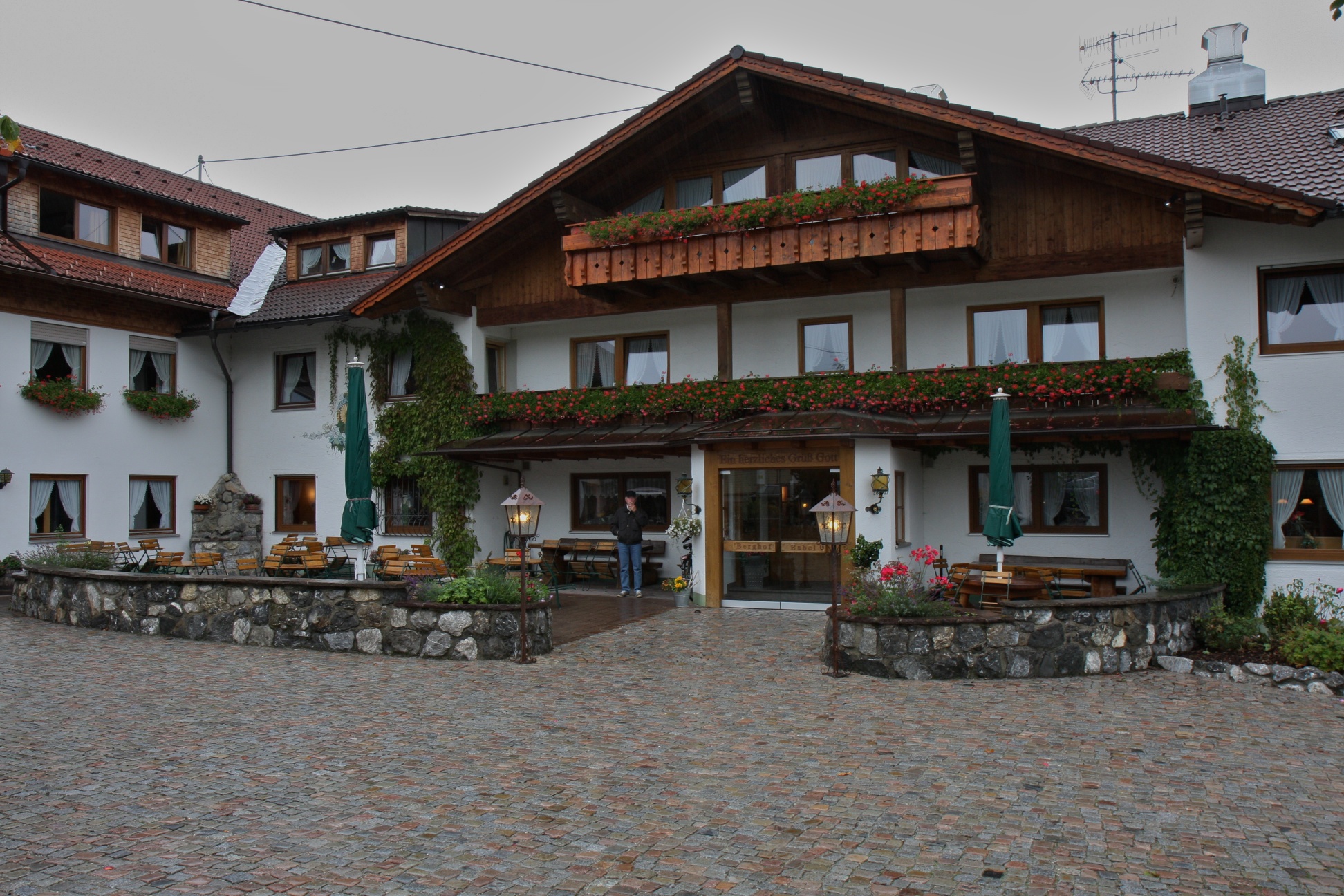
Having been collected by Pat’s parents and friends at the guest house we arrived at in Wald from Berlin, we now load our stuff into their vehicle for the short drive to where we’ll be staying.

Pat’s parents and friends have been traveling together for several days already. The friends, Dieter and Gisela, have traded their car with their daughter so they have a mini-van to fit us all in for this trip. The mini is a little more mini than a typical American mini-van, but we all fit perfectly. They take us to the “wellness resort” we will be staying at for the next 3 nights. This is an interesting concept in Germany. These are guest houses equipped with pools and hot tubs and various other amenities that help restore health and sanity. They typically are quite economical, although only available in pretty, country areas outside large cities, and are often free for Germans who are suffering from illness or stress that their doctor feels warrants a break from everyday life.

This one is located on a working farm. They make most of their own foods served in their restaurant from the butter and cheese to the beer. When we have dropped our bags in our room, our group reconvenes and takes little tour of the farm. We visit the horses and donkey in one barn, and the milk cows in another. We watch as a cow milks herself–the most fascinating thing I have ever seen. When a gate is opened, a cow with a full utter walks into a pen and lines herself up in the milking station, where grain releases into a bucket so she can happily munch while being milked. A robotic milking machine starts by washing each of her teats with rollers. Then, laser beams line up the suction cups on the milking machine with the teats until all four are properly captured in the milking machine. The milk is matched to the cow using an electronic chip on her ankle. If the cow has recently calved, her milk is rerouted to her calf in a barn next door. All the milk is automatically tested to make sure the cow doesn’t have any diseases and that there isn’t dangerous bacteria in the milk before it is pumped into the milk storage container. When a teat stops producing milk, the machine releases it until all of the teats have been milked dry. A gate opens, the cow walks out, and the next cow, when ready, enters. I wish I had thought to bring my camera down, but maybe I am the only one who gets excited about cows that milk themselves?

We visit many calves next. They are at various stages of growth. Some are in large plastic huts and they stick their heads out as us as we walk by. I reach out to one and let it suckle my fingers while I rub its head. I don’t think anyone else in the group has ever seen someone do this because they were all pretty surprised. The calf holds its tongue over its teeth so it doesn’t bite, but the force that calves suckle with is pretty amazing. My fingers are covered in slim when I extract them. I do my best not to touch anything. We wander over to the building where they make cheese and beer. Nothing is currently being made, but it’s still nice to see. Pat buys some Landjaeger (something between sausage and beef jerky) that is also home made. We then wander back to the main guest house to have dinner. I scrub my hands twice before sitting down to eat.

The restaurant serves four courses, with the only choice being which of three entrees you want. They bring us a soup to start with a meaty broth and a large noodle. It’s delicious and hot. Then we have a typical German salad with lettuce on top hiding an assortment of other types of salad underneath. I have the fish. Dieter describes the fish as a “salmon trout,” which is exactly what it’s like. Flaky trout meat that’s firmer and pinker than most trout. While it’s delicious, the filet they brought me was about the size of a flattened football and I couldn’t eat it all. The dessert was warm chocolate cake with chocolate sauce, whipped cream and fresh currants. Surprisingly, I find I have just enough room for the dessert.

We sit and drink beer and swap stories in German and English. Two of us do not speak German, two of us speak German and American English, and two speak German and formal English. It makes for interesting translations–it’s amazing how many words we use in everyday conversation that don’t make it into language classes. But, we have a good time anyway. Giesala has a warm and ready laugh that is infectious and Dieter has a quiet sense of humor that catches me by surprise, making his jokes even funnier. Both are patient with those of us who don’t speak English and make a tremendous effort to speak English whenever possible so we feel included.

We discuss our plans for tomorrow and decide to make a change from the original plan. The cold and rainy weather is supposed to improve the following day, so we decide to switch days. We will all go to see some castles tomorrow and we will go to the Oktoberfest the following day. All in all, it’s been a good day.

American Tourists in Berlin

We get up on our first full day in Berlin surprised at how well we slept. I am starting to feel like I might be ahead of the cold I’m holding at bay and we realize that the room was so quiet that we slept undisturbed. We go to the hotel breakfast before hitting the streets. An American woman complains loudly to her friends about not having any soap in her room–I wonder if she has failed to realize that there is liquid hand soap in a pump by the sink and a bottle of shower gel for the bath.

A small man sits at the table next to us. There is only 12 inches of space between the tables, so it is almost like he’s joined us. He looks like a troll transported through time and space from a Brothers Grimm fairy tale and stuffed into a too small button-up shirt and khakis. His face is covered with hair that looks just a little too much like fur and the girth of his torso exceeds its length. I keep waiting for one of the buttons on his shirt to give up its tenuous grip and fly across the table to hit me in the forehead. This fear is heightened by his constant coughing and snorting; he apparently is losing his battle against a cold. Each time he coughs, I can almost hear the threads ripping. He continually paws at his dripping nose, using the backs of his short, stubby arms as a tissue even though there is a paper napkin at hand and more on the buffet. I find his presence takes the edge off my appetite.

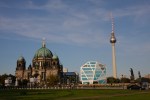
After breakfast, we head first to Checkpoint Charlie. After all, we have only today to see Berlin and we feel obligated to stick to the beaten path of the millions of tourists who have come before. Checkpoint Charlie is a bit of a let down. There are only small pieces of the wall displayed on the buildings that line the street, none of the wall itself is still standing here. Men dressed in American and German soldiers uniforms offer to pose for tourist pictures for a fee–none of then are actually in the military. We decide to skip the museum and head back towards the Fernsehturn tower again, this time with the intent of going to the top.

When we arrive at the tower, there is a long line to get tickets–another place where planning in advance would have paid off. We wait for nearly an hour and then have to wait 40 more minutes for our turn in the elevator. As we wait for the elevator, a second line forms of people with VIP passes and reservations in the rotating restaurant up in the tower. They get to ditch our line 2x before the Germans in the front put up a protest and get our line moving again.

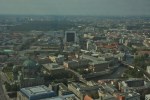
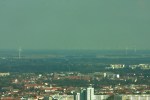
When at last we get up into the tower, we find that half of the observation deck is closed for a private event, the restaurant is completely booked, and we cannot even go up into the restaurant to see the other half of the view because the bar is closed. I am a little disappointed that we spent 20 euros and, worse, 2 hours of our one day, for half a view, but in the end, decide it was worth it. The view really is spectacular.

After returning to earth, we head for a motorcycle museum Pat spotted from the tower. However, when we get there, it’s all East German bikes, which Pat isn’t interested in, so instead of going in, we stop to eat lunch at a near by restaurant. We sit outside again and order beer and sausages (is there anything else?) and relax while we decide where to go next. We had planned to take a boat tour, but feel like we’re running out of time. We decide to take a tram over to the zoo and check that out.

We get on a train that takes us two stops towards the zoo and then announces it’s the end of the line and everyone must get off. We get off, but then not quite believing it’s turning around, we get back on. It goes the opposite direction. We get off and catch another train, which returns us to where we got off. We pick up a third train and get two stops further before the same thing happens. We are befuddled. We make it to the zoo in 2 more trains, each going two stops further, but are unable to determine why they are each turning around after 2 stops.

I always have mixed feelings about going to zoos. Besides feeling bad for the animals (although they seem to have a pretty good life and often help preserve endangered species), most zoos are similar enough to one another that you don’t really feel like you’ve visited a unique city by going there. However, entering the Berlin zoo felt like stepping out of the frenetic energy of the city and into a sudden state of relaxation. The zoo is literally called an animal park here, and that’s exactly how it felt–like a park with animals. Although the display style is not so unique from, say, the Columbus zoo, they have an amazing collection of animals that includes a giant panda, African lions, polar bears, bizarre warthogs, birds I’ve never even heard of, and hippos. When we walk into the cat house (resisting making a joke here), we start looking at some of the small cats that look suspiciously like house cats when the African lions at the other side of the building start roaring at each other. I’ve never heard anything like it–the roaring of lions reverberates off every surface of the building, making us feel like we’re surrounded by an entire pride. We move quickly towards the source of the sound, wanting to see what all the commotion is about. As we pass displays of small prey animals, I realize this must be a frequent occurrence because none of the smaller critters appear the least bit perturbed. As we arrive at the lion pens, they fall silent. We can’t tell what exactly happened, but there are two males in side-by-side pens, each with a single female. It looks as if they have recently been fed. I have to wonder if the two males smelling each other are frustrated by not being able to claim adequate territory. We watch these huge beasts pace and pant for several minutes. They are so beautiful. The might of their muscles rippling under their fur is awe inspiring. I imagine them chasing down an antelope and wonder if perhaps their protest was that someone had already killed their food?

We return to browsing the other displays in the building, but we don’t get very far before the roaring starts up again. We move back towards the lions and see that each male roars almost continually, still pacing, while the females appear to be providing harmony with smaller roars panted between the longer, rolling roars of the males. Perhaps they are not upset at all–maybe they are a quartet?

We walk outside for a while, glad of the fresh air after the intense smells of the cat collection. We pass by a collection of birds hanging out by several ponds. A huge hawk flies up from one of the ponds and lands in a tree, her shift apparently over for the day. The number of local birds just enjoying the free lunch vs the birds who are part of the collection is difficult to say. Dozens of herons hang out here, flying in in low circles looking for the best place for a snack. I’m pretty sure not one of them is a resident. The ducks get a little more confusing–there are many more types of ducks than listed on the signs. It reminds me of the Calgary zoo where wild turkeys perched on the fences of their outdoor deer display–whatever grain they were feeding the deer was apparently quite a treat for the local turkeys.

We head towards the hippo display, finally finding it almost by accident. When we do, I am so glad we came. The display is a huge pond with a glass wall that lets us see almost the full depth of the water from the side. There are fake rocks and ledges that lead to a land area for the hippos as well, but right now, the hippos are taking a swim. They circle around the pool, looming through the green water and suddenly appearing clearly up against the glass, floating by with unimaginable grace. Watching these huge, awkward animals fly through the water like ballerinas makes me laugh out loud. I have a vague recollection of a children’s story about hippos in tutus and wonder if this is where the author got the idea. I could have sat there until we were kicked out, I was so fascinated by this hippo dance, but, conscious that it is getting late, we move on.

The wart hogs (or whatever variety of pigs these are) make us laugh with their funny faces and the birds fascinate us with their fancy plumes. We walk by to se the polar bears before departing, but they seem to be frozen in a stand off, one in the water and one on the shore glaring at the one below. We head on out the gate and decide to walk a ways and try to find a taxi. Pat guesses we’ve walked 10 miles; I guess it’s something closer to 5, but we’re tired and both our backs are aching.

We end up stopping at a restaurant recommended by a woman at a small grocery store where we stopped to buy water. I have a really good snitzel. The restaurant owner calls a cab for us and we ride back to the hotel grateful for the ride.

Going to Berlin

We awake to The sound of frogs chirping at 6:00AM. I am momentarily confused and then remember that we’ve set the alarm on Pat’s phone because we are catching an morning train to Berlin today. I get up and find the phone and kill the frogs. Pat has an uncanny ability to remain untroubled by alarms–I’ve accidentally set mine on snooze from time to time and found him sleeping soundly with his head under a pillow for as long as a hour after the alarm started going off. I have an irresistible compulsion to get up when an alarm sounds–I figure it’s a good thing one of us does.

After breakfast, we take our luggage outside to wait for the cab we’ve ordered. When we step outside, a cab pulls up and a man walks up to it and gets in. It’s a few minutes early, but Pat says, I bet that’s our cab and then stands there staring. Visions of us standing there for 10 more minutes waiting for a cab that never shows and then having to wait 10 more for another on to arrive prompt me to suggest he go ask before the cab drives away. Sure enough, it is our cab. But, we are all going to the train station, so we will share.

We make it to the station with 45 minutes to spare. We sit on a bench on the track and wait for our train. I decide to use the restroom while we’re waiting. When I get there, I discover that the train station has pay toilets. They’ve upgraded from change operated door handles to a turnstile entry to the restrooms, but now they charge a euro to get in. Having no cash on me, I return to the platform and decide just to wait since the restrooms on the train are free.

The train pulls into the station 3 minutes before our departure time. We get on and find seats. We sit side-by-side with no seats across from us. We sit back and relax, me taking out my iPad and getting caught up on my blog while Pat stares out the window and points interesting sights out to me.

When we get to the next stop, we are displaced. A man has a reserved seat that I am currently occupying. I am somewhat irritated as there are plenty of open seats and I don’t quite understand why he doesn’t take one of them, but when we are displaced again at the next stop, I begin to understand the problem. Pat asks a woman how to tell if a seat is reserved and she explains that the lighted sign above each seat displays the names of the departure and arrival stations between which a seat is reserved. We quickly discover there aren’t two seats together with no reservation (since we have none). Pat spots two seats labeled “Schwerbehinderte” that face each other with a table in between. He explains that these are “handicapped” seats and that we can sit there unless someone who needs them gets on. We settle back down for the third time.

Pat looks around and notices that there are a half dozen “Schwerbehinderte” seats around us. He says, “wouldn’t it be our luck that an entire handicapped tour gets on the train at the next stop?” I almost laugh, but feel like he has just jinxed us and seriously contemplate the likelihood of that happening instead. But, we are not displaced again and we make it to Berlin around 3PM.
We take a taxi to our hotel where we are informed that they have upgraded our room for us. We don’t know why, but we’re not complaining. It’s an interesting hotel, the Gendarmes Nouveau, with hyper-modern decor and lighting throughout the lobby. When we get to the room, it’s a combination of mauve and gray, only still in the hyper-modern theme. I’ve never seen modern done in mauve and gray before–it feels vaguely middle eastern to us, but I don’t know why. Maybe just because our taxi driver was telling us about his flight from Iran on the way to the hotel and so the region is fresh in our minds. In any case, the room is quite nice, very quiet, and we can live with gray and mauve decor for two nights.

After freshening up, we head out. Pat wants to walk to Alexander Plaza, which is supposed to be the center of Berlin. We wander down the streets struck by the contrast with Freiburg. We feel like we’re in a different country. Here the streets are wide and asphalt with regular car traffic, although bikes are certainly prevalent as well. So much so that, on the way over, I noticed our taxi driver stopped on right turns to look up the sidewalk for approaching bikes before making turns. While I have been told before that Berlin is surprisingly new for a European capital and I know from history that it’s really more surprising that anything old is left standing than that most of the buildings are new, I’m unprepared for the architecture of the 60’s and 70’s. There are few buildings of interest and most of them are ancient survivors (or perhaps restored). The bleak and boring industrial look takes up the majority of the city skyline.

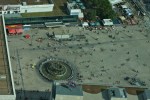
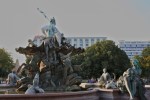
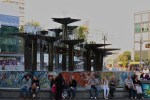
We walk past a museum that sparkles with gold leaf in the setting sun, a couple of old churches, and several parks with interesting sculptures that make the walk worthwhile. We go past the Fernsehturn tower, deciding to wait to go up it until the next day, and on to Alexander Plaza. We are both disappointed to find that the only thing interesting here is a fountain and the street performers. We are passed by a man dressed as a half-man, half-goat mythological creature, using stilts covered in fur to simulate goat legs. An electric rock band has found power somewhere and set up and started playing. Unfortunately, they are not so good. They compete with another band around the corner, all acoustic. In the middle of the square, a man plays the sax and, I swear, he sounds much like one would expect a new student of the sax to sound after about two weeks of lessons.

As much as we are tempted to hang out for a while and people watch, Pat notices that teenagers keep gawking at my camera and feels like we’re at risk of getting mugged. We decide to head towards the hotel and find a place for dinner. We approach a fine looking restaurant that advertises it’s been there for 100 years, but when we look through the windows, the men are all wearing jackets and no one is wearing jeans. We decide we’ll try it for lunch the next day instead. We find a more casual place a block later, but they have no indoor seats available. We opt to sit outside, although I am shivering before our entrees are served.

The food is good and hot (although not for long in the cold wind). We eat quickly, racing against heat transfer. We finish up and pay quickly when we are done eating–my lips have turned blue and I can’t stop shaking. It’s not really that cold, but I get cold easily and I am fighting a bug, which can’t help. We walk quickly to the hotel, taking the stairs to the fifth (or fourth if, you’re European) floor just to warm up. Inside, I get ready for bed quickly and snuggle under my personal comforter, but have to sneak under Pat’s to press my cold feet up against his legs to get warm. As soon as my feet thaw, I drift off into a deep sleep.

Wandering Freiburg

On the morning of our last full day in Freiburg, I awake feeling much like I’ve been run over by a train a few times. My head aches, my throat is on fire, my body hurts every where. When I stand up, my calves remind me how much up and down walking I’ve been doing by spasming painfully. I look in the mirror to discover a large spot between my upper lip and nose. I get out my reading glasses and determine it’s a giant zit that could only be more noticeable if it were on the end of my nose. There is a certain irony about having to put on reading glasses to determine a foreign body on your face is a zit, but I cannot say I find it amusing.

I splash water on my face and drink some from a glass in the room, breaking my no tap water rule. I am glad that we have spent so many days in this small town–I don’t feel rushed to see all of it in a day and feel the freedom to relax into our trip gradually as my body adjusts to the time change and, hopefully, defeats whatever virus it is that I’ve picked up on the plane. I check the time and it’s nearly 9AM. Pat is up and we make our way towards breakfast with me moving slower than usual.

I take my iPad to breakfast with us today since we haven’t yet figured out what to do today. Pat suggests going hiking again, but every part of my body screams “Nein!” at this suggestion. I suggest we hit a couple of museums and do a casual stroll down to the Dreisam River, now that we know where it is. We plot out a broad rectangle through town, wrap up breakfast, and head back to the room to finish preparing. I make the mistake of sitting down on the bed to read while Pat is in the shower, finding myself nodding off and slow to get moving again. It’s nearly noon by the time we get out the door. I remind myself again that we don’t have to try to do and see everything and this is our 4th day in this town–if we didn’t see anything else here, it would be OK.

We wander down a street we haven’t taken before–when we looked at the map, we were surprised to find that there were a few of those left. We point ourselves at the Anthropological Museum, hoping for dinosaurs and wooly mammoths, I suppose. When we arrive at the museum, we recognize the park in front of it and realize that we’ve been by several times before. The building isn’t big enough to house dinosaurs, but we go in anyway.

We follow the displays of ancient artifacts ranging from tiny remnants of weapons and tools to large pots. The signs are only in German and the English translation booklets are all gone. Pat has trouble translating the signs, not knowing many of the words since they are not commonly used in conversation. I wonder if it is a deep character flaw on my part that when I see these types of displays with their little signs purporting historical significance that I immediately want to lay down and take a nap. We make it through two and a half small floors of displays of similar items. Some displays are models of what life looked like at each represented chapter from history. One has a tiny woolly mammoth in it and I smile. But upon closer inspection, I see that it is a child’s plastic rhino covered in fake fur to look like a mammoth–apparently model mammoths are hard to come by.

Returning to the bright sunlight outside the museum, we walk a little further and find a much more exciting sight–the university library is being torn down. A crane takes bites of concrete from the massive structure, leaving exposed rebar along the edges. We retreat to a safe corner as we watch and a man standing there strikes up a conversation with Pat. He has returned to Freiburg for the first time in 20 years and is amazed that they are tearing down the library. He tells Pat that he watched it being built when he was a college student there in 1977. Other than the building being ugly, I can’t determine why they would be tearing it down by looking. I stand there watching the crane at work as Pat and the man continue their conversation. I catch bits and pieces and realize they’re trading stories about travel, but at last Pat turns to me and says, “He’s doing what we want to do–he has no home.” Later, I learn from Pat that the man graduated from college and started living out of a VW bus, traveling all over Europe. He also spent about a year doing the same in the US. He never settled down and continues to live on the cheap as he moves from place to place. He tells Pat that he gets an occasional job but he eats from the grocery store, buys used clothes, and spends very little money. I find myself wondering who “we” is in Pat’s statement.

We wander on down to the Dreisam “river” and realize why we couldn’t find it the other day–we probably crossed over it without noticing. We walk down to a pedestrian path along the water passing groups of teenagers who pass joints back and forth between them, the smell of pot lingering in the air. Pat tells me to be careful in case we are mugged, but I imagine we would be in more danger if we were carrying a bag of fries than carrying my camera. We walk on by un-accosted.

A beer garden sits on the edge of the river in front of an active group of ducks fluttering around on the water. We stop and think we might have a snack, but the waiter doesn’t come and finally Pat goes inside, returning with two Pilsners and no food. When I ask about a snack, he tells me the kitchen was a cluster, so he just got beer. We had breakfast only two hours ago, so I figure we should survive the deprivation, but I worry about drinking strong German beer without any food. Pat has to answer an email, which takes him a long time on his iPhone. I sit and wait for him to finish, watching a silly dog dive into the knee-deep water and try to chase the ducks, hopelessly thwarted by the resistance of the water.

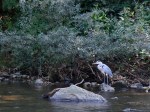
A man gets up and points out a large heron of some kind sitting on the bank across the stream. It looks related to the Great Blue Heron of home, but I wish for the second time that I had purchased a German bird book before coming over. I also wish I’d brought my telephoto lens with me today instead of leaving it in the hotel, but content myself with shooting with the lens I have.

After finishing our beers, we walk on along the river, passing a pair of lovers on a park bench. They are young. He sits in the bench while she lays with her head in his lap. They see nothing but each other and he reaches out and strokes her face with the tenderness of young love. After we pass, I tell Pat I wish I could shoot that moment without interrupting it, he looks at me oddly and says, “They’re dirty and homeless and they look like they’re high.” I guess we all see things differently–or maybe I really did need to have food with my beer.

Returning to the city streets, we find ourselves some ice cream and wander along towards the modern museum of art. We find a large church on the way and stop to peer at it between the bars that keep it closed to the public but open for gawking. Pat says, “They really make it hard to get close to god at this one!”. I laugh, but since I think we’re closer being outside than in, perhaps it’s not as funny to me.

We wander around some more, deciding to stop and eat a flatbread pizza-like thing that Pat says first appeared in Germany about 15 years ago and seems to have grown in popularity since. He doesn’t like Flamkuchen himself, but thinks he should give it another try. We sit outside once more, this time in a small courtyard between what might be office buildings. The Flamkuchen is not any better than Pat remembers it, but the beer is good. We sit in the sun feeling very European–or maybe French or Italian–letting the afternoon cruise by as we relax with no place to go.

Finding the small amount of energy I’d rallied flagging, I suggest we skip the art museum and return to the hotel for a nap instead. Pat agrees and we make our way back to the hotel. We decide to watch an episode of Damages on my iPad and I fall asleep ten minutes in. Pat goes through two more episodes while I doze before he, too, falls asleep.

Waking nearly 3 hours later, I am groggy and confused, but hungry. We decide to do our usual wandering for dinner exercise. I get myself sorted and we decide to try to find the restaurant we ate at our first night in town. We both think we know where it is, although we don’t agree. We wander around for an hour with it being in neither of the places we thought it was. Eventually, we settle for a place we haven’t been before where I try a traditional German version of macaroni and cheese. It’s made with spaetzle noodles and rich cheese and cream sauce and topped with toasted onions.

While I eat, I watch two French men sitting behind Pat. Tonight, they are the “loud Americans,” talking and laughing loudly and ogling each woman that walks by with an openness that I haven’t seen in the states in 20 years. One of them wears a polo shirt and khakis that look almost American. The other wears a black leather biker vest, a long dangling earring in one ear, and his mostly missing hair in a pony tail. If it weren’t for how they held their knife and fork, I would think they were Americans playing a joke by speaking French. Then, the biker guy pauses in his eating to run his tongue down the length of his knife, removing every remnant of whatever he’d been cutting with it. I have never seen anyone do this from any country, although having only been to France a few times, I can’t claim to be an expert on French etiquette. I’m pretty sure this is not standard French dinner behavior, however.

Finishing up dinner and skipping dessert, we drag our still tired selves back to the hotel for the final time. We set the alarm for the first time since we arrived, needing to get up early to catch the train to Berlin in the morning. As I get ready for bed, I carry my iPad around with me trying to catch up in the episodes I slept through. Getting caught up, I suddenly feel wide awake. We end up watching one more episode before falling asleep. I wonder if our German neighbors can hear the iPad through the walls as I drift off to sleep.
Freiburg Cathedral

On the way back from our walk up to the Schlossberg Tower, we decide to stop at the Freiburg Cathedral since it is still early afternoon. Having circled Freiburg Cathedral for two days, it’s time to go inside.

When we approach the entry, a sign over the door announces something about the pope. Underneath, two tour groups gather, preparing to enter the cathedral as well. As we pass around them, there is a sudden swirl of bodies–we have inadvertently split the herd and apparently caused a panic. We step out of the way as quickly as possible and they regroup and settle back down. Pat suggests we could just follow along with one of the tours, but it’s in German and we learned from our last trip to Germany that Pat is not a good translator when it comes to tours–his vocabulary is limited to daily conversation and there are too many words he doesn’t know in tours.

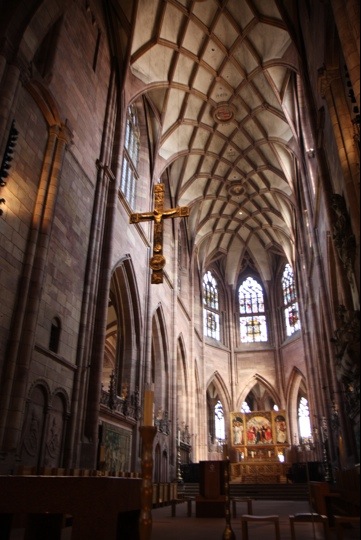
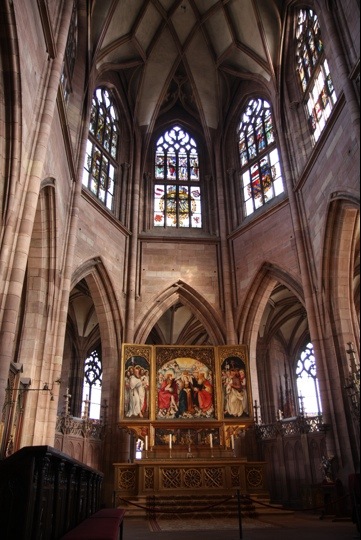
We step through the doors unguided and are instantly thrust from bright sunlight into what seems like darkness. After a few moments, our eyes adjust to the dim light streaming through enormous stained glass windows. My mouth drops open as I gawk at the soaring ceiling so far above our heads that it nearly disappears in the faint light. Looking back down, the pews continue for what seems like a mile through the full length of the sanctuary. I imagine a wedding here and wonder if every resident of this town would be enough to fill the pews. There is something about the size of this space that creates a sense of distance and isolation. In spite of its glorious architecture, its spectacular windows, and its frightening art full of what I assume are supposed to be inspirational pictures of Christian conquests, I have to wonder if anyone actually feels closer to god in a place like this. I think of the generations of men and women who must have spent most of their lives working on this church–it was under construction for over 3 centuries. I wonder how many of them suffered as a result of this monolithic project and how much blood was shed. I find myself awed and horrified simultaneously–perhaps that is the intent.

We wander around the main sanctuary to a series of chambers around the perimeter. They each display relics from the church ranging from elaborate sculptures to simple kneelers before alters. Each is locked in its own prison cell, protected from the masses. Similarly, the pulpit is roped off–an area where only the members of the clergy are welcome. Pat comments that they keep people at arms length from god. I find myself wondering why people would come here to worship at all, but apparently they do. A grandmother sits in front of three statues of saints whispering intently in German to her young grandson and gesturing periodically at the statues. I imagine her telling him the tales of these saints and wonder what he is thinking.

We wander back out to the daylight and return to the hotel to get ready for dinner. Once again, we find ourselves wandering aimlessly by lighted shop windows and busy restaurants looking for tonight’s destination. Still tired from travel, the cold I’m fighting and all the walking, I am less tolerant of having no plan today–the fact that we had little for lunch and my stomach is growling doesn’t help me be patient, either. Finally, we decide to give-up on finding somewhere new and return to the restaurant we had lunch at our first day.

Today, we eat inside. There are loud Americans in this restaurant, too. But they are two couples and the women keep shushing their husbands even though one of the women is the loudest of them all. Pat strikes up a conversation in German with the waitress and learns that she is Croatian, but her mother has lived in Florida for over 30 years. She tells Pat that the pope is coming to Freiburg on the 24th and that they have to close all the plaza restaurants for the day and remove all the umbrellas–apparently umbrellas are a threat to the pope’s security. She compares traveling to the US to visit her mother during the cold war years to the pope’s visit–she laughs about all the security required just for the pope to go by and wave. It does seem a shame that so much security is required even for a man that is supposed to represent peace (isn’t he?). Pat and I are relieved the pope didn’t come while we were there–we imagine the plaza jammed with people and all the hotels full and smile at our fortune.

After dinner, still hungry, we indulge in dessert. By “we,” I mean that I order dessert and Pat agrees to eat a couple of bites. I order the house speciality, which is described as vanilla ice cream mixed with egg whites and Kirsch and served in a soufflé cup. It doesn’t taste as rich as I expected and the Kirsch is just a subtle flavor. Yet, by the time I finish it (minus Pat’s two bites), I feel like I’ve had a shot of schnapps. I wonder how much Kirsch is in that tiny cup?
We walk back to the hotel, me giggling a bit more than usual, but walking no more awkwardly than is normal for me. I am almost ready for bed when Pat asks if I want to go out and check out the night life. I’m sure the look I gave him said it all–the thought of going to bed is the only thing on my mind tonight. I think about going out for just a moment and suddenly feel very old. Tonight, we will stay in.

20110926-064409.jpg

20110926-064431.jpg

20110926-064451.jpg

20110926-064516.jpg

20110926-064540.jpg