Two Strangers at Tualatin

While in Portland, we made a stop at the Tualatin River Wildlife Preserve to see what birds had stopped over on their way South.

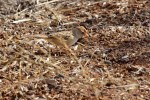
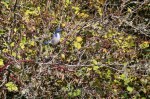
When a sparrow appeared to me, I was hoping it was going to be something I don’t see at home.  However, I would say it’s either a Chipping Sparrow or a young White Crowned Sparrow, both of which are also found out east.  I’m rooting for a White Crowned Sparrow–it’s more exciting than a Chipping Sparrow.  Plus, it has an orange beak–although this isn’t normal for a young White Crowned Sparrow as far West as we saw this one according to Sibley.  But a Chipping Sparrow doesn’t have an orange beak, either, so I’m going with the White Crowned.

Sparrows are often tortuous to identify.

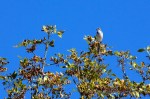
This leads me to a species definitely not seen East of the Mississippi–the Scrub Jay.  I don’t know who named this poor guy after something that sounds like it should be used to clean toilets, but they really must have been annoyed with these noisy, persistent buggers when they named them.  After all, the Scrub Jay is a beautiful, brilliant blue bird with gorgeous markings.

My appreciation of the Scrub Jay reminds me of a visit from a Korean family when I was a teenager.  They were amazed by the Northern Cardinal.  We had dozens of them visiting the feeders during their visit and the Korean children couldn’t get over how beautiful they were.

What is it about rarity that makes us prize beauty more?  Once it becomes a common occurrence, we forget to be amazed.  This seems related to the old adage, “we only want what we can’t have,” usually applied to dysfunctional relationships.

Instead of appreciating the ubiquitous Northern Cardinal when we are in the East and the equally ubiquitous Scrub Jay when out West, we look for the birds that are hard to find.  We revel in sighting the birds yet to get a check mark on our life list.  We yearn to see a bird we’ve never seen before.

I admit I fall into this thinking.  I was excited to add two birds to my life list while at the preserve.  First, there was the Cackling Goose (or the Crackling Goose as it seemed to come out more often than not).  I had dismissed them as Canada Geese to be honest.  I had no idea there even was such a thing as a Cackling Goose.

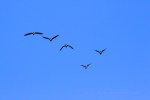
Fortunately, my father had recently learned about the Cackling Goose, which led me to play its call compared to a Canada Goose.  Sure enough, different calls.  All of the birds in flight were Cackling Geese.  They seemed to be confused as they tried to create a formation.  Perhaps that’s why they were still as far North as Portland in October.

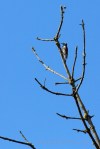
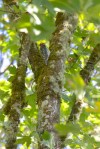
But more exciting than the Cackling Goose, we also got to see a Red-breasted Sapsucker.  Definitely a nice treat, although probably a daily sighting in this preserve.

Quiet Giants

Even as a dedicated tree hugger, I never thought going to stare at trees was particularly exciting. Arboretums, for example, fail to move me.

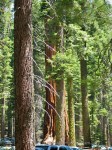
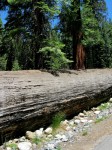
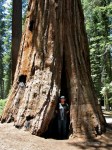
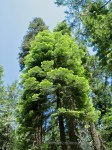
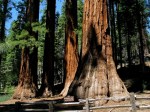
But, several years ago, after 6 days of backpacking in Yosemite, it was a nice respite to head to Mariposa Grove and see the giant sequoia there.

In the same inexplicable way in which the mountains evoke a quietude, these giant trees spoke to me like individual mountains standing amongst a forest of tiny hills. They are the largest living things on the planet by volume.

I once read a historical novel about the settlers of the Pacific northwest in the 1800’s. In that book, they had an intense hatred of trees. The trees stood between them and fertile farmland, sustenance, and shelter.

When I saw the sequoia looming down, as they had in some cases for over 3000 years, among some of the world’s oldest living creatures, I found myself wondering what the early settlers thought of these giants. The Sequoia survived in part because they were fire resistant, bug resistant, rot resistant, and not particularly useful for building anything.

The settlers couldn’t burn them–in fact, fires are quite helpful in promoting Sequoia reproduction and over-controlling forest fires led to a demise in their population.

Their seed cones are tiny pods that pop open and spread seeds when properly dried. The heat of fire, which has the additional benefit of clearing out most of the Sequoias’ competitors, dry out the cones and allow the seeds to disperse.

The Chickaree squirrel can also help disperse sequoia seeds. This little guy will eat sequoia cones and help spread the seeds in part by storing the cones.

Luckily for both the sequoia and the Chickaree in Mariposa Grove, controlled burns are helping to restore the natural ecosystem of the area, encouraging new generations of giant sequoia trees.

The famous “California Tunnel Tree” in the middle of the park probably serves as the best representation of how the early settlers felt about these giant trees. They cut a big hole through the middle of a tree wide enough to drive a wagon and a team of horses through it. Not exactly a sign that they had a sense of awe and wonder about the trees. Seems more like a Graceland tourist trap than a healthy respect for the diversity of life.

In any case, we are all fortunate that Galen Clark did come along with a healthy respect. He saw the testament to grace these trees represented and managed to preserve them.

I imagine life from the trees’ perspective, in which thing move at a pace proportional to a 3000+ year life expectancy. I imagine what a tree “sees” in the course of 3000 years as the make up of the air, the water, and even the very soil at its feet shifts and changes. I wonder if the older trees complain about kids these days or if evolution occurs at an altogether different pace?

Visitors at the Visitor’s Center

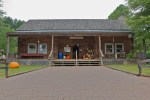
Last Saturday, I watched the visitor’s center at Audubon Acres from 9AM-1PM.  It’s one of those volunteer jobs I don’t mind doing, but the visitor’s center isn’t often a busy place.

I guess it’s helpful for a volunteer to be there to deal with visitors who stop by so the various other folks who might be there can work on projects uninterrupted.  The property manager was off running an activity, which was a tour of a wetland at the local VW factory.  I was covered the front desk until he got back.

After taking advantage of the quiet to finish up some work of my own, I got out my camera.  I took the cordless phone with me, staying close enough that I could get back inside before a visitor could pull in, park, and walk in.

Someone had spent quite a bit of time decorating the front of the center for halloween.  They had found or grown giant pumpkins and strategically placed them in front of the center to make it look like a pumpkin patch.  I’ve never seen such large pumpkins.  I thought they were fake until I knocked on them.

A Brown Thrasher perched in the open across the parking lot from the center.  I, of course, couldn’t resist crossing to the other side to see if I could get a shot of him.  Brown Thrashers are amazing teases.  I believe they instinctively recognize a camera even if they’ve never seen one before.  They perch where they can be seen clearly with no obstructions just until the moment when the camera achieves sharp focus.  Then, they hop behind a bunch of leaves, disappearing completely out of the frame and forcing the photographer to take her eye away from the camera to locate said bird again.

Now, this kind of hide-and-seek is expected when you’re shooting a hummingbird or a warbler.  Tiny little birds that move quickly can disappear completely behind a single leaf.  But a Brown Thrasher is a big bird.  It’s bigger than a Robin and has a much longer tail.  It should NOT be able to evade my lens so effectively.  Yet, there it is and there it isn’t.  I rarely get a shot of a thrasher even though I see them almost daily here.  I hear their loud clicking and know they are making fun of me from their favorite hiding spots.

Fortunately for me, although I had no luck getting a shot of a thrasher, I did get to spend a few minutes walking around the property before I left for home.  Within minutes I’d spotted some warblers flitting around in the trees.  The first one I got several shots of was a Magnolia Warbler in fall colors.  The second was a Wilson’s Warbler–one I’ve never seen before.  I love it when I get to add a bird to my life list!  Unfortunately, 400mm is not enough for warblers, so the photos are heavily cropped.

Tent Cabins

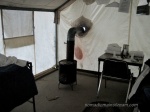
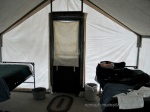
On our trip to Yosemite several years ago, we spent one night in a tent cabin at Tuolumne Meadows.  This was long before the recent scare related to the Hantavirus infection in Curry Village.  Plus, Tuolumne Meadows is a long way from Curry Village.

There are many differences between Curry Village and Tuolumne Meadows.  Curry Village is located in Yosemite Valley, where the temperature is far warmer.  It’s also the most popular part of the park, so Curry Village is larger and has more people in it.  This results in a lot more noise and a lot more bears.

It’s really hard to get that many people to comply with rules about keeping anything scented in a bear locker.  Even well-intentioned people overlook things like lost M&Ms in their cars or in pockets.  Cars parked at Curry Village are often in danger of bear raids.

By comparison, Tuolumne Meadows is cold.  It’s at a much higher altitude in a remote location above the valley, resulting in much cooler temperatures.

We were there in July–and it was even a warm July.  We slept in sleeping bags rated to -10 degrees.  We wore fleece, warm hats, and zipped our mummy-style bags securely around our heads to stay warm.  Thankfully, the bags were warm enough even after the fire in our tiny, inefficient wood-burning stove went out.  There is nothing about a tent cabin that is energy efficient, unlike our 2-person tent that can often get quite warm with our bodies in it.

But the advantage of the cold temperatures and more remote location is that it’s a smaller village with fewer, quieter people who tend to be more serious about hiking and more conscientious about storing their stuff properly.  There are far fewer bear encounters in Tuolumne Meadows as a result.

Another advantage was that, because of the remote location and smaller number of people, they served a really awesome hot breakfast right in the village.

The biggest challenge we faced was identifying our bear locker in the long row of lockers.  People used unique rock arrangements on the lockers to mark theirs.  We made the mistake of remembering the rock arrangement on the locker next to ours, which had changed by morning.

Anything with a scent must go in a bear locker.  This includes toothpaste, hair gel (if you happen to have brought hair gel), deodorant.  If it could possibly smell like food to a bear, into the locker it goes.

The black canisters are a portable equivalent of a bear locker–all things with scent go in one on the trail.  The Yosemite bears are so familiar with bear canisters they don’t even try to break into them if they see one that’s been properly closed.  We left extra stuff that didn’t go on the trail with us in a bear locker at the trailhead.

There was often evidence a bear had checked out our campsites, but they’d always left quietly without disturbing anything.

Stringer’s Ridge

Among the many places in the vicinity of Chattanooga to hike, Stringer’s ridge is both new and old.  It’s old in terms of having been there for a very long time.  But it’s new in that a group is now working hard on creating new trails throughout the ridge area.

For us, it made a great Sunday hike when Pat was tired, having been on his feet all week working on building guitars.  Instead of driving an hour and hiking a a strenuous path, we drove about 5 minutes to get to Stringer’s Ridge.

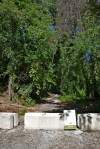
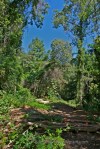
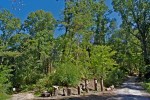
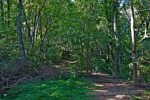
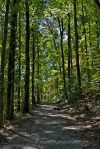
The area has many trails still under construction; they are marked with signs indicating they’re closed.  But, in spite of the closures, we found a lovely loop open by following the deteriorating roadway that seems to be a remnant from when people had homes in what is now a preserve.  It went from deteriorating asphalt to gravel, which was actually easier to walk on.

Where the road intersected several trails (most still under restoration efforts, but one open to traffic), it appeared someone had been expressing their artistic talents in wood.  A collection of what appeared to be bird houses lined the main intersection.  A giant sculpture of a hiking man created by creatively placing a forked log and adding appendages made a very cool trail marker.

We’re excited to see the progress.  We could see some of the trails under construction winding their way through the woods below us and were certain they would be a great walk when they’re open.

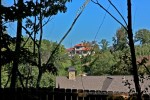
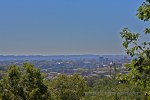
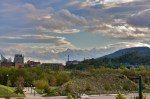
We were also thrilled to discover the fantastic view of the Chattanooga riverfront and north shore areas from the South side of the ridge road.  Who knew we could find such a view just minutes away from home?

Date Night Plus One

Last weekend, my husband suggested something fun, a little romantic, not strenuous, and inclusive of Tisen.  He suggested getting take out and going up to Signal Point to watch the sunset.

He had a craving for fried chicken.  This is monumental.  I have known my husband for going on 18 years now; he’s eaten chicken exactly twice in those 18 years.  The first time was last March.  I’m beginning to think southern culture is getting to him.

This craving resulted in me waiting inside NIkki’s Drive In for our dinners to be prepared while Pat waited in the car with Tisen.

While I sat, I pondered the meaning of “drive in.”  Nikki’s is a place that is most easily reached by driving.  However, there are certainly houses well within walking distance and even more within biking distance.  I’m certain they don’t turn customers away who get there by either of these means.  They aren’t one of those places where you can pull up and park and order through a microphone and they come out on roller skates to serve you.  In fact, they don’t even have a drive through window.  They have a parking lot.  Does having a parking lot qualify a restaurant as a “drive in”?

When I got our food, we drove up to Signal Point without using the GPS.  Pat took 2 wrong turns in spite of me pointing and saying, “turn, turn, turn! TURN!”  I think this is a common marital problem.

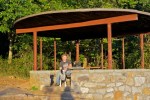
When we got to Signal Point, a couple was already at the only picnic table.  We picked a rock along the hillside to sit on while we ate.  Pat, my romantic husband, had spent an inordinate amount of time packing Tisen’s elaborate dinner so Tisen could eat with us.

Tisen is on a special diet.  It consists of all raw foods.  His fur is softer and stays cleaner longer.  His teeth look cleaner.  He has more energy and seems to limp less.  Yet, he still suffers from the allergies that caused us to change his diet in the first place.

He gets a mixture of reconstituted foods along with herbs and supplements that put our own diets to shame.  This is all mixed with organic coconut oil.  Pat prepared it all and had it ready to go for Tisen while we picked at our fried chicken.

Tisen was pretty sure the fried chicken would taste better than his health food.  I’m pretty sure he was right.

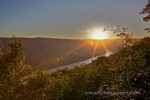
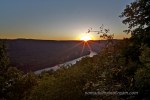
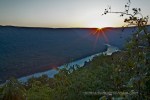
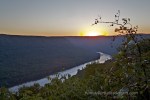
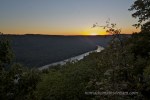
As the sun started to set, the moon rose higher in the sky.  I couldn’t resist trying to get a vertical shot with both the river valley and the moon.  Then, I couldn’t decide which one I liked better.  The one with the sun still hitting the foreground, the one with the foreground in shadow, or something in between?  There wasn’t much going on with the sky, but it was still a lovely evening as are most evenings on Signal Mountain, I suspect.

Biking, Birding, and Bystanding

Biking and birding reminded me of several life lessons I have learned, forgotten, and learned again.  First, speed causes us to miss details.

I think back to the native prairie by the bike path back in Columbus, Ohio.  I used to ride by wondering why I didn’t see more birds.  When I went by on roller blades, I saw more birds, but was surprised I didn’t see any hummingbirds.  When I walked by, I saw hummingbirds but was surprised there weren’t any bees.  When I stood completely still, it was like a magical veil was lifted and suddenly I saw an amazingly dense array of life, buzzing and hovering and dipping among the flowers.  I am frequently reminded that sometimes, to really see the abundance of life, you have to sit still.

The second lesson was:  it probably isn’t a good idea to point out birds–even really big ones–to a bunch of people on bicycles.

When we all pulled well off to the side of the path to stop and look, everyone was able to see the differences between a Turkey Vulture and Black Vulture, and many got to see an Osprey soaring overhead with no injuries.

As I watched these birds of prey, I had to wonder if they experienced the same kind of joy in catching a thermal and soaring on the wind as I was experiencing pedaling my bike through the early autumn breeze.  Some may think that birds just do what they do for the purpose of finding food, but I have to believe there is a joy that comes from doing what you were born to do that even birds experience, particularly on a beautiful day.  I find it impossible to watch the grace of soaring raptors without being moved.

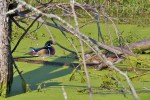
As we made our way up the Riverwalk to the Curtain Pole Road swamp area, I learned the third lesson of the day.  Sometimes, it’s not the birds that are the most interesting part of a bird walk.  One of the other participants spotted turtles and frogs.  Although the wood ducks were still my favorite (see photos from yesterday’s post), the turtles and frogs were pretty darn fascinating.  By the way, one attendee pointed out that in the last Wood Duck photo in yesterday’s post, there is a camouflaged turtle right in front of the Wood Duck.  I totally missed that!

The final lesson for the day was that we all have different levels of excitement about the same birds.  I was so excited to stand and watch the Belted Kingfishers at Amnicola Marsh.  I could have stood there all day with them swooping across the marsh, chattering away.  In the meantime, most everyone else was looking for something more interesting.

Regardless, I think we all enjoyed the outing. For me, it doesn’t get any better.  A beautiful day, a bike, a new group of interesting people to meet, some really cool birds, and my camera.  What more could anyone ask for?

Bike and Then Bird

I have been riding the Tennessee Riverwalk twice a week for a few months now.  It’s one of those places that makes me happy.  It’s just a beautiful way to wake up.  Riding along the river on the mostly quiet trail, exchanging smiles with the dozen or so pedestrians who also haunt the riverwalk just after dawn–there just isn’t a better way to start the day.

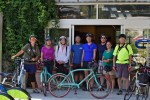
I have also been leading bird walks a couple times a month.  And, I went on a biking tour of the Chickamauga and Chattanooga National Military Park last year, which was organized by Outdoor Chattanooga.

Thus, it was only natural that, as I rode past great birding spots along the riverwalk, I would think “I should organize a bike and bird!”

Allow me to clarify for safety reasons:  I am not advocating birding while riding a bike.  That would be dangerous.  However, a bird walk is a usually a slow meander through a relatively small area with a good bird population and does not afford the opportunity to cover much distance without driving.  It seems counter-intuitive to me that we would increase the amount we drive in order to pursue an activity motivated by the desire to learn about and appreciate creatures quite dependent on an unpolluted environment.

To give credit where credit is due, a friend of mine back in Columbus, OH previously organized “eco bird walks” where all participants agreed to walk, bike, or take public transportation to the starting point and they walked from there.

So, I my idea was not exactly unique.  Regardless, I get a special pleasure out of combining activities.  I formed a plan:  Outdoor Chattanooga organizes bike tours all the time.  Why not ask them to do a bike and bird?  They have a fleet of bicycles so even people without bikes could join.  I would invite the Chattanooga chapter of TOS and the Audubon Society and we could have a lovely morning of riding and birding.  Or, to be more accurate, riding, stopping, and then birding.

And so it was.  It took a few emails and phone calls, but that was it.  Outdoor Chattanooga did the rest–and what a great group of people they are!

Finally, the Saturday selected was upon us.  I’m not sure which of the folks at Outdoor Chattanooga was in charge of arranging the weather, but they did a fabulous job.  I suppose if it would have been a little less breezy, we might have had an easier time spotting small birds among the trees, but the clear blue sky with little humidity and the cool breeze kept me smiling the entire ride.

We saw quite a few good birds, although not quite the bonanza I was hoping for.  As I told our guide from Outdoor Chattanooga, it was such a beautiful day that I would have enjoyed it even if we hadn’t seen a single bird.

Renaissance Rodents

Across the street, Renaissance Park beckons.  It calls to me with its manmade hills hiding secrets left behind by the manufacturers who occupied this park long ago.  And before that, the civil war soldiers who crossed the Tennessee here at Ross’ Landing.  And even before that, the Cherokee on their tragic walk on the Trail of Tears.

I don’t know what all was encapsulated in the mounds of Renaissance Park, but Renaissance is a good name for it.  Reborn from the pit of industrial waste it had become, it’s now a haven for birds, butterflies, the occasional deer, perhaps a fox family, and for sure coyote.

The thing is, you don’t get predators if you don’t have prey.  Fortunately, prey doesn’t care if the hills are manmade or if the wetland was created by a backhoe, or that the plants were carefully inserted into the earth by the hands of a human being.

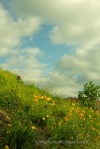
The fact that the western hill in Renaissance is covered in native grasses and flowers means it’s a living feeder.  It feeds the American Goldfinches who love to cling to the stems of flowers that have gone to seed while they munch away.  And, underneath the foliage, it also feeds a more mysterious colony of life.

This colony becomes massive in the fall when the young have matured enough to rustle amongst the long grass on their own.  They scamper and disappear quickly enough that all I’d been able to determine is that they were rodents.  I’ve been afraid to consider the possibility that they’re rats.  Not because I’m afraid of rats but because I fear the reaction of the public to the notion of a large population of rats nesting in the park.

To me, this just makes the hillside a better feeder–it provides food for more than one link in the food chain.  But, for many, the word “rat” causes a different reaction.

When Tisen and I walked into the park a few evenings ago, these mystery creatures were showing themselves.  In fact, one sat on top of a clump of grass staring at me.  I was so caught off guard, having tried to see what they looked like for so long without success, that I barely had time to process what it looked like before it took a closer look at Tisen and decided to duck back under cover.  It looked a lot like a small brown rat.  I decided I’d better bring my camera over the next evening.

Back we went, me armed with my 70-200mm lens.  As Tisen’s tags jingled, the little critters scampered around, not holding still long enough for me to get a look, let alone a shot.  But, finally, I spotted one sitting still.  I am happy and relieved to report that it is not a rat; it’s a Meadow Vole (I think).  After all, no one ever got up in arms about exterminating a bunch of cute little voles, did they?  My favorite hawk feeder is safe.

Birding with Enthusiasm

Tuesday night, I set up the coffee maker and set the timer so it would start brewing at 5:15AM.  I put out the clothes I would wear for rowing.  Everything I needed was ready to go so that when the alarm went off at 5:30AM and I was stumbling around disoriented and wondering why in god’s name I continue to get up at 5:30AM, I wouldn’t have to think.

Wednesday morning, hot coffee in hand, I looked at my schedule for the day and there, low and behold, was a bird walk on my calendar for 7:00AM.  As in a bird walk I was leading!

Startled by my oversight in planning, I shifted gears, pulling together my bird walk backpack and gathering binoculars and my camera.  I pulled up the flashlight app on my iPhone and went searching in the darkness for a different outfit.

I admit I was feeling slightly resentful about giving up my rowing time as I imagined sitting alone in the park waiting for others who never show up.

At 6:50AM, it wasn’t even the crack of dawn yet.  I sat in darkness until I was surprised by a silhouette that turned out to be the Audubon property manager.  Next, a father with 4 enthusiastic children arrived.  Then, a regular from the condos arrived.  I stopped feeling bad about missing rowing.

I started my lesson about birding during fall migration.  I talked slowly and told more stories, hoping the sun would rise.  Every time a shadow went by, one of the children would turn, point, and shout, “What was that bird?”  I need to find out what kind of coffee they drink in the morning!

The amazing thing was how much the kids knew about birds.  They knew which birds were locals and which birds would not be found in Tennessee (even during migration).  The girl immediately recognized a Brown Thrasher she had barely seen for a split second.  Her older brother told me all about the birds he sees at his feeder at home.  Their father told me the interest in birds was the kids passion.  I thought that was pretty cool–also an advantage of home schooling.

I didn’t do so well on photography that morning.  First there wasn’t enough light.  Then I was just a bit flustered by all the questions and exclamations (LOOK!!!  THERE’S A CARDINAL!!!  LOOK!!! THERE’S A TURTLE!!!  LOOK THERE’S A BLUE HERON!!!  LOOK!!! THERE’S A SQUIRREL!!!).

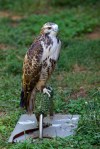
As much fun as it is to be surrounded by little people who think everything is fascinating, it does make it a little more challenging to take a moment to shoot.  I’ve filled in the photos a bit with some leftovers from the previous walk and one shot of Cody, an unreleasable Red-tailed Hawk who has appeared in this blog several times as part of the S.O.A.R. raptor program.  I saw Cody again over the weekend, but that’s another blog post.