Maligne Lake

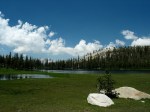
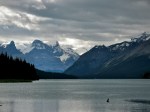
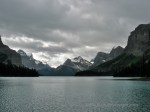
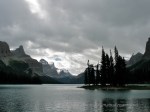
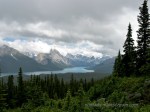
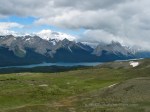
Maligne Lake takes its name from the Maligne River that feeds it. The river was apparently treacherous enough to be dubbed “malicious,” although it sounds better in French. Located in Jasper National Park in the Canadian Rockies, it’s one of those places that I had never heard of before I started researching the area while planning our first trip there.

Maligne Lake is a popular destination. The tiny island, Spirit Island, located in the lake is apparently an extremely popular destination among tourists. One cruise to the island states the island “epitomizes the Canadian Rockies.” the island is supposedly one of the most photographed sites in the Rockies.

Whenever I see a claim like that, I have to wonder how anyone knows how often a particular site has been photographed. I didn’t notice any photo detectors going off while I and the boatload of people on our cruise started shooting like mad.

I did however notice a certain calm. I don’t know if it was a case of self-fulfilling prophecy with all the build up, but the place seemed aptly named. There is something about journeying across this lake to see this tiny island that makes the trip worth it, even if it’s been done by a million people before and will be done by a million people after.
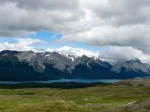
Having done our tourist duty by contributing to the Jasper economy by joining a boat tour, we then separated from the crowd and headed up to hike the Bald Hills that were immediately past the lake.

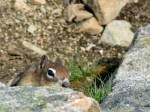
We spent the better part of the day climbing in elevation. By the time we got into the hills, we were starving. At the same time, the temperature was dropping rapidly and a cold wind kicked up. We found a rocky outcropping to shelter us from the wind and quickly learned that not only big, scary predators can be a pest if they’ve been fed. At least today we had only to outsmart the chipmunks.

After a few minutes, they were so bold that we were afraid we were going to get bit. When one actually stopped and nudged Pat with its tiny little paw as if to say, “Hey, feed me!” I started to get more nervous than when we had encountered a bear! I just kept envisioning a finger getting nipped off while we hunkered down on this remote mountain and dying of some horrible illness like rabies.

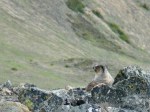
We did manage to complete our lunch without any injuries, although we did lose a crumb or two. As we walked on, we passed a slumbering yellow bellied marmot soaking up what little was left of the sun. in fact, sunshine came to an abrupt and frightening end when dark clouds rolled in and snow started falling fast. Unprepared to spend the night in a snow drift, we moved out quickly, taking the chipmunks’ last hope for a grand feast with us.
Swamp or Park?

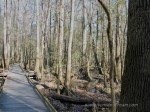
When I planned our route and where we would stop on our way to the Everglades and Key West back in 2008, I picked some places on the map I had never been to, including Congaree National Park.  When I googled it, I discovered that it had, until recently, been called Congaree National Swamp.  I guess I can understand why someone might think Congaree National Park was a better name.  After all, how many people think pleasant thoughts when they think of a swamp?

It only made me more curious to see it, however.  As we started down the very fancy boardwalk that kept less enthusiastic hikers’ feet dry, we spotted several woodpeckers and a couple of warblers in about 5 minutes.

We continued well beyond the boardwalk and onto the trails for those with waterproof boots.  As we walked, a Barred Owl called over and over, completely oblivious to the fact it was 2 o’clock in the afternoon.  We heard a Pileated Woodpecker and saw it fly.  We followed it as long as the trail allowed, but I never did get a shot of it.  Of course, still toting my Powershot G3 that trip, I’m not sure how much of a shot I would have gotten anyway.

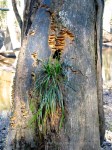
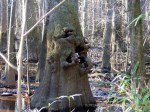
We continued along to a beautiful stream with giant swamp trees growing along the banks.  I assume they were Cyprus–the number of knees that threatened impalement to anyone who dared to trip was overwhelming.  I expected to see a few knees popping up here and there–the fact that acres of swamp were nothing but knees was quite a surprise to me.

But the biggest surprise was when we heard some rustling in the underbrush as we approached a darkly shadowed part of the woods.  We paused and looked at each other, unsure of what we were hearing.  Then, suddenly, several boar jumped up from their cover and went squealing off through the woods.

While I generally seem to lack the appropriate level of fear of wild animals, I have to admit that I definitely jumped when those pigs ran off through the woods.  Although I was disappointed I didn’t get a picture, I preferred missing the shot over having them run towards me.

At the time, I didn’t know that wild board were supposedly introduced here in the 16th century for hunting.  Who knew that the boar would go nuts and start taking over?  The amount of damage they can do is pretty frightening.  I don’t mean just to humans (although that’s frightening too) but to land, farms, and ecosystems in general.

I was a lot less excited about our wild boar encounter when I learned just how common they had become in the region and what a problem they are.  Much more recently, I discovered there’s a reality TV show about boar hunters.  Like most of the reality TV shows I’ve heard about, that just seems wrong.

In spite of the boar, I highly recommend hiking in the Congaree.

Almost Shenandoah

In 2008, I took my trusty PowerShot G3 for it’s final trip.  While I would have preferred my Canon 40D by then, since our plan included canoeing/camping in the Everglades, I was content to take a camera I wasn’t worried about ruining.

On our way to the Everglades and Key West, we stopped in Shenandoah.  It was on a list of places to see before you die, so we thought we’d check it out.  On our way through Virginia, we entered the North end of the park and managed to get in a short hike in thick fog before heading on toward lower elevations.  The fog was forming hoarfrost on the trees as we exited the trail.  We crept along the main road through the park, barely able to see a young buck walking along the road.

We made it safely to our hotel, where it was completely clear and much warmer.  The next morning, we learned the entire park was closed due to ice, but we were told to call back in a few hours–things might improve.

We decided to go for a cave tour nearby to kill the morning.  Luray Caverns was interesting. Although, because it’s privately owned, it’s treated commercially instead of for preservation purposes.  This means there were formations we could touch, lots of colored lights, a wishing well, and an organ that played a song by triggering mallets that hit various formations.  The cave was pretty astounding none-the-less.  I just hope it survives being shown off long enough for many to enjoy.

Returning to daylight, the valley was sunny and relatively warm for late December.  We decided we needed to get on the road whether we were able to hike in Shenandoah or not, so we drove on up to the park.

As we continued upward in elevation, the skies got cloudier and more and more of the scenery was blanketed in white.  As it turned out, all of the trees and roads were still frozen in a coat of ice.  It was beautiful to see, but the entrance to the park was closed.

Instead of hanging out for an extra day to see if things improved, we decided to take the Blue Ridge Parkway South and enjoy the scenery as we drove.

This turned out to be a surprisingly good decision considering the weather.  The further South we went, the sunnier the skies and we encountered no ice at all.  I guess the Parkway South of the park is a little lower in elevation.

We not only got to enjoy beautiful views of the valley below, but we were treated to spotting a couple of mountain goats tussling at the side of the road.  They were so entangled with one another, they looked like a two-headed goat.

We were sorry to leave the parkway behind, but we did make it to Congaree National Park early enough to take a long hike there and work the kinks out.

The Long Hike

Continuing from my last post, I’ll skip the other backpacking practice trips we went on between Wildcat Hollow and Yosemite–let’s just say that I experimented with “ultra-light backpacking” methods and decided having rain covers for the backpacks, a dry change of clothes, and a waterproof tarp was really worth the extra weight.

That said, we arrived in Yosemite fully prepared.  However, having spent the day flying across the country and driving to the park, we weren’t up for hitting the trail as soon as we got there.  Instead, we stayed in the Tent Cabins where we got to watch a video of a black bear peeling open a car door to get to a forgotten cookie.

We were very careful about using approved bear containers.

Our first day on the trail was a bit more complicated than we thought.  First of all, by the time we ate breakfast, got our gear packed, got our backcountry permit and bear canisters, and figured out where to safely store stuff we weren’t taking with us, it was nearly noon.

We also had a complication to deal with.  The trail we were going to take was closed.  We were going to have to take a different, longer route with more elevation ups and downs.  We hitchhiked for the first time (this is really not like hitchhiking on the freeway–even the park rangers suggested hitching to the trailhead).

It seemed quite a coincidence that a German picked us up given that my husband is German.  They chatted in their native tongue until our driver almost ran into oncoming traffic.  Then my husband decided maybe it wasn’t such a good idea to talk while the guy was driving.

We made it safely to our trailhead.  We started the long climb from the valley floor toward or goal, the top of El Capitan.  There are only two ways to get to the top of El Capitan:  hike the slow climb up the back or climb the steep face with ropes.  We picked the long, slow route.

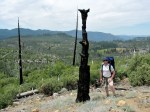
The start of the trail was through what seemed like miles through a burned out area of the forest.  With no shade, we felt like we were being cooked like ants under a magnifying glass.  We were both relieved when we made it into the woods.

From then on, the scenery improved, water sources were plentiful, and Pat stopped complaining.  However, we both started suffering from mild altitude sickness.  Not something we expected at those elevation.

We ended up stopping short of our distance goal for the night.  We had trouble forcing ourselves to eat, feeling slightly nauseous.  We happened to pick a mosquito resort area, so we quickly retreated to our tent and went to bed early.  I realized as I fell asleep that the one thing I’d forgotten was gatorade–it’s awesome when altitude sickness is an issue and you need calories that don’t make you nauseous.

Oh, and the non-toxic mosquito repellant didn’t work.

Practice Hike

Back in 2004 (yes, more stories from my PowerShot G3 era), I talked my not-yet-husband into going backpacking in Yosemite.  He had never been backpacking before and he had never been to Yosemite before, so he was both excited about the prospect and nervous that I, the slightly more experienced backpacker, would mislead him in his preparations.

Since I hadn’t been backpacking for many years, I did the only logical thing.  I bought a stack of books about backpacking.  Then, I began equipping both of us.  The next logical step was to test it all out.

I also got to test my setup for taking pictures.  Instead of a strap, I used an elastic harness that took all the weight of my camera off of my neck, which was such a relief.  It also left my hands completely free.

Well equipped, we headed to Wildcat Hollow in Wayne National Forest.  It was the only place I found within a 2 hour drive that allowed backwoods camping.  The entire trail was about 12 miles–just long enough for a day and a half trip for us.
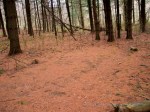
Although the hike started through a grove of evergreens, most of the trail went through deciduous forest.  In early April, just the beginning of spring growth was starting on the ground–the trees showed no signs of life at all.

As we made our way through the woods, we came to a stream with a beaver lodge.  Something was laying on top of the lodge.  We approached quietly, thinking we were going to get to see a beaver.  But, as we crept forward, I found myself wondering what a beaver would be doing on top of its lodge and how on earth it would get there.  I frantically tried to remember everything I knew about beavers.  I was pretty certain their lodges were supposed to only be accessible from underwater.

I guess when people say “only accessible from underwater,” they aren’t thinking about geese.  That’s what was stretched over the dome of the lodge–a large canada goose.  We watched for a long time trying to decide if it was alive, dead, or dying.  We saw it breathing, but decided it must be dying because it had its head down.  Coming up with no way to help this goose, we hiked on and tried to come up with alternative, more cheerful explanations.

When at last we found the perfect site to camp, we discovered how easy our new tent was to put up–it took 5 minutes.  We heated up instant soup on our tiny burner and hunkered over our hot soup cups as the temperature dropped.

We put on warm, dry long underwear and our warm wool hats before snuggling into our sleeping bags.  We slept pretty well, staying warm and dry all night.  When we woke up, it was snowing.

We hiked out with our bellies full of oatmeal and hot coffee feeling like we were quite the survivors.

Signalled

Late Sunday afternoon, I got the urge to hike.  Pat, however, did not.  He was in the middle of a project.  I started to settle back into the couch, but then thought, “I didn’t move to Chattanooga so I could sit on the couch.”

With a little surfing, I discovered there was a section of the Cumberland Trail on Signal mountain and it sounded awesome.

Based on the map scale and the “pinky measurement” technique I’ve developed (patent pending), I guestimated it was between 2 and 2.5 miles one way.

As we started down the trail, we passed a sign that said Edward’s Point Overlook was 2.9 miles away (there goes my patent!).  I resigned myself to the reality that we were not going to make it to Edward’s Point today.

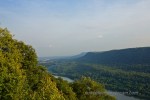
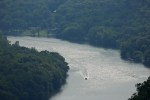
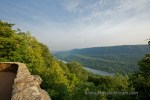
We made our way down some treacherous steps and then some even more treacherous steps.  After about 20 minutes of walking, we made it to another overlook.  Black Vultures soared on a thermal, rising up over the mountain and disappearing on the other side.  I tried to get a shot, but they disappeared before I could even get my lens cap off.  I shot a boat down on the river below instead.

We kept on going, which might have been a mistake.  I had trouble getting Tisen to drink water.  He wouldn’t drink out of my hand and he shied away from a water stream.  I paused to find a depression in a rock he could drink from.

As we continued, we heard a waterfall.  I thought maybe water would be nearby, but each stream was just a damp mark on the side of the mountain.

I watched Tisen plow through poison ivy.  As much as I knew I should avoid touching him, I couldn’t help myself.  I suspect even my camera is now covered in poison ivy oil.

We’d made it about 200 yards past a frightening bridge when our time ran out.  With no photo ops since noticing a cluster of mushrooms high above us,  I was cursing every ounce I was carrying.

When we stopped again at the rock with the depression for more water, Tisen laid flat out on his side, head down, sides heaving.  I wasn’t sure he was going to get up again.  But, when I stood up, he popped up like he’d just been teasing me and even led the way up the steepest parts of the trail.  I was really impressed when he hopped up those scary steps full of energy.

We stopped at the overlook in the park one last time to shoot the Eastern sky.  The light was better, although the sun was still too high for shooting towards the West.

Hot, tired, and hungry, we headed back down the mountain to return home.  Unfortunately, we couldn’t relax right away–both Tisen and I required poison ivy detoxification.  Tisen does not much like baths, but he seemed to feel pretty good afterwards.  Or maybe it was after dinner?

Fearless and Foolish

When I returned to Yosemite with my husband in 2004, after spending a night up on Clouds Rest, we hiked over to Sunrise Lakes and spent a night there.

Sunrise Lakes consists of three lakes that are at different elevations on the mountain.  We hiked our way up to the top lake, eventually coming to an area that was a popular place to camp.  As we passed a group’s campsite, a young woman stepped out of a tent.  She told us her friends went on a day hike and she decided to stay behind and read.  After chatting for a bit, we continued on, hiking over a ridge and finding a spot to set up our own, much smaller camp.

After getting our site setup, we were about to take a dip in the lake when the girl from next door appeared.

“Uh. . . can I hang out with you guys for a little bit?” she asked.

As it turned out, there was a black bear in her campsite.  I insisted we go back and chase it away or it would never leave them alone.

So, we returned to her site to discover a relatively small black bear (who was actually brown) had found a bag of trash that had been left in an open bear canister.

I have to take a moment to get on a soap box here.  We had never backpacked in a park where you had to use bear canisters before.  But, when we got our permit, the ranger explained to us why we needed them and how to use them.  We followed the instructions carefully.  They were simple:

  1. Anything that has a scent must go into the bear canister.
  2. Your kitchen area must be at least 50 feet from your tent
  3. Any and all leftover food, pot scrapings, wrappers, trash, etc have scent; refer to rule 1.
  4. The bear canister must be properly closed.
  5. A properly closed bear canister can be set on the ground in the kitchen area.

Although we found evidence the next morning that a bear had come through our campsite, as the rangers promised, when it discovered all the goodies were unobtainable in our canisters, it quietly moved along without even knocking over a canister.

But, back at our neighbors’ campsite, I should have been afraid of a roughly 400 pound bear with scary claws, but, he just seemed like a bigger version of our dog.  I experienced no fear.  I led the three of us as we shouted, clapped, and threw rocks.  Between throwing and clapping, I took as many photos as I could.  I can’t say I spent a lot of time on composition.

We chased the bear away, but, unfortunately, our neighbors didn’t learn their lesson.  A13 year old in the group left a container of Gatorade in her backpack and the bear harassed them all night long.

It makes me sad to think that bear may have eventually paid the ultimate price because people couldn’t follow simple instructions.

Climbing Up the Walls

Having made space in my photo library, I, of course, had to fill it.  I did this by importing an old archive of photos into my favorite photo management tool, Aperture.

An interesting thing happens when you import an old archive:  you watch your life flash before your eyes in the most literal of ways.

As I sat there going through time, I was reminded of many amazing things I’ve experienced in my life.  Of course, I find a starling with white tail feathers (which still eludes my camera) amazing, so I guess I’m easy to amaze.  I consider that a virtue.

Among these memories are a few moments when I was scared and not sure I could do something, but I did it anyway.  I’m sharing one of those today.

I had traveled to Yosemite with some friends I’d been training with for my first triathlon.  We went to San Francisco first where some of them (not me) did Escape from Alcatraz.  That was above my pain tolerance level.

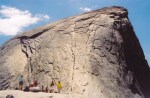
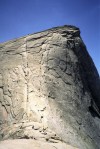
In Yosemite, at the base of Half Dome, I stood looking up at the climb to the top of the dome and nearly didn’t attempt it.  If I am completely honest, it was only pride that motivated me to do the climb.

It’s hard to describe the climb.  I guess if you imagined people walking across a rope bridge and then imagine the bridge is vertical, hanging down the side of a mountain, and only has a floor-board every 10 feet, that would be close.

The boards are flat against the rock so you can perch and rest for as long as the people behind you will tolerate.  It’s probably not quite as vertical as it seems, but I felt like we were walking up a wall.

You are not tied to anything and you do not use any special gear.  Gloves are highly recommended, however.  If you arrive without a pair, there is a pile of gloves at the start of the climb left by those who completed it.  These are simple work gloves–nothing special.

I don’t know how long it took to complete this climb.  I just remember feeling grateful that someone slower than me was ahead of me–that gave me the time I needed to recover between resting perches.

When I made it to the top, what breath I had left was completely taken away.  There is an interesting phenomena that the harder I have to work for a view, the more amazing it is.  Part of the amazement is the sense of incredibly great fortune that I, a mere mortal of lower-than-average athleticism, am among the few to see it.

When Pat and I went to Yosemite together a couple years later, I tried to talk him into doing the climb.  That was a non-starter.  We hiked to several other views that were probably just as mind blowing, but they didn’t come with quite the same sense of elation.

*Photograph Credits:  these are not mine (in fact, I’m in 2 of them).  I’m not sure which friends took them, but I’m happy to have them.  Especially since I haven’t found my own photos from this trip–they may be in print only.

Clutter vs. Hoar Frost

In the process of going through old photos and clearing out the masses of virtual junk that I have collected, I am reminded both of how much I prefer a life uncluttered and how much I enjoy reliving the past.

On the topic of de-cluttering, there was a time when this referred to clearing clothes out of closets, emptying the junk drawer that collects unrecognizable objects that we’re sure we’ll need someday, selling the collection of hobbits or beanie babies, and donating excess household goods.

For us, we started the process of reducing things several years ago.  But having focused for so long on getting rid of physical items, I completely ignored the virtual ones.  My main problem, as you might guess, is photos.  As long as all my images fit on the hardware I already owned, I don’t think of it as clutter.

But having grown my capacity to over 7 TB between old devices, new devices, backup devices, and spare devices, I’m thinking it’s time to start eliminating the multiple copies of the same photo, the really bad images, the slightly different angles of the same thing, the series of 300 shots of the same person making different facial expressions–in short, the crap.

Having cleared out this virtual junk, I find the important memories and the images I’m almost proud of suddenly jumping out at me.  Just as clearing out the 4 potato mashers, the endless collection of useless appliances (useless to me since I don’t cook), and the endless odds and ends that filled our kitchen cabinets made the kitchen a place I didn’t mind hanging out in (because I could suddenly, for example, find the corkscrew when I brought home a bottle of wine), I find myself suddenly having a hard time pulling away from perusing the past.

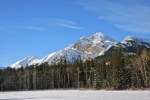
When I stumble upon photos from one of my favorite places, Jasper, Alberta, I decide to share a few from our hike near Pyramid Lake in December of 2009.

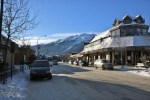
Jasper National Park is located in what I used to think was Northern Canada–until I looked at map.  It is North of Banff, but, it turns out that’s not even far enough North to be Northern Alberta, let alone Northern Canada.

Given that the town of Jasper is located within Jasper National Park, which encompasses a pretty big chunk of the Canadian Rockies, it was far enough North (or perhaps just far enough in altitude) that the high temperature those two weeks of December was -15 degrees Fahrenheit.

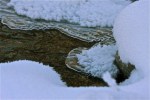
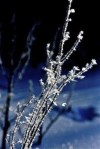
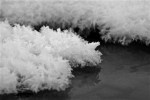
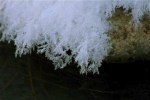
When we hiked around Pyramid Lake, we discovered something I’d only read about–hoar frost.  I never actually knew what hoar frost was until after I showed some of these shots to a friend.  If Pat wouldn’t have been with me, I probably would have frozen to death because I was so fascinated with the hoar frost, I would undoubtedly have forgotten to return until it was too dark to see.

I don’t consider these images clutter.

Blowing the Top

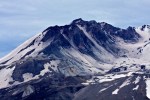
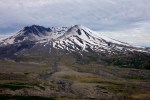
Mount St. Helen is one of those places everyone should see.  Or at least anyone who is interested in what happens when a mountain explodes.  It’s one of those fascinating places that I have no problem returning to.  I’ve been there three times, which is a lot considering I live about 2500 miles away and there are a lot of places I haven’t been that are higher on my bucket list.

Our last trip out to Portland, my brother, sister-in-law, and nephew wanted to see Mount St. Helen and we decided to do a 6 mile hike while we were there.  My dad and his wife would hang at the visitor’s center while we did our through-hike.  They would pick us up at the end of the trail.  Timing was a bit tricky.  With no working cell phones, we had to predict how long it would take us to go 6 miles.

I have read a lot of books about backpacking where people say things like “20 minutes a mile with a full pack is a good pace.”  I have yet to go on a day hike where we were able to maintain a 20 minute mile pace, let alone a hike with a full pack.  So, when my sister-in-law (who likes to do things like run marathons at an 8 minute/mile pace) guestimated we could hike 6 miles in 1 1/2 hours, I was less optimistic.  A 15 minute pace sounds painfully slow to a runner, I suppose, but maybe that’s why I don’t enjoy running?

Before we departed, I told my father we would take at least 2 hours and that he shouldn’t worry if we took 3.  I set the panic time for 7:00PM, figuring that would give us three hours–I felt confident we could manage a 30 minute pace even in the worst of conditions.

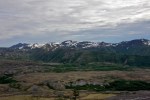
The views in the Mount St Helen area are haunting.  The landscape looks almost foreign.  Yet, each time I’ve returned here, there were more signs of life–more green, more elk, more birds.  Given that it’s been nearly 10 years since my first trip, the progress is slow, but it is progress.

As it turned out, we got confused about which trail we were on.  Our only trail map was a flyer from the visitor’s center that gave us so little information we couldn’t find the trail we wanted to be on and eventually decided to turn back.  We walked back quickly to an overlook we’d passed.

After hitting up a few tourists until someone agreed to give me a ride down to the meeting place, I made it to the rendezvous spot about 1 minute before the panic time.  My dad and his wife were quietly napping, so I don’t think we were in danger of them panicking.

On the way home, we stopped one last time to enjoy the view of Mount St. Helen–majestic even without her peak.