Olympic Adventure

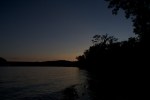
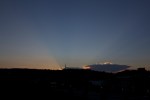
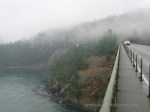
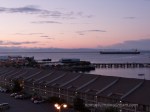
Whenever I go through old photos, I look for things I’ve learned as a photographer.  Sometimes it’s a little depressing.  It’s hard to say what improvements have come from skill vs luck vs improvement in technology.

However, I found one obvious improvement that can only be attributed to me having learned something–straight horizon lines.

Well, it’s not actually true that only my skill has straightened my horizon lines.  In truth, it wasn’t until I recently upgraded cameras and started using the in-camera electronic level that I can truly claim I had straight horizon lines.  But, setting that aside for a moment, as I look through images taken on my first trip to the Olympic Peninsula, shortly after I’d purchased my trusty old Powershot G3 circa 2003, I realize I didn’t even think about straight horizon lines back then.

So, there you have it. Solid evidence that I have retained one piece of information about how to have better images in 9 years.  I feel much better now.

The trek to the Olympic Peninsula from just North of Seattle seemed somewhat epic.  When you look on a map, Olympic National Park looks like it’s right next to Seattle–like it should take a couple of hours to drive there.  But the first hint that maybe it’s not so straight forward is when you try to get driving directions from Seattle to Olympic National Park–google says, “We could not calculate directions . . .”

Our route may not have been the most direct.  We went North through Deception Pass to Whidbey Island and, from somewhere in the general vicinity, we took a ferry over to Port Angeles on the Northern end of the Olympic Peninsula.  From there, we made our way along the coast down into the park where we visited an ancient lodge and trekked through an even more ancient rain forest.

Oh wait . . . that’s how we got there on our second trip to Olympic National Park.  Sorry.  On our first trip, we went South to Mount St. Helen first and then North to Olympic and then back via Port Angeles and Whidbey Island.  I had things reversed.

If Olympic were in the Northeastern United States and you asked someone for directions, they would tell you, “You cahn’t get theyah from heeah.”

I would love to go back to Olympic for a week.  Both times we went before, we did more of a drive by, taking only a couple of very short hikes.  I would love to do a through hike of many miles in the rain forest.  The number of elk that we saw in just a mile or so of walking in the midst of the deep shadows of giant trees was amazing–it wasn’t the kind of terrain I expected to find elk in.

It’s too bad it’s so difficult to get to–otherwise we would probably go every year as a short side trip from Portland when we’re out visiting my dad.

Maybe next year.

Play Date

Tisen has made a friend.  Well, at least a playmate.  Let’s start at the beginning of this relationship.

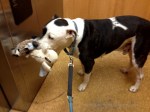
Tisen and Twiggy were introduced at the park several weeks ago.  Tisen isn’t all that fond of other dogs, although he’s definitely getting more tolerant.  So, imagine my surprise when this beautiful lady of a dog starts tussling with Tisen and they end up in a playful wrestling match!  No snarling, no growling, no yelping.  It was great!

This monumental event was followed by a pleasant visit to Twiggy’s patio and, later, another visit at our place during a weekend lunch for the humans.

However, Tisen and Twiggy never re-engaged with one another other than to take each other’s toys when we were in their respective homes.  It was a little disappointing–but perhaps they needed neutral territory to wrestle.

In any case, the other day, Twiggy was invited to spend the morning with us without her parents.  It was Tisen’s first real play date.  I walked Tisen before going to get Twiggy so he could have his usual morning routine.  Then, I picked up Twiggy and took her for a spin around the park before taking her home.

When we got to our place, Twiggy ran for the toy basket and started digging around for what appealed to her.  Fortunately, Twiggy went straight for real chew things like bones.  Tisen never touches bones.  This would have worked well, except for one little complication:  Twiggy started breaking off enormous chunks of bone and swallowing them.  We were worried enough that we substituted first a softer bone, thinking she would chew it up smaller, followed by a dried hoof, but both suffered the same fate.

Robbed of attention-occupying chew toys, Twiggy returned to the basket and started pulling out squeaky toys.  This started a game that was like a combination of capture-the-flag and king-of-the-hill with a touch of tug-o-war thrown in.

Tisen started grabbing his toys two at a time and running behind the couch with them.  Twiggy, in turn, grabbed what she could and started making a pile in the middle of the living room.

I played referee when arguments started over toys mysteriously migrating from one hoard to the other.  It was possibly the funniest thing I’ve seen in a long time.  No sooner would Tisen run off with a toy from Twiggy’s pile then Twiggy would find another to replace it with.

I was pretty sure this was going to be an infinite game, but after turning away for a few minutes, when I turned back, they were both snoring next to their respective piles of toys.

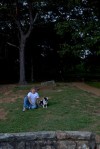
Unfortunately, they both woke up when I got out my camera, but Twiggy posed like a pro while Tisen guarded his pile behind the couch.

I think they had fun–they certainly weren’t bored.  Tisen slept more soundly than I’ve seen him sleep in a long time after Twiggy went home.

Valley View and Difficult Decisions

Decision making is something I do all day.  In fact, I get paid for it.  I’m not claiming the decisions I make are important or life changing or even interesting.  I’m only claiming that I make decisions.  And I do it all day long.

The thing is, I’m pretty quick at deciding.  In fact, I’ve spent a couple of decades learning how to slow down and not jump to conclusions.  I don’t need to know every possible piece of information; only a reasonable amount to feel confident that I can make a choice between options.

So, I ask, why is it that once I put my work away, I can’t seem to make even the simplest decision?

Is decision making a non-renewable resource?  Do you only have so many decisions you’re allowed to make during the day and then all decision-making brain cells are drained until they are recharged over night?

I don’t know why, but deciding things like “what do I feel like eating?” often feels like I’m trying to decide whether to wage war on a neighboring country.

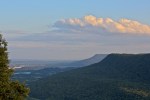
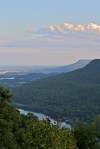
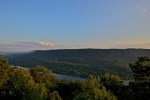
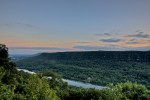
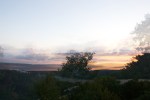
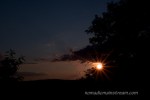
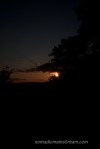
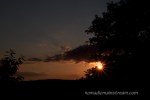
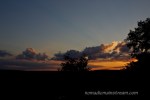
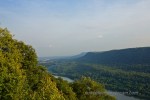
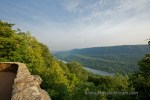
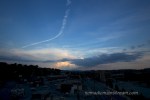
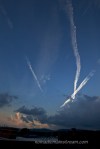
Similarly, tonight as I looked through the remaining shots from Signal Point trying to decide which ones to include in today’s post, I look at the first shot and think it’s not bad.  Buth then I look at the second shot and prefer the framing.  In the first example, the bank of clouds is entirely visible.  There is no view of Venus in either shot, but the temptation to keep both images overwhelms.  Instead of choosing the one I like the best, I now have doubled the storage required.

Oh, and wait, what about the vertical version?  Or the wider angle view of the valley at 18mm?  Or what about the slightly less wide angle view at 28mm?

I know that there should ultimately be only one best image but whose best am I shooting for?

Then, there’s the HDR processed images.  After all, given that i went through near heart failure to get multiple exposures of several images, shouldn’t I keep the processed versions of these negatives, combining the many exposures and trying to output a combined photo that exposes all parts at the same time.  I’m pretty sure the entire collection of exposures should be kept just in case I want to recombine them all differently in the future.

I would also share the in-camera HDR settings, but I haven’t actually figured out how to do that yet.  Figuring out how to do brackets of 7 exposures was challenging enough and then that failed.  It makes it a little difficult to get motivated to figure out how to use the more advanced features like in-camera multi-exposure processing.

Maybe next post . . .

Someting Wong

I have a beef.  For months, I deliberated about whether a new camera was worth it to me or not.  I cut back on expenses and saved until I could afford the camera I wanted.  I waited for it to arrive for weeks while it was on backorder.  Finally, it arrived and I thought for sure it would take my photography to a new level.

(Alas, you know what they say:  it’s not the ingredients, it’s the chef.)

What I didn’t expect was to have some bizarre problem with my brand new camera.

Yesterday, after attempting to shoot the Transit of Venus, I nearly had a heart attack when I placed my loupe up to the LCD and saw some of the images included in this post.  Having previously seen a video that shows how you can ruin the sensor in a digital camera by pointing it at a laser light, and having also read enough of the camera manual to know it says “never point the camera directly at the sun,” my heart took a pause when I considered the possibility that I had just destroyed the sensor in my 3-week old camera.

The images looked like half of sensor had been completely blown.

I stood there at my tripod and tried to breath.  My heart was racing, my stomach doing flips–had I just ruined my biggest single investment in photography?  I tried to calm down by reminding myself that I have shot sunsets numerous times without a filter and it’s never burned my sensor.  This time, I had a 10 stop filter on the lens–surely that protected my camera?

Taking a few deep breaths, I managed to dissipate the panic enough to do the only thing one can do when anything operated by a computer starts to malfunction:  reboot.

I turned off the camera and turned it back on.  Thankfully, it started working again.  My heart slowed down and I almost cried with relief.

When I looked at my photos on my computer, it became clear that there was indeed a malfunction.  Some of these images look like double exposures–I didn’t think that was possible with a digital camera.

In looking at the problematic images, I discovered several things.  First, it happened when I was shooting bracketed exposures (e.g., the camera automatically shoots 7 images in a row with a shutter speed that is one stop of light apart for each shot).

I also recalled several times when I was expecting to get 7 shots, I ended up with 2.    When I looked at the pairs of photos that were most likely associated with these misfires, they have identical metadata.  By that, I mean the shutter speed, ISO, aperture, date, and time (down to the second) matches exactly.  Yet, the exposures and even the subject in some cases look wildly different.

I have googled to no avail.  I seem to have a unique problem.  I always knew I was different.  😉

If anyone knows what this problem is, please comment!

P.S.  Title is an exact quote of my all-time favorite error message in a software program circa 1994.

Venus Spotting

The Transit of Venus is one of those phenomena you have to get excited about, even though there’s a little voice that says, “it’s a black dot on the sun.”  You must ignore that little voice and get caught in the frenzy surrounding an astronomical event that won’t happen again for 105 years.

For me, the frenzy began when I read an article about it this morning, thanks to a post from a friend who is far better informed than I am.  I thought about trying to find a station on TV that was showing it instead of trying to see it.

Then, the frenzy ended about 10 minutes later when I promptly forgot all about.

After a long day of work, I decided to share Signal Point with my husband as a nice way to relax.  I promised him we wouldn’t hike any further than the 100 yards to the overlook from the parking lot.

I, of course, then packed up my camera, a couple of lenses, and my tripod.  Tisen packed as well.  As soon as he heard the first zipper, he started jamming toys into his mouth.  He managed to get both Tiger and Baby Beaver into his mouth at the same time.

When we arrived at the overlook, a man was already there with a pair of binoculars on a tripod and a camera sitting on the wall.  I was puzzled by his binocular setup–they were positioned about 3 feet above the ground and I couldn’t imagine how he could look through them at that height.  I asked him if he was seeing anything good, assuming he was looking for birds (what else are binoculars for?).

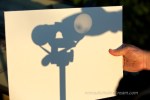
This is when I was reminded of the once-in-a-lifetime (well, twice) event I’d read about only a few hours before.  He used the binoculars to project an image of the sun onto a white card.  That way, we could safely view Venus passing in front of the sun.  Honestly, I was more excited to learn you could view the sun that way than by the black dot in front of the sun.  But it was pretty cool to be able to say we saw it.

I put a neutral density filter that blocks 10 stops of light (that’s a lot of light) and tried to shoot the sun.  However, I was worried about pointing my camera at the sun and, for whatever illogical reason, didn’t want to do so with my 70-200mm lens on it.  I’ve never heard of pointing the sun doing damage to a lens, just the sensor (and the photographer’s eyes), so I don’t know why I was worried about the lens, but shooting with a wide angle zoom only got me to 35mm–not exactly the best focal length for capturing  black dot on the sun.

I did get some interesting sunset shots and, even if we can’t see it, we know Venus is in there somewhere.

Signalled

Late Sunday afternoon, I got the urge to hike.  Pat, however, did not.  He was in the middle of a project.  I started to settle back into the couch, but then thought, “I didn’t move to Chattanooga so I could sit on the couch.”

With a little surfing, I discovered there was a section of the Cumberland Trail on Signal mountain and it sounded awesome.

Based on the map scale and the “pinky measurement” technique I’ve developed (patent pending), I guestimated it was between 2 and 2.5 miles one way.

As we started down the trail, we passed a sign that said Edward’s Point Overlook was 2.9 miles away (there goes my patent!).  I resigned myself to the reality that we were not going to make it to Edward’s Point today.

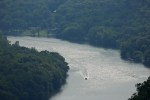
We made our way down some treacherous steps and then some even more treacherous steps.  After about 20 minutes of walking, we made it to another overlook.  Black Vultures soared on a thermal, rising up over the mountain and disappearing on the other side.  I tried to get a shot, but they disappeared before I could even get my lens cap off.  I shot a boat down on the river below instead.

We kept on going, which might have been a mistake.  I had trouble getting Tisen to drink water.  He wouldn’t drink out of my hand and he shied away from a water stream.  I paused to find a depression in a rock he could drink from.

As we continued, we heard a waterfall.  I thought maybe water would be nearby, but each stream was just a damp mark on the side of the mountain.

I watched Tisen plow through poison ivy.  As much as I knew I should avoid touching him, I couldn’t help myself.  I suspect even my camera is now covered in poison ivy oil.

We’d made it about 200 yards past a frightening bridge when our time ran out.  With no photo ops since noticing a cluster of mushrooms high above us,  I was cursing every ounce I was carrying.

When we stopped again at the rock with the depression for more water, Tisen laid flat out on his side, head down, sides heaving.  I wasn’t sure he was going to get up again.  But, when I stood up, he popped up like he’d just been teasing me and even led the way up the steepest parts of the trail.  I was really impressed when he hopped up those scary steps full of energy.

We stopped at the overlook in the park one last time to shoot the Eastern sky.  The light was better, although the sun was still too high for shooting towards the West.

Hot, tired, and hungry, we headed back down the mountain to return home.  Unfortunately, we couldn’t relax right away–both Tisen and I required poison ivy detoxification.  Tisen does not much like baths, but he seemed to feel pretty good afterwards.  Or maybe it was after dinner?

The Last Mimosa

I’m saddened to learn that the Mimosa tree is an invasive tree from Asia that doesn’t belong here.  In fact, the Tennessee Exotic Pest Council ranks it as a severe threat.  This makes me sad because I was really enjoying the blossoms, but I feel strongly that invasive plant species need to be removed from non-native habitats.  Now I feel like a traitor–aggrandizing the enemy.

But, I can’t help but indulge my irresponsible self one last time before I turn my back on the Mimosa tree (don’t worry, I’m sure I’ll continue to indulge in the beverage on the rare occasions the opportunity presents itself–too bad it’s not the drink that’s invasive instead of the tree).

In case you are unfamiliar with the problem of invasive species, I confess it’s a bit of a sore spot with me.  Having spent many weekends trying to remove plants that were taking over my own yard as well as the neighborhood, I know how difficult these plants are to control first hand.

In the US, we tend to plant what we think is pretty and/or is easy to grow. We fiercely defend our property rights and believe what we plant in our yard is our own business.  Unfortunately, invasive plants don’t stay on our property.  They spread through an amazing variety of means and grow quickly out of control since whatever keeps them in check in their native habitat doesn’t exist in the ecosystem they have been introduced to.

While we sometimes call native plants “weeds” because we don’t like the way they look and they grow in places we don’t want them to, these aren’t the same as invasives.  Invasive species do outright harm to an ecosystem.

As we all know (I hope), every living thing has interdependencies with other living things.  Whether it’s for shelter, food, temperature control–all of the above, no creature can exist without other creatures to support it (depending on what you call a “creature,” I guess).  Plants are a critical component of this web.

Invasive trees like the Mimosa reek havoc upon the availability of necessities by crowding out the native trees and plants that would provide them.  Because invasives didn’t evolve with the rest of the ecosystem, they fail to provide the critical (and often subtle) requirements that the native plants would provide.

This is my plea:  the next time you plant something, remember that what you plant will spread far and wide whether you know it or not.  Make a choice that everyone can live with (including wildlife) instead of just what looks good.

A chunk of our tax dollars is spent trying to control these invasive species–even if you care nothing about your ecosystem, why would you want to make a choice that will be an ongoing cost to you and the rest of the tax-paying population for generations to come?

All right, I’m off my soapbox now.  Back to taking pictures.  🙂

Cloud 9

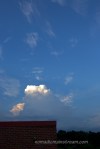
Every once in a while, things come together unexpectedly in small ways.  I say in small ways because, after all, creating an image that I like is not like curing cancer.  But, sometimes, just every once in a while, something happens that gives me hope.

I don’t know what for, exactly.  There’s the hope that maybe I can capture images that matter to me.  There’s the hope that life will have more moments of stunning beauty and the joy of witnessing them.  And then there’s the hope that life is really about these moments and none of the other crap really matters.

On this particular day, the three of us were loaded in our mini van.  Me in the front passenger seat, Pat driving, and Tisen riding in the back with Lion (or maybe it was ‘Possum?).  As we made our way to the Rice Boxx to pick up dinner (side note:  the food is decent, but if you judge chinese food by the quality of the fortunes in their fortune cookies, steer clear), I looked up and saw the most amazing clouds in the sky.  They were the fluffiest, most interestingly lit clouds I can remember.  Of course, the time to see the most interesting clouds is not when you’re in a car on your way to pick up dinner and camera-less.

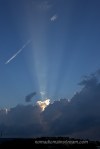
This is the part where things just came together.  We got dinner and went home and when I looked out the window, I saw an enormous ray popping through the clouds going straight up.  I had to choose between trying to capture an image that might last the rest of my life and eating a hot dinner that would last about 10 minutes.  It was an easy decision.

I grabbed my camera, tripod, an extra lens, and headed up to the roof.  I found a neighbor up there, already enjoying the sky.  She had her back to the sun rays coming through the clouds, enjoying the puffy clouds–although they were somewhat less puffy now.  Like me, she really enjoys unwinding on the roof.  Unlike me, she didn’t bring a camera.

While I set up and started shooting, she and I talked.  I managed to set up and get at least one image I’m happy with (well, at least on my monitor) and get to know a little about my neighbor at the same time.  This might be a new milestone for me.

One of the things I’ve discovered about my 5D Mark III that was a nice surprise is its built-in level.  I can push a button and it displays a level on the LCD.  Having discovered that I view the world at a tilt, this is an awesome feature for me.  Especially when shooting in Chattanooga–there are no straight lines on the horizon to line up with.

Returning to finish my dinner, I discovered Tisen was not at all interested in the clouds–only in getting comfortable on the couch.

Mimosa Anyone?

For those of us who appreciate an excuse to drink champagne for breakfast, a mimosa is a tasty beverage that someone invented most likely because they spent too much money on a bad bottle of champagne (my apologies to any French readers, I really mean sparkling white wine that may or may not be from the Champagne region of France) and didn’t want to waste it.  Sweetening up sparkling wine with orange juice was a stroke of genius in my opinion.

But it does not explain how it got its name.  For that, I am forced to google.  Apparently, I have never had a mimosa that was made correctly–they are supposed to have a foamy head that resembles the flower on the mimosa tree.

In Ohio, the crabapple trees bloom fantastically in the early spring.  But I can’t remember ever being over powered by their smell.  And they burst into blossoms that seem to disappear within a week.

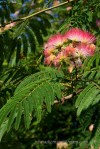
This is my first spring where mimosa’s are common.  In Ohio, you might discover this strange tree tucked into a protected corner of someone’s garden, but I can’t recall ever seeing one in the wild.  Here in Tennessee, they start a sneak attack with their sweet scent.  I walked through the park smelling the perfume in the air for days before I finally figured out what it was.  That was at least 2 weeks ago–they are still blooming like mad.

Unlike the crabapples, the mimosa trees tend to be tall, keeping their blooms out of reach.  This makes them a bit of a photographic challenge.  And, as you may know by now, I seem to gravitate towards challenges.  But it’s not the challenge of capturing them from a distance that attracts me, it’s the way the light hits them in the evening, suddenly spotlighting their pink foam flowers in golden light.

I may have to get a ladder and go back for some close-ups.  I wonder what the maintenance crew would do if they saw me carrying a step ladder?

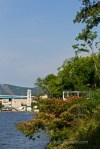
I spotted a small mimosa tree down by the river.  The best time to shoot it would be around 8AM when the sun is still low but high enough above the Eastern horizon to send a few rays over the steep bank above the tree.  But, I decided evening would be a good time to experiment with my flash outdoors.

I set up my flash on a stand so I could put it as close to the tree as possible while I shot further back and to the side enough to keep the flash out of my frame.  However, if there is any light on the mimosa, it’s because I lightened it in post-processing, not because the flash threw so much as a single random shiny spot on it.  A disappointing experiment.

The good news is that the mimosas seem to just keep on blooming.  Maybe I’ll get a chance for that close up over the weekend.

Being There

Finally, after much anticipation, the big event–my nephew’s graduation day.  Of course, it wouldn’t be my family if we didn’t have a debate as to the necessity of celebrating high school graduation by going to a ceremony.  My family doesn’t require a reason for a debate.  If there’s a question to be asked, someone asks it.  If Hamlet were my relative, he wouldn’t have asked “to be or not to be.” He would have asked, “I am.  But why?  And is it really all that important?”

In any case, we had a pleasant surprise when Sam and Ellie appeared at the house at about 2PM in the afternoon (they were supposed to be at school).  This afforded us the opportunity to take some more pictures!

We gathered in the front yard and I set up my umbrella stand.  This is when I learned about why photographers own sand bags.  Having been a huge fan of Mary Poppins, I was only disappointed that it wasn’t strong enough to carry me away.

Fortunately, with 8 people standing around, it was much easier to find an assistant than a sand bag.

I went through the standard combinations:  Grad with his girlfriend.  Grad with his grandparents.  Grad with his parents.  Grad with his brother.   I’ve really got to start paying attention to group photos to figure out some better poses–I really am horrible at directing people on where and how to stand.

After finishing up pictures, the grads went on their way and we started getting ready to meet them at graduation.  We had a grand plan with three of us going an hour earlier than the rest to get good seats.  However, I got confused on what time we were leaving and we were 15 minutes late.  Then, we stopped to grab food on the way.  When we got there, the best seats left were up behind the stage.  We had a good view of Sam’s seat, but not of the stage since we were behind it.

Having shot my older nephew at the same place 2 years ago, I decided to try to improve on my shots by adding a teleconverter to my 100-400mm lens to try to get tighter on Sam than I was able to on his brother.  This was a fatal mistake.

I have tried to remind myself when choosing lenses to ask whether light or length was more important.  In this case, both were.  However, the loss of light caused by adding the teleconverter was critical.  Few of the shots taken with it on worked–I had too much motion blur because of too slow a shutter speed.

I was very sad about my failure at getting tighter shots, but I did take the teleconverter off just in time for Ellie’s walk across the stage.

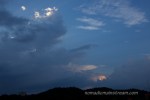
After the ceremony, as we searched for the parked car, the sky was so cool, I had to stop and take a shot while everyone else looked for the car.